From the NGO NEWS AFRICA
In
London on July 1, 2011 President Paul Kagame received the Humanitarian
award from The Chello Foundation for his work in the areas of children’s
education and healthcare and the promotion of women’s rights. Former
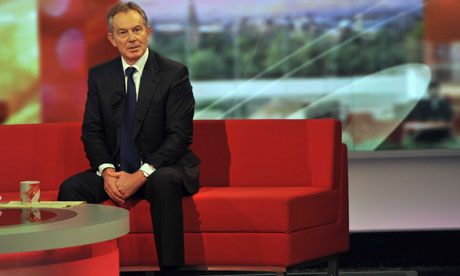
Prime Minister Tony Blair’s introduction of President Kagame came via
video where he praised the Rwandan President in the above listed areas
as well as his leadership of Rwanda. President Kagame then spoke for
just over fourteen minutes thanking The Chello Foundation, Tony Blair
and the ongoing support that the UK provides to Rwanda. The Rwandan
President emphasized
“meaningful and productive relationship over many years.” Attenders
at the event looked on with admiration, smiles and nods as President
Kagame spoke of the progress Rwanda has made in the areas of children’s
education, HPV vaccine for girls and sanitary supplies so they do not
have to miss school.
While President Kagame receives this prestigious award many are left
wondering why his record on humanitarian abuses continues to be ignored
by the former UK Prime Minister and the international community as
widespread reports continue to circulate regarding President Kagame and
the RPF as they systematically create chaos and destabilization within
Rwanda and the DRC.
This journalist uncovered a letter addressed to former Prime
Minister, Tony Blair from Oppositional Rwandan Leaders requesting peace
talks with him regarding his relationship with Rwanda. These leaders
asked Mr. Blair to withdraw his support until peace can be established
as well as a cease in humanitarian rights abuses. As of this
publication confirmation has been established regarding the former Prime
Ministers receipt of this letter.
The letter in its entirety has been published below in its original format with no editing by this writer.
Confidential letter to The Hon. Tony Blair
January 7, 2011.
Hon. Tony Blair
Africa Governance Initiative
London
United Kingdom.
Your Excellency,
Re: Political Situation in Rwanda
An article entitled “‘Tony Blair defends support for Rwandan leader Paul Kagame” that
was published in the December 31, 2010 edition of the Guardian newspaper highlighted
your support for President Kagame and your unequivocal endorsement of his stewardship
of the post—genocide Rwanda state. The article reports that you consider President
Kagame to be a visionary leader, and that allowance ought to be made for the Rwanda
Government’s record on governance and human rights issues on account of the country’s
recent experience of genocide. The article also states that you regard the use of charges
of crimes of ‘divisionism’ and ‘genocide ideology’ to silence critics of the Rwanda
government as legitimate; and, that you share President Kagame’s view that economic
development should take a priority ove1· democracy and respect for human rights and that
you consider Rwanda’s military intervention in the Democratic Republic of Congo
during the 1990s and early 2000s, that has caused immense human suffering and loss of
more than 5 million lives, as justified. We note with deep regret that the article also
reports that you would appear to discount the gravity of the allegations of violations of
international humanitarian law established by the Report of the Mapping Exercise
documenting the violations of human rights and international humanitarian law
committed within the territory of the Democratic Republic of the Congo between March
1993 and June 2003.
The writers of this letter represent Rwandan political and civil society organizations that
have long had concerns about the policies of the United Kingdom government in relation
to Rwanda and your Excellency’s support for President Kagame’s policies. We
acknowledge that you are entitled to your personal opinion on the situation in Rwanda.
We do not in any way seek to question your good faith or noble intentions in the work
that you do to support Rwanda. We also appreciate the very significant humanitarian and
development assistance that the United Kingdom has provided to Rwanda since 1994.
Nevertheless, we find ourselves compelled to address this letter to you in order to bring to
your attention the views of our respective organizations and members as well as many
other Rwandans on the situation in Rwanda. We seek, in particular, to communicate our
concerns over the damaging impact of your Excellency’s public pronouncements and
unqualified support for President Kagame’s leadership and conduct.
Rwanda is a one party regime governed by one man who controls all organs of the state.
President Kagame does not allow opposition parties to be registered, let alone operate
freely. Media outlets that are critical of the government are either shut down by the
government or forced to close operations as a result of attacks against their journalists.
Civil society organizations independent of the government operate under draconian
restrictions that make the exercise of their role as watchdogs over government all but
impossible. The people of Rwanda have no liberty to discuss, let alone decide, how they
should be governed. The political system marginalizes the majority of the population
from political participation.
President Kagame maintains his grip on power by severe repression, including arbitrary
arrests and detention, enforced disappearances, and extrajudicial executions of political
opponents of the regime. Institutions of the state continue to subject real and imagined
critics of the government to a wide range of human rights violations, including arbitrary
arrests and detentions, involuntary disappearances and extrajudicial killings. President
Kagame does not respect the sanctity of human life. Over the course of the last several
months, several members of opposition parties, civil society groups, independent media
outlets and individuals suspected of being opponents of the regime have been hunted
down, arrested, tortured, imprisoned or killed. Agencies of the Rwandan state have made
multiple attempts to kill opposition leaders such as Col. Patrick Karegeya and Gen.
Kayumba Nyarnwasa. Victims of state sponsored terror who have lost their lives over the
recent past include Andre Rwisereka (Vice President: of the Democratic Green Party of
Rwanda), Jean—Leonard Rugambage (deputy editor of the Umuvugizi newspaper) and
John Rutayisire. As we write, many members and leaders of opposition parties (including
Hon. Charles Ntakirutinka of Ubuyanja Party; Bernard Ntaganda, President of the Social
lmberakuri Party; Victoire lngabire, President of the FDU-Inkingi party and Deo
Mushyayidi of the PDP Imanzi Party) remain in detention, as do some innocent relatives
of opposition leaders. The climate of repression that prevails in Rwanda has made it
impossible for tens of thousands of refugees who remain in exile after the events of 1994
to return to Rwanda. Indeed, the human rights situation in the country continues to force
Rwandese from all levels of society to take the road to exile.
President Kagame’s appalling record on human rights and governance in general is not a
result of the legacy of the genocide. It was not inevitable that Rwanda should end up as a
dictatorship after the genocide. The Arusha Peace Agreement provided a framework that
could have led to a successful transition to democracy under a broad based government.
The RPF, and President Kagame in particular, derailed Rwanda’s transition to democracy
after the genocide by driving other political forces from government in 1995. President
Kagame has used his control of the ruling party (the RPF), the government, and security
institutions to entrench authoritarian rule, The restrictions on the exercise of fundamental
liberties that the Rwanda government has established aim to protect President Kagame’s
monopoly of political power, not to promote peace. Peace and stability in deeply divided
post conflict societies are best protected and promoted by inclusion and genuine power
sharing. Peace maintained by a dictatorship through violent repression is not enduring.
Democracy and respect for human rights are not a luxury that any government is free to
dispense or withhold at its discretion. Nor is development aid necessary to purchase
freedom, an inalienable right for every human being, rich or poor. Your views on
President Kagame’s accountability for human rights abuses is at variance with the values
that the United Kingdom has espoused in its long history, and the positions that it has
always taken on accountability in other post conflict situations, such as Liberia, Sierra
Leone and Iraq. Your stand on the relationship between human rights and development in
the context of Rwanda contradicts the policies and approaches that your own
governments Department for International Development and the international
community have long championed. We are fortified that our organization’s concerns
about the broad human rights situation in Rwanda are shared by all major human rights
organizations, including Human Rights Watch, Amnesty International and the
Commonwealth Human Rights Initiative.
We firmly believe that the violent conflicts that Rwanda has experienced over the past
half century are rooted in issues revolving around governance. The only path to
sustainable peace in Rwanda is a system of government that has popular legitimacy,
includes all communities of Rwanda and is committed to respect of fundamental human
rights, especially the integrity of the person and the right to political participation.
Economic development in post conflict societies that is not rooted in democratic values,
respect for human rights, and broad inclusion is not sustainable. The tolerance that the
international community has exhibited towards President Kagame’s excesses continues to
fuel impunity. The endemic impunity that still thrives in Rwanda is an insurmountable
obstacle to lasting peace and sustainable development. We strongly believe that
accountability for violations of human rights and international humanitarian law,
including the crimes disclosed in the Report on the DRC mapping Exercise, is a pre-
requisite for national reconciliation and lasting peace.
Rwanda is in a situation of serious crisis. We are convinced that violent conflict is
virtually certain to return to Rwanda if the present government does not heed calls for
dialogue and agree to a process of peaceful political reform leading to democracy. The
results of the substantial development assistance that your government and others have
extended to Rwanda since the end of the genocide could be very swiftly undone in the
event of such conflict, with grave implications for the whole Great Lakes region and
international peace and security.
The climate of fear and terror that prevails in Rwanda does not permit Rwandan society
to freely discuss the very grave problems facing the country and to find solutions to those
problems. The people of Rwanda count on Rwanda’s development partners, especially
the United Kingdom and the United States (the two countries that are widely perceived as
being Rwanda’s principal allies in the West) to support the promotion of respect for
human rights and advancement of democracy. We believe that Rwanda’s development
partners, especially those who have close relations with the current government such as
Your Excellency, have a unique role, if not responsibility, to advance the cause of
peaceful change in Rwanda by President Kagame on the need for progress in
guaranteeing for fundamental human rights and for national dialogue to resolve the
country’s crisis. It is in this spirit that we write to urge you to keep an open mind about
the situation in Rwanda; to have empathy for the suffering of the victims of past and on-
going human rights abuses for which President Kagame bears personal responsibility; to
put the long—tern1 interests of Rwanda and of the majority of her people above loyalty to a
President you say is a personal friend and to hold him accountable to the values and
V standards of conduct that the international community ought to require of leaders
exercising the responsibility of national leadership, particularly leadership that citizens ,
have not freely chosen and are powerless to change.
We hope and trust that this letter will be the beginning of a necessary engagement
between you (and others in the international community who want to help Rwanda attain
stability and lasting peace but are at the same time still supportive of President Kagame’s
leadership) and individuals and organizations whose views on the situation of Rwanda
and vision of our country’s future can not be freely articulated inside Rwanda on account
of the prevailing climate of repression. We assure Your Excellency of our respective
organizations’ commitment to unconditional dialogue with both the Rwanda Government
and Rwanda’s development partners on the way to avert the crisis that is engulfing our
motherland. Some of the organizations that are signatories to this letter have already
demonstrated commitment to inter-Rwandan dialogue by establishing a mechanism to
advocate for such a dialogue. We take this opportunity to request Your Excellency to
grant the writers of this letter audience to enable us discuss the issues raised in the letter
with you in person and to brief you on our work in pursuit of peace change in Rwanda.
Accept, Your Excellency, the assurances of our highest considerations.
Dr. Nkiko Nsengimana
Premier Vice President
Comite de Soutien
Forces Democratiques Unifiees
Paul Rusebagina
President
Dialogue inter Rwandias
Hautement Inclusif (DIRHI)
Paul Rusebagina
President
Hotel Rwanda Rusesabagina Foundation
Gen. Habyarimana Emmanuel
Convention Nationale Republicaine-Intwari
Ambassador Jean-Marie V. Ndaguimana
President FEIDAR-Federation Internationale des Associations Rwandaises
President IBUKABOSE-Memoire por tous
Karangwa Semushi Gerard
Vice President
PDP-Imanzi
Matata Joseph
Centre de Lulle Contre Impunite et L’ Injustice au Rwanda
Dr. Rudasingwa Theogene
Coordinator
Interim Coordination Committee
Rwanda National Congress
BY: Jennifer Fierberg, MSW