Africa Great Lakes Democracy Watch


Welcome to
Africa Great Lakes Democracy Watch Blog. Our objective is to promote the institutions of democracy,social justice,Human Rights,Peace, Freedom of Expression, and Respect to humanity in Rwanda,Uganda,DR Congo, Burundi,Sudan, Tanzania, Kenya,Ethiopia, and Somalia. We strongly believe that Africa will develop if only our presidents stop being rulers of men and become leaders of citizens. We support Breaking the Silence Campaign for DR Congo since we believe the democracy in Rwanda means peace in DRC. Follow this link to learn more about the origin of the war in both Rwanda and DR Congo:http://www.rwandadocumentsproject.net/gsdl/cgi-bin/library


Showing posts with label AFRICA GREAT LAKES REGION. Show all posts

Wednesday, November 16, 2011

RWANDA:RNC Condemns Attacks on Paul Rusesabagina by Kagame Regime

The RNC calls upon the Kagame regime to lay off Rwandans who have a different opinion than its own...
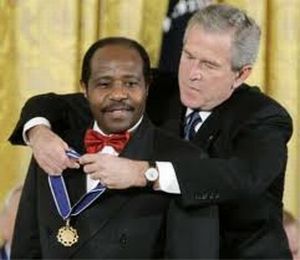
Paul Rusesabagina
Paul Rusesabagina of 'Hotel Rwanda'

(WASHINGTON D.C.) - From the moment the Lantos Foundation for Human Rights announced that Paul Ruseabagina was the choice for the 2011 Lantos Human Rights Award for his role in sheltering Rwandans at Mille Collines Hotel in 1994, Kagame’s regime immediately came out with attacks against him in hopes the award would be withdrawn.
In keeping with its trademark tradition of savaging its opponents, the Kagame regime outed its full arsenal of dirty attacks: using co-opted newspapers to hurl false accusations against him and spew hatred on him, directing associations of those who survived by finding shelter in that same hotel to smear him with lies and slander him, flooding the Lantos organization with written demands that it cancel the award, etc.
The RNC vigorously condemns these despicable attacks the Kagame regime continues to launch against its opponents. These attacks clearly defeat and unmask the sugar-coated rhetoric of the regime that it is serious in pursuing reconciliation among Rwandans and self-esteem.
As a reminder, President Kagame and his senior advisors are on record praising Paul Rusesabagina’s actions after previewing the movie Hotel Rwanda that featured Paul’s heroic feat which continues to receive worldwide acclaim. Attacks against Rusesabagina did not start until he publicly criticized the killings and other gross violations by the Kagame regime.
The RNC calls upon the Kagame regime to lay off Rwandans who have a different opinion than its own, and to allow them to fully enjoy their freedoms, including receiving awards they deserve. Instead, it is President Kagame and his wife the First Lady of Rwanda who must stop their terrible wasteful spending of Rwandan taxpayers’ money by staging self-promoting events and heavy lobbying for undeserved awards and prizes.
The RNC would like to thank the Lantos Foundation for showing concern about peace in Rwanda and reconciliation among Rwandans by recognizing Paul Rusesabagina’s life-saving and heroic action during a time of extreme danger.

Done in Washington, DC on November 8, 2011

Dr. Theogene RUDASINGWA
RNC Interim Coordinator

Thursday, November 10, 2011

Hotel Rwanda film director Terry George speaks out – Smearing a Hero

By Terry George 

Paul Rusesabagina, the real-life hero of the movie “Hotel Rwanda,” is being denounced by some in his country as a traitor and a criminal. Perhaps he helped bring some of this abuse on himself, but none of it is deserved. As director and producer of the film, I’d like to explain.
To make a film of a true story you must compress timelines, create composite characters and dramatize emotions. When it came to making “Hotel Rwanda” — the story of how Paul Rusesabagina saved the lives of hundreds of people who took shelter from the 1994 genocide in the hotel he managed — I was obsessed with getting it right. The Rwandan episode was a slaughter of unimaginable horror and magnitude, yet I firmly believed I had found a story that showed that even in the midst of such horror the human capacity for good can triumph.
Before making the film, I grilled Rusesabagina and read all I could about his experience. I traveled to Brussels and Rwanda, and I met survivors from his hotel, some of whom still worked there. No one contradicted his story.
When the film was released, Rusesabagina was acknowledged as a hero not just by ordinary people across the United States and Europe but also by diplomats, politicians, journalists and Rwandan officials in diplomatic posts here. Rwandan expatriates gave testimony to the veracity of the film, as did people who had been in the hotel and who tearfully acknowledged Rusesabagina’s role.
Last May I had the chance to meet Rwandan President Paul Kagame in Rwanda. I sat beside him as he and his wife and most of Rwanda’s parliament watched the movie. Afterward he leaned over to me and said the film had done much good around the world in exposing the horrors of the genocide. The next evening, I screened the film at Amahoro Stadium for some 10,000 people. It was the most emotional screening I have ever been at. I spent close to an hour afterward accepting thanks and congratulations.
But there was one empty seat at both screenings — the one reserved for Paul Rusesabagina. Two days before, as I waited for him to join me at the boarding gate in Brussels for the flight to Kigali, he called to say he had decided not to travel to Rwanda. On his speaking tours around the United States and Europe, he had begun to criticize Kagame’s government, saying that the last election in Rwanda, in which Kagame received 90.5 percent of the vote, was not democratic and that true peace would come to Rwanda only when it had an inclusive government. Because of his criticism, Rusesabagina said, he had been advised that it would not be safe for him. I could not persuade him to come.
Last fall his fears were borne out when Rwandan journalists and politicians began a smear campaign against him. On Oct. 28 a reporter for the Rwandan daily newspaper the New Times ran a long story on the “true nature” of Rusesabagina, which quoted a former receptionist at the hotel as saying that he had saved only his few friends, and that he had charged people to stay in the rooms (a fact we had highlighted and explained in the film). Buried at the end of the piece was probably the true fear of the Rwandan authorities: that Rusesabagina planned to form a political party.
The newspaper attacks on Rusesabagina have steadily escalated. In November he received the Presidential Medal of Freedom from President Bush. Six days later a New Times editorial said he would “go down in the annals of history as a man who sold the soul of the Rwandan Genocide to amass medals.”
In February Kagame joined the campaign — cryptically at first. In a speech at Amahoro Stadium to mark National Heroes Day, Kagame said Rwanda’s heroes are not made in America, Europe or in Asia; cinema or film stars have no place on the list of national heroes. He went on to make several veiled comments about “a manufactured hero.”
A few days later Rwandan Radio ran a two-hour live talk show about Rusesabagina. The speakers included genocide survivors and, sadly, some old friends of Rusesabagina’s. Francois Xavier Ngarambe, the president of Ibuka, the umbrella body of genocide survivors’ associations, ended the show by claiming: “He has hijacked heroism. He is trading with the genocide. He should be charged.”
I called Rusesabagina in Brussels to discuss what was going on. He said he saw the smear campaign as confirmation of his previous fears and of his reservations about the Kagame regime. His new autobiography, “An Ordinary Man,” will only make things worse, as in his last chapter he writes, “Rwanda is today a nation governed by and for the benefit of a small group of elite Tutsis. . . . Those few Hutus who have been elevated to high-ranking posts are usually empty suits without any real authority of their own. They are known locally as Hutus de service or Hutus for hire.”
On April 6, the 12th anniversary of the genocide, Kagame launched his first attack on Rusesabagina, saying, “He should try his talents elsewhere and not climb on the falsehood of being a hero, because it’s totally false.” I pray that this situation can be resolved. The millions who saw “Hotel Rwanda” and received its message of hope ought to know that they were not duped.
I understand Paul Rusesabagina’s desire to foster inclusiveness in Rwanda. I understand, as well, Kagame’s legitimate fear that the country has suffered too much, too recently, to allow divisions to be fostered. There are many politicians here and abroad who could mediate this clash. “Hotel Rwanda 2″ is a sequel I never want to make.
Terry George was co-writer, director and producer of the film “Hotel Rwanda.”

Tuesday, November 1, 2011

RWANDA:NO TRUE RECONCILIATION IN RWANDA


NO TRUE RECONCILIATION IN RWANDA

by Habimana Rukundo on Thursday, July 21, 2011 at 8:35pm
Hutu Refugees in Goma: Most of them were killed by the RPA, according to the former RPA officer
There is no true reconciliation in Rwanda. 
If any , as you said there is a "one way reconciliation" , or forced reconciliation .Imagine this
An army fighting for power invades a country . In the process , they wipe away the falimy of a young boy (the only survivor) . The young boy , following his neighbors and family friends, flee to Congo , where he is chassed again , under the rain of Katyusha and 105mm , to the Congo forest , then he fall sick .... Some of his friends die , and he was injured , and finally repatriated back to Rwanda . 
he undegoes an "ingando" training, where he is taught about the new country policy . He is taught about "loving his country" , he learns how the former regime (back in the time when he lastly experienced peace) was demoniac ! He is taught that history is false ... and then he is sent back to his village. 
Back at the village , he see other orphans ("Tutsi genocide orphans") going to school for free , being given all accomodations (from the school fees , matress , books even pens and clothes ....) , while he don't even dream of education , simply because he did not survive the Tutsi genocide .
“ Paul Kagame is a war criminal and he deserves to be executed 20 times a day for his crimes against humanity.”And through it all , MY BOY IS PRAISING THE REGIME , singing and dancing about the reconciliation installed by the current "father of the nation" (Mzee wacu , as many name him) . Our boy may even be currently enrolled in the local leadership of Intore .

Questions : 
1. Do you think this kid will make noise , protest , or do anything to claim a fair treatment ?? (How can he do it while the Intore are watching every house of the neighbohood ?? )

2. Do you think when Kagame comes to this village (followed with Kabarebe and other Congo war "heroes") , this kid will not applaud them ?? 
Sure he will ... !Youth prisoners accused of the Genocide in Rwanda work in field in youth prison in Gitagata, Rwanda.

3. Do you think this kid will not participate in foundraising for helping the "Tutsi genocide survivors" ?? 
You bet he will try to participate more than anyone else ! Being aware that he has none to speak for him , he will try to stay out of trouble . Azubahiriza gahunda zose za leta !

4. When Kigali Gvt will need to refute the "Mapping report" , do you think this boy will be a key witness for them ??? 
I bet he will be testifying that "only interahamwe were killed " , and RPA are angels !

5. Do you think this kid will have any way to ask for a proper burial for his family dead back in 1990 ?? 
No , no no no.... ! Why ??? Think about it . 
( Take this hint: How can an Intore ask for a proper burial for people killed by "freedom fighters" ??)
Rwanda's Island Prison for Children! Hundreds of vagrants, thieves and street kids have been sent, without a trial, to a remote island — an extreme example of the levels of repression in Rwanda.Reconciliation ?? mmmm ... Only as long as the one who implemented it has control ! Otherwise , I am afraid, it will waver quicker than most of us think .
Peace .

PRESIDENT OF RWANDA PAUL KAGAME PRAISING HIM SELF FOR KILLING RWANDAN REFUGEES


http://soundcloud.com/umuvugizi/20100413-kagame-yigamba-ko 

Monday, July 11, 2011

RWANDA:Insights into Rwandan hit man’s plot to murder Col. Karegeya.


Col Patrick Karegeya wanted Dead

From THE UMUVUGIZI NEWSPAPER
After the plot to assassinate the renagade and former Rwanda’s Army Chief, General Faustin Kayumba Nyamwasa, Rwanda’s hitman has been trying to murder his coleague Colonel Patrick Karegeya reasons being he talked too much about Rwanda being behind the failed plot against  Kayumba’s life.
Umuvugizi newspaper has been investigating the murder plot which leaked to the public and here, it brings you the full telephone conversation that leaked.
In the file attached to this story, one hears the voice of Colonel Dan Munyuza, Rwanda’s DMI chief was sending the driver to Col Karegeya to find his boss home and shoot him as the only way to silence Karegeya from the noise over the attempted assassination on Kayumba in June 2010.
Using a telephone line of one of the neighbouring countries, one hears another voice of one Aime who acted as a go-between the driver and Col. Munyuza in the murderous plot.
Aime, the go-between, constantly refered to Col. Munyuza as a technician (Technicien) who was behind the whole plot, organised funding, and searched for people to carry out the shooting of Col. Karegeya, a lightskinned person, (Umuntu w’urutuku).
The technician advised Aime and the driver to be more careful while studying the environment at home before carrying out the plot to avoid messing up just like they did with the plot against Gen. Kayumba.
As one listens into the recording of the telephone conversation you hear Col Munyuza accepting to pay the first installment of the required amount of money needed to carry out through some airhost.
The technician promised the duo that if that plot was well accompolished, there was another job in the waiting, finishing off the ailing General Kayumba from the clinic where struggling for life after surviving the first attempt on his life. Another option was killing Kayumba’s wife whom the technician said was also making noise over her husband’s fate.
The technician asked for the address of where the Kayumbas residended saying the DMI needed to know the exact location of the home.
The conversation ends with Col. Munyuza emphasising seriousness in the plot against Col. Karegeya to avoid more problems. Sources say that on the urgent list of Rwandans supposed to be killed from South Africa include Rwandan Tycoon Tribert Rujugiro.
Kagabo, London

Wednesday, June 29, 2011

RWANDA:shooting of Rwandan exiled in South Africa


By Associated Press from Washington Post

Paul Kagame and RPF Soldiers
JOHANNESBURG — One of the men accused of trying to kill a former Rwandan general exiled in South Africa said that Rwandan soldiers with plenty of cash and cars were behind the plot, a friend testified Wednesday.
The testimony came on the second day of trial in the June 2010 shooting of Lt. Gen. Faustin Kayumba Nyamwasa. The former Rwandan military chief went into exile just months before he was attacked in Johannesburg.

Rwandan President Paul Kagame’s government has denied allegations of involvement in the case. However, witnesses in the trial have asked for special protection, saying they fear the Rwandan government.
Kalisa Mubarak, a 36-year-old Rwandan who immigrated to South Africa in 2003, testified Wednesday that he has known one of the six suspects since they were children.
He said that former Rwandan soldier Amani Uriwani told him about being recruited by some European-based Rwandans to help with a job in Johannesburg.
Mubarak said his friend would only say the target was also a soldier, and he tried to talk Uriwani out of taking part. Uriwani was offered 10,000 rand (about $1,400) for his part in the attack, according to his friend’s testimony.
Prosecutors say Mubarak has been moved with his wife and three children to a secret location under a witness protection program.
Two body guards sat nearby as he testified in English and Kinyarwanda. He wore dark glasses and sat in the witness stand with his chin sunk in a black-and-white checked scarf draped around his neck.
Three Rwandans and three Tanzanians are accused of attempted murder, conspiracy to commit murder and other charges in Nyamwasa’s shooting.
Nyamwasa and other Rwandans living abroad have accused the president of crushing dissent and democracy after he helped to end the 1994 genocide that left more than 500,000 people dead in Rwanda.
In May, British police warned some Rwandan exiles living in the U.K. that their lives were in danger, and the threat is believed to have emanated from the Rwandan government.
Human rights groups say opposition politicians, journalists and civil society activists have been subjected to crackdowns inside Rwanda as well.
The key suspect in the South Africa case is Pascal Kanyandekwe, a Rwandan businessman. He’s also accused of plotting to kill Nyamwasa while the general was hospitalized after the shooting.
Kanyandekwe and four men not linked to the shooting are to stand trial in the hospital plot later this month. He also is accused of bribery after two police officers said he offered them $1 million to let him go when they arrested him in July 2010.
The shooting victim, who has kept a low profile since the June 2010 attack, also faces international war crimes charges linked to the aftermath of the Rwandan genocide — allegations he denies.
Nyamwasa and other senior Tutsis are accused of waging an extermination campaign against Hutus in the chaotic aftermath of Rwanda’s genocide — charges that Nyamwasa denies.
A Spanish judge in 2008 charged Nyamwasa and 39 other members of the Rwandan military with the mass killings of civilians after they seized power in Rwanda.
A U.N. report last year echoed the 2008 Spanish charges, accusing invading Rwandan troops of killing tens of thousands of Hutus in 1996 and 1997 in neighboring Congo.
Copyright 2011 The Associated Press. All rights reserved. This material may not be published, broadcast, rewritten or redistributed.

Britain Suspends President Kagame’s Visit


Queen Elizabeth warns Rwanda of its dubious diplomatic Incidences

From UMUVUGIZI NEWSPAPER
The British government has surprisingly suspended President Paul Kagame’s planned  visit which was schedule to take place between July 18 and 24th.  During the same visit, Kagame was expected to feature as the guest of honour at a Rwandan youth convention known as Itorero.
Reliable sources confirm that Rwandan Diaspora in the United Kingdom is preparing to foot the expenses incurred in organising the halted presidential visit to the UK.
The suspended planned visit comes days after the British government warned Kigali authorities against political activities carried out by Rwanda’s ruling party the RPF on British soil which are said to be targeting Rwandan refugees living in the country.
Recently, the British Scotland yard Police and M15 sent a warning notice to members of Rwandan opposition living in UK, warning them of possible security threats. The same police sent a warning to Rwanda’s Embassy in the UK  informing them that  tough diplomatic measures would be taken if  members of the mission don’t stop in activities incompatible  with their status .
A former Rwandan military intelligence official living in Belgium was suspected of involvement  in similar incidences and he was stopped from entering the UK . Another Rwandan spy, one Rubagumya was also arrested in Uganda on related Incidences .
All these events follow a series of meetings held by Rwanda’s key security officials around Europe. One of such meetings was held on January 15 in London chaired by the Chief Spy Colonel. Dr. Emmanuel Ndahiro, in attendance was Rwandan Ambassador to Britain Ernest Rwamucyo, others at the meeting were Rwandan security operatives Jimmy Uwizeye, Col. Mupenzi , Linda, Lt. Tom Rwabugiri, and the representative of the Rwandan Diaspora in Britain Mr. Mugabo.
Despite different pieces of evidence attained by British secret services implicating Rwandan Government in dubious activities  against its critics in UK, ,president Kagame recently dramatically denied he’s Government’s Involvement in these  allegations and instead  accused respected British security services of not being professional .
Although UK is one of Rwanda’s key donors, it has maintained that it’s  support is strictly based on mutual interests of respecting universal jurisdiction ,Freedom of press , Freedom of expression and respecting value of citizens.
Suspending President Kagame’s visit sends a strong warning that the donor community and the entire European continent is interested in seeing a responsible government in Rwanda that is accountable to the citizens rather than one that is bent on using the donors’ money in expanding the spy network that is cracking down its citizens in exile.
Johnson , Europe .

Tuesday, June 28, 2011

In Rwanda: What to expect from the divided RPF “family”.

From RWANDANEWS
Tutsi Soldiers mutilating a Hutu young lady in DRC 1997
As the saying goes, when two elephants fight it is the grass that suffers. The feud between Kayumba Nyamwasa et al. and Paul Kagame is likely to have a far from pleasant end. The peasants might once again be entangled into a conflict they little understand and as a result, forced to pay a heavy price.

The wrangle between the two heavyweights seems to have reached a point of no return. What is now left is a dog-eats-dog strategy, or an equivalent of the Darwinian survival for the fittest. This was the message directly implied when Kayumba was shot last year in the streets of Johannesburg. Kayumba and his family believe that the government is still trying to kill them. For Mr. Kagame, actions speak louder than words!

But is Kayumba hitting back as well? This is hard to tell. At the moment, there is no clear evidence that this might be the case, although the Rwandan government has accused him of forming terror zones within the country. Knowing that Kayumba was the chief of the Rwandan army for many years, and is still said to be very popular among the ranks of the military, everything is possible. Moreover, some claim that he enjoys very strong ties with the Ugandan government. The thought of him mobilizing a fighting force, no doubt exaggerated at the moment, is not a complete impossibility.

As of yesterday, the government of Rwanda claims to have arrested five dissidents, including a colonel in the Rwandan army. They are accused of planning sabotage attacks against Rwanda under Kayumba’s authority. Of course, such accusations need to be taken with a pinch of salt. After all, these are the exact same charges that are always leveled on political dissidents in Rwanda. If so, it might be the case of a boy crying wolf.

As expected, Kayumba’s vehemently denied any links to the arrested individuals. Because this is the first time that an insider of the ruling Rwanda Patriotic Front (RPF) is wrestling with the regime, it might be hard to tell where the truth lies.

We know that an investigative report released by the United Nations earlier this month refuted any links between Kayumba et al and other fighting groups based in the DRC such as FDLR and RUD Urunana. We also know that it is in Kagame’s best interest to portray Kayumba as a military trouble maker who is threatening Tutsi hegemony by collaborating with Hutu extremists. In Kagame’s threatening words, he is “excrement” that must be eliminated from the body.

As I said in my post earlier, these are troubling times in Rwanda. The “warrior refugees” that once won the praise of Philip Gourevtitch now have guns pointed at each other. They threaten the stability of a country they fought for and some of them have already been exiled again. It is not a pretty sight.

To be honest, Kayumba’s opposition to Kagame bears more hope for democracy than an event in Rwanda’s recent history. Kayumba has challenged Kagame’s totalitarian control in a way that leaves the man humbled. He often likes to say that, “absolute power corrupts absolutely”. By extension, Kayumba, at least in rhetoric, wants the RPF to undergo a process of reformation; which will allow for competitive politics.

Part of Kayumba’s problem with the RPF party is that Kagame has personalized it. He has built a personality cult akin to that of the late Juvenal Habyarimana. As such, Kayumba and other RPF compatriots feel their vision betrayed. They are longing for change.

It needs to be emphasized that the RPF, under Paul Kagame, has been a major stumbling block to democratic reform. They have established complete control over the military, the church and the civil society. They are like the despot king who must die in order for democracy to arise. We also need to be aware that Kayumba et al. were the yesterday’s champions of this corrupted system. But human being can learn from their mistakes. And there are few untainted hands in Rwanda.

I may not be a fan of Kayumba et al., but I think they deserve a chance. After all, they are Rwandans as well and their love for the country is evident. So far, they have been busy trying to spearhead for reconciliation among the Diaspora of Hutus and Tutsis. They efforts seem to be wielding success. In particular, Theogene Rudasingwa, the group’s most vocal member, has shown the willingness to acknowledge the crimes committed by the RPF against Hutu civilians. This is a BIG and unprecedented step—one that needs to be celebrated. By any indications, Rudasingwa looks like a reformed man who is hungry for peace and reconciliation. Rwanda desperately needs more of his kind.

I view the confrontations as a necessary step for Rwanda’s rebirth. It is completely disheartening to think that the peasants will once again bear the brunt. However, can there be gain without pain? Are the peasants better off under a cruel dictatorship? I welcome comments from my readers

Trial starts in shooting of Rwandan in S.Africa

First a gunman shot the exiled Rwandan army general. When he survived, prosecutors say the people who wanted him dead plotted to strangle him in his South African hospital bed.
Prosecutors won't say whether they believe Rwandan President Paul Kagame's government was behind the attack carried out in another corner of the continent.
But on Tuesday as the trial began, prosecutors disclosed that key witnesses are now under special protection in South Africa because they fear the Rwandan government.
Rwandan authorities have angrily denied the allegations of involvement in the June 2010 attack on Lt. Gen. Faustin Kayumba Nyamwasa, and have even hired a South African lawyer to monitor the court proceedings this week in Johannesburg.
"The government of Rwanda doesn't have anything to hide. They're not involved in this," their lawyer Gerhard van der Merwe told The Associated Press.
Prosecutor Shaun Abrahams refused to say Tuesday whether his case would implicate the Rwandan government. He said the evidence will speak for itself during the complex trial, which is being conducted in English and translated into three other languages: French, Swahili and Kinyarwanda.
The shooting victim, who has kept a low profile since the June 2010 attack, also faces international war crimes charges linked to the aftermath of the Rwandan genocide — allegations he denies.
Nyamwasa was once Rwanda's military chief before he fell out with the president and went into exile in South Africa last year. He and several other top Kagame aides have since been convicted in absentia on charges that include threatening state security.
Now three Rwandans and three Tanzanians are accused of attempted murder, conspiracy to commit murder and other charges in Nyamwasa's shooting in South Africa. They each pleaded not guilty to the charges Tuesday.
Nyamwasa and other Rwandans living abroad have accused the president of crushing dissent and democracy after he helped to end the 1994 genocide that left more than 500,000 people dead in Rwanda.
In May, British police warned some Rwandan exiles living in the UK that their lives were in danger, and the threat is believed to have emanated from the Rwandan government.
Human rights activists also charged last year that Rwanda's Tutsi-led government was pursuing Hutus in neighboring Uganda. Rwanda's government denied involvement in a series of attacks on Hutu Rwandans in Uganda.
Human rights groups say opposition politicians, journalists and civil society activists have been subjected to crackdowns inside Rwanda as well. Earlier this year, in a case Human Rights Watch said was politically motivated,
Rwanda's High Court sentenced an opposition leader to four years in prison on charges of endangering national security, attempting to organize unauthorized protests and inciting ethnic divisions.
The key suspect in the South Africa case is Pascal Kanyandekwe, a Rwandan businessman. He's also accused of plotting to kill Nyamwasa while the general was hospitalized after the shooting.
Kanyandekwe and four men not linked to the shooting are to stand trial in the hospital plot later this month. He also is accused of bribery after two police officers said he offered them $1 million to let him go when they arrested him in July 2010.
The other two Rwandans accused in the case are Nyamwasa's driver and a former Rwandan soldier, according to prosecutors.
While Nyamwasa portrays himself as a champion of democracy and is a victim in the trial that opened Tuesday, he also faces serious criminal charges.
He and other senior Tutsis are accused of waging an extermination campaign against Hutus in the chaotic aftermath of Rwanda's genocide — charges that Nyamwasa denies.

A Spanish judge in 2008 charged Nyamwasa and 39 other members of the Rwandan military with the mass killings of civilians after they seized power in Rwanda.
A U.N. report last year echoed the 2008 Spanish charges, accusing invading Rwandan troops of killing tens of thousands of Hutus in 1996 and 1997 in neighboring Congo.
South African refugee and human rights groups have gone to court to try to have Nyamwasa's asylum status stripped because of the allegations.
In a lawsuit filed earlier this month, the groups acknowledge it might not be safe for Nyamwasa to return to Rwanda and instead proposed that he be tried in South Africa.
Copyright 2011 The Associated Press. All rights reserved. This material may not be published, broadcast, rewritten or redistributed.

Rwanda: Police manhunt for an opposition member in Gisagara District, Southern Province


 On 6th June 2011, FDU-Inkingi informed the public about a spree of night gun murders in parts of Rwanda and particularly in Gisagara District (Southern Province). The police accused the opposition party of trying to rush to the media before reporting the incidents.
 Since then, a police manhunt for an FDU-Inkingi opposition member, Mr. Jean Bosco Hanganimana, resident of Gisagara District started.  From the 25th June, deployments of mobile police and night army patrols sent residents of Higiro location (Sector Nyanza, Gisagara District) in panic.
 That same day, the Executive of Higiro location, Madame Niwebasa Assumpta, expelled Mr. Jean Bosco Hanganimana, FDU-Inkingi member, from the Umuganda community work in Nyanza sector and stated that “nobody should worry about what will happen to that FDLR supporter and to those opposed to the ruling RPF”. At 16:00, the police searched his house and failed to arrest him. At 20:00, with nosearch warrant, 6 army men , a local defence staff and a civilian night patrol stormed his house, searched and arrested his wife who was later released.
 Many months before on 12th November 2010, the police abducted Mr. Jean Bosco Hanganimana from the hospital and detained him for 19 days for unknown charges. There were allegations of abuse and torture. He was reportedly attacked because he belongs to the opposition party FDU-Inkingi.
 The party FDU-Inkingi is calling upon the Government to investigate and to ensure that the local autorities and security services respect the basic rights of citizens.

FDU-Inkingi
Twagirimana Boniface
Interim Vice President


Friday, June 24, 2011

US proposes UN force for Sudan's Abyei


By Sally Kelly
London, (Pal Telegraph) - US introduces UN resolution that would deploy a 4,200-strong Ethiopian peacekeeping force to disputed Abyei region.
The United States has introduced a UN resolution that would deploy a 4,200-strong Ethiopian peacekeeping force to Sudan's disputed Abyei region, the scene of heavy fighting in recent weeks.
Susan Rice, US ambassador to the UN, said the resolution will support an agreement signed on Monday by the Khartoum-based government in the north, and the government of south Sudan, to demilitarise the contested border region.

Rice told reporters that the two parties requested the troops to be deployed under UN auspices and called for swift adoption of the resolution by the Security Council so they can get on the ground in Abyei immediately.

"Ultimately, it's obviously up for the Security Council to decide the strength and the mandate of any UN mission,'' she said.

"But the United States, in tabling this draft, has sought to remain faithful to the agreement reached by the parties, which we understand was hard won and inherently fragile.''

She declined to predict how long it would take to adopt the resolution and said that it would not happen overnight.

The violence in Abyei and neighbouring south Kordofan comes as south Sudan prepares to declare independence from the north on July 9, the culmination of a 2005 peace deal that ended more than two decades of civil war that killed about two million people.

The north's invasion of the Abyei region and takeover of the town of Abyei was triggered by an attack on May 19 on northern and UN troops by southern soldiers.

John Temin, of the United States Institute of Peace, spoke to Al Jazeera about the draft resolution and said: "It is important to be very clear that this is a temporary agreement that was reached. The fundamental question of whether Abyei is part of north or south remains unresolved and we are no where closer to resolving that question as a result of this agreement."

What this agreement does is remove some of the northern troops who moved into Abyei several week ago and put in Ethiopan troops to try and calm the situation, Temin said.

Abyei tensions

While south Sudan's independence is expected to take place on schedule, crucial issues remain unresolved.

The areas of debate include: the future of Abyei, which is supposed to be decided in a referendum; the north-south border demarcation; how oil revenues and other resources will be shared; and citizenship.

Rice told reporters that the purpose of the interim security agreement for Abyei is to allow the withdrawal of Sudanese forces not to settle the future of the region.

Violence began in south Kordofan earlier this month when Sudan's military attacked a black community aligned with Sudan's south.

The UN says that about 10,000 people have fled the region to escape the violence.


Source: agencies

MINUTE OF SILENCE OBSERVED IN FRONT OF KIGALI MAXIMUM PRISON IN MEMORY OF VICTIMS OF DEMOCRACY AND FREEDOM OF EXPRESSION IN RWANDA.

Press Release


Today at 10:00, the Rwandan opposition has observed a minute of silence in front of the maximum prison today, in memory of Rwandans who lost their lives struggling for democracy; in memory of those who were assaulted, tortured and arrested a year ago; in memory of all political prisoners; in memory of all Rwandans inside and outside Rwanda sentenced on politically trumped up charges. This solemn moment was interrupted by Nyarugenge LPD, Mutezintare, who yelled that the presence of opposition members is an unacceptable threat to peace and security.  Like a year ago, members of the police threatened democracy activists. Until the afternoon security guards were still nervous as one of them pushed harder the back of Ms. Alice Muhirwa, FDU-Inkingi Treasurer who was bringing food to Ms. Victoire Ingabire.
 
Today, 40 members of the opposition queued at the kigali maximum prison gate for a chance to visit democracy prisoner Madame Victoire Ingabire, FDU-Inkingi Chair,  but were refused again. It's the 13th week of isolation.  The political prisoner Bernard Ntaganda has completed his first year in prison; Charles Ntakirutinka, leader of PDR Ubuyanja, is held since April 2002; The presidential candidate Doctor Theoneste Niyitegeka was arrested in September 2005 and is serving a 15 year sentence since; Deo Mushayidi, leader of PDP Imanzi was arrested in March 2010. Ms. Victoire Ingabire is spending her 253 day in captivity today.
 
 
On 24th June 2010, opposition leaders and members peacefully demonstrating in front of the Rwandan Ministry of Justice in Kigali were assaulted, arrested, tortured and held incommunicado for several days. The very day, an independent journalist Jean-Leonard Rugambage was gunned down.   3 Weeks later on 14 July 2010 was discovered the beheaded body of the late André Kagwa Rwisereka, Vice President of the Democratic Green Party of Rwanda.
The year 2010 has been a turning point, an eye opener on the real political stability of Rwanda. Similar signs and symptoms of looming turmoil were observed in the country in the late 50s just before the 1959 social revolution and the independence; in 1973 just before the military putsch that removed the first Hutu leaders; in 1990 before the war and 1n 1993, just before the Rwandan genocide. The then leaders and the international community ignored those bedlam  warnings until implosion and chaos. There is no exception today. The independent media is stifled, the opposition thwarted, the opposition leaders are in prison and others in exile, the ruling class is monopolising the wealth, the economy, the power; the judicial is politicised and in the hands of the rulers; there is increasing fear in the country;  huge expenses for propaganda and cults of personality; the regime uses the state police to buttress it's reign;  international human rights voices are criticising the state of terror in the country.
We call upon the government to open up the political space, to release all political prisoners, journalists, human rights activists and to stop the harassment of Rwandans inside and outside the country.
FDU-INKINGI
Interim Vice President
Boniface Twagirimana

RWANDA:Unsafe to speak out

From Amnesty International

Rwandan president Paul Kagame holds a press conference in Kigali, Rwanda, Monday, Aug. 9 2010. © AP Photo / Margaret Cappa

Rwandan president Paul Kagame holds a press conference in Kigali, Rwanda, Monday, Aug. 9 2010. © AP Photo / Margaret Cappa
By Tom Gibson, Amnesty Internationals Central and East Africa Campaigner
Freedom of expression in Rwanda has been unduly restricted for many years. The killings of a political opponent and a journalist in 2010 indicate how people who criticize the authorities are often at risk.
We believe the Rwandan government should re-open the investigation into the killings of Jean-Leonard Rugambage and André Kagwa Rwisereka by establishing two separate independent commissions of enquiry.
One year ago, Rwandan journalist and deputy editor of the Kinyarwanda newspaper Umuvugizi, Jean-Leonard Rugambage, was shot dead outside his home in Kigali on 24 June 2010. There is no evidence that Rwandan police have explored those leads into the killing of Jean-Leonard Rugambage that pointed towards it being politically motivated.
20 days later, on 14 July 2010, André Kagwa Rwisereka, vice president of the opposition Democratic Green Party, was found dead in Butare, southern Rwanda. He had been beheaded. No-one has been brought to justice for André Kagwa Rwisereka’s murder. The police opened investigations, but the prosecution claim to have insufficient evidence to press charges.
The months leading up to the August 2010 presidential elections, which President Kagame won with 93 per cent of the vote, were marked by a clampdown on freedom of expression and association.  Help us speak up for freedom of expression and mark these key dates.
Take action by…
Joining our call to allow criticism to be voiced in #Rwanda. Copy and paste the messages below & send them to @PaulKagame on 2 key dates:
24 June
@PaulKagame: I’m calling on the Rwandan authorities to re-open the investigation into
#Rugambage’s murder 1 year ago
With a follow-up tweet linking to the page with instructions for others who want to take the action:
Join me & message the Rwandan authorities to re-open the investigation into #Rugambage’s killing @PaulKagame. http://bit.ly/kagameAI
14 July
@PaulKagame: I’m calling on the Rwandan authorities to re-open the investigation into
#Rwisereka’s murder 1 year ago
With a follow-up tweet linking to the page with instructions for others who want to take the action:
Join me & message the Rwandan authorities to re-open the investigation into #Rwisereka’s
killing @PaulKagame. http://bit.ly/kagameAI
Disclaimer – Amnesty International has specified the example tweets and is not responsible for alternative messages sent by users.
If President Kagame responds to individuals, users are recommended to send him a link to the campaign: http://www.amnesty.org/en/library/asset/AFR47/002/2011/en/ef7cd1a3-d1db-46da-b569-818b7555b83b/afr470022011en.pdf

Thursday, June 23, 2011

Why we should be concerned about Rwanda

Rwandan Protesters in Europe
from NEWSRWANDA-NKUNDA
For all the façade on stability in Rwanda, there is more than enough proof that the situation might be worsening. Indeed, we should be afraid if not concerned about this tiny central African state with a penchant for ethnic violence.

Someone is beating the drums of war and like a teenager hungry for attention; he wants us to take him seriously. The signs are more ominous than ever. We ignore them at our own peril.

Rwanda has gone through many phases for the last seventeen years since the 1994 genocide. Throughout, violence has been an important and undisputed part of the package. However, the latest signs of violence are in a category of their own.

In the past, violence has for the most part pitted two groups, Hutu and Tutsi against each other. More than ever before, as Kagame’s autocracy worsens, the prospects of a united and multi-ethnic force rising against him are becoming more pronounced. Although the likely protagonists keep denying this, the breeze of violent resistance is very much palpable.

Frantz Fanon in his book The Wretched of the Earth talks about the concept of liberating violence. If violence spreads out the oppressed (Fanon’s primary concern is the colonized), having nothing of value to lose, and are the first to embrace violence. In Rwanda the oppressed are a handful many.

The hope for Fanon is that violence would become the greatest equalizer as the “last become the first”. Many might rightfully say that Rwandans have had enough of this. I am personally skeptical of the likelihood of violence to liberate. However, what is left for Rwandans to try? Is it acceptable that Rwandans hide in exile because they cannot express their views back home? When and where does the cycle of violence stop?

Somehow, as a people, we seem incapable of conceptualizing a life that guarantees equal freedom for all. Paul Kagame is going down in history as just another despot, having failed to reconcile Rwanda and heal the ethnic divide. Even worse, Kagame’s recklessness seems to have divided the Rwandan Patriotic Front, the ruling party. As a testament, his former allies are now his most vicious opponents. They are barking so loud and are eagerly waiting for the chance to bite him hard. If war breaks out, it will most likely be the RPF against the rpf.

Kagame’s former allies and top ranking members of the RPF now describe him as a bloody thirsty dictator with no respect for human life. Theogene Rudasingwa former RPF secretary general and director of Kagame’s cabinet, a Tutsi himself has this to say, “….” Knowing very well that these men fought alongside Kagame during the 1994 liberation war, we do well to give them an ear.

Even harder to ignore at home are assassinations and nihilistic violence. Just before the last presidential elections, Kigali was gaining the notoriety as the city of grenade explosions. Whether this was an inside job as some have speculated or not, it is a highly disturbing precursor. Moreover, several members of the former CNDP, a proxy militia of the Rwandan government based in Eastern DRC, have been executed. High ranking military personnel (most of them Tutsi) are languishing in Rwandan jails accused of treason.

The fallout between Kagame and Kayumba an equally highly respected Tutsi leader might well be the ultimate sign of this instability. The subsequent attempt to assassinate Kayumba brings to light the dangerous and highly alarming inner struggles of power in Rwanda politics. You kill me or I kill you!

Given the inter-ethnic alliances that are blooming, it is likely that the second wave of violence might not be as bloody as the first. That for now is our source of hope. Our politicians do not want to talk, making violence seem rather inescapable.

Sunday, June 19, 2011

Rwandan assassin still holed up here

From the Razor Online NewsA top Rwandan assassin who sneaked into the country is still around and about, a highly placed security source told to The Razor yesterday. Captain Francis Gakwerere, considered East Africa’s top hitman, is reported to have left a plush Kampala city hotel after The Razor blew the lid off his whereabouts and relocated to a guest house in Bugolobi, one of the upscale Kampala suburbs located southeast of the city.
SSEWANYANA)
Gakwerere is a high profile retired RPF soldier wanted in connection with the shooting of exiled Rwandan Army General Kayumba Nyamwasa in South Africa last June. Security sources told this newspaper that the guesthouse that is highly restrictive belongs to a Rwandan national with businesses in Kampala. “At least he hasn’t yet left the country. We have established that he (Gakwerere) is still in town but we don’t know what his mission is,” said a security operative attached to Internal Security Organisation (ISO).
The source that described Gakwerere’s presence as a “thorn in the security’s operations, said they were closely monitoring him. “We know Gakwerere and his movements. We are not taking chances. We shall continue to monitor him,” said the source that declined to be named due to the sensitivity of the matter.
A senior security operative attached to External Security Organisation (ESO) yesterday revealed to The Razor that a joint crisis meeting between leading security agencies was held last week to find out what mission the Rwandan hitman has to accomplish in Uganda.
The security agencies included ESO, ISO, Anti-terrorism, Chieftaincy of Military Intelligence and operations department of Police. “He is a smart and highly respected former Rwandan operative, that is why we put our heads together to seek amicable solutions without causing a diplomatic row,” said the senior officer. His continued presence in Uganda and entry without detection has triggered a panicky investigation by the security bodies.
Gakwerere is one of the original members of the Rwanda Patriotic Army (RPA), the armed wing that toppled Rwandan late president Juvenal Habyarimana. He joined the RPA as a kadogo (child soldier). Being illiterate, he was taken to the Rwandan Kadogo School at Ruhengeri, in the northern part of Rwanda where he got basic training in military skills. He is believed to be between 35 -36 years.
Earlier intelligence reports indicated that Gakwerere and others resided in a top Kampala hotel before they left for the Democratic Republic of Congo where a failed assassination attempt on President Joseph Kabila was reported on February 27. Six of the attackers were killed by forces guarding Kabila’s presidential palace.
Gakwerere, considered a top professional assassin in the region, was last year arrested in South Africa and questioned in relation to the failed assassination attempt on Rwandan general Nyamwasa. The foiled assassination attempt led to a simmering row between Rwanda and South Africa.
Both Rwandan embassy officials in Kampala and the Rwandan foreign ministry declined to comment on the alleged presence of Gakwerere in the country. ‘We have heard of such and we wouldn’t want to comment on issues that will cause tension among the two sister nations,” said a top Rwandan diplomat in Kampala.
By Patrick Jaramogi

SOUTH AFRICA:Local intelligence operatives are hunting down Rwandan death squads operating in South Africa.


The hitmen have been dispatched to South Africa to assassinate an exiled general who is allegedly plotting to overthrow the regime of President Paul Kagame.

City Press has learnt that the National Intelligence Agency (NIA) has over the past year thwarted several attempts by Rwandan intelligence operatives to find and kill Lieutenant-General Faustin Kayumba Nyamwasa, the former Rwandan army chief.

Nyamwasa, once one of the most powerful men in Rwanda, was shot and wounded in Joburg in June last year when a Rwandan agent came to South Africa and hired Tanzanian gunmen.

City Press can also reveal that the presence of Rwandan death squads in South Africa has triggered a diplomatic crisis between Kigali and Pretoria.

The latter recalled its high commissioner in Rwanda a year ago and has not returned him, while the Rwandan high commission in Pretoria is also without a high commissioner.

The South African secret service chief, Moe Shaik, has over the past year been dispatched to Rwanda several times to dissuade Rwandan intelligence commanders from sending their hitmen to South Africa.

Approached for comment, Shaik referred City Press to NIA spokesperson Brian Dube, who did not respond to questions.

Nyamwasa was once a close ally of Kagame but became his prime enemy when he was recently instrumental in forming the Rwanda National Congress, which is intent on ousting the president.

Nyamwasa was last year granted political asylum in South Africa and is currently under witness protection in a safe house.

City Press was told that further evidence emerged of Rwandan death squads last week when an alleged agent was arrested in Kampala, Uganda.

The agent had a large amount of money on him, carried a gun and had three passports, one of which included a South African visa.

The Rwandan government did not respond to any requests for comment.
- City Press

RWANDA: Rwandan Refugees Around the World

Dear Rwandans and Friends of Rwanda,
Please read the attached letter and memo by the Rwandan members of the Civil Society and Political organizations to the UNHCR. The United Nations' (UN) World Refugee Day is observed on June 20 each year.  While the world is observing and honors the courage, strength and determination of women, men and children who are forced to flee their homeland under threats of persecution, conflict and violence from their governments; the Rwandan government is celebrating the forced returns, shotings, disapearances and imprisonments of  refugees, and manipulating International community to hunt and force the remaining refugees to join the above shameful actions.
The fleeing of the current rwandans refugees began their journee from 1991 with the selectively killings of Byumba and Ruhengeri population by RPF, and continued to exacerbate in 1994, then resumed toward 2000 where RPF, government members, and other authorities started running away from their own government they created and setup. Hunting and killing refugees started in 1996 mostly with Refugees in DRC, and Nairobi with the most two recents in South Africa and Unite Kingdom.
Today, Rwandan members of Civil society and Political organizations outside the Rwanda sent a "Plea for no Cessation Clause of Rwandan Refugees Protection status" to the UNHCR to oppose to the Kigali manipulation since the reasons that made these refugees to run away are still there: Abuses, killings, and arbitrary imprisonments of Rwandans who do not aggree with the Authorities.
The Leaders of Rwandan members of civil society and Political organizations ask everyone who can do anything to help Rwandan Refugees to overcome these critical and pressure moments, by advocating, and explaining to the policy makers why the time is not yet come for this Rwandan government to receive these refugees. Please use the attache letter and memo to detail the reasons.
For Rwandan Community
Pascal Kalinganire

Saturday, June 18, 2011

Rwanda's media 17 years after the genocide The sins of the past still haunt Rwanda's media landscape today.

Watch the video from Aljazeera here
On Listening Post this week: Online hoaxes and the dilemma for journalists trying to cover the Arab uprisings. And Rwanda's media 17 years after the genocide.
When it emerged that a gay, female blogger had been detained in Syria, the story drew massive interest online and was quickly carried by the mainstream media. Activists were outraged and there were vociferous calls for the release of the blogger, Amina Abdallah. But when the pictures on her blog turned out to be fake, the story quickly started to unravel. Soon journalists realised that no one had ever actually met Abdallah or even spoken to her and questions were raised as to whether she even existed. Those suspicions were confirmed when the blogger behind A Gay Girl in Damascus turned out to be a straight man in Scotland. Our News Divide this week looks at this case of online deception and how difficult it is for journalists to verify information in a country they are locked out of.

In News Bytes this week: Suspected Anonymous activists arrested in Turkey and Spain; a prominent Indian crime reporter is gunned down in Mumbai; Bahrain sues a British newspaper for what it calls 'defamatory' coverage; after 40 years, the Pentagon Papers are finally released; and South Africa's best-known political cartoonist, Jonathan Shapiro, takes on President Jacob Zuma, again.
Seventeen years ago ethnic tension in the small East African country of Rwanda boiled over into one of the bloodiest genocides the world had ever seen. Approximately 800,000 Tutsis and moderate Hutus were killed in around 100 days. What helped to trigger those events was the hate speech broadcast on Rwandan airwaves, by one station in particular - Radio Mille Collines. Fast-forward to 2011 and Rwandan journalists are still burdened with that legacy. Their government still uses the media's complicity in 1994 as justification for its restrictive and punitive media laws and governments across the continent use what happened in Rwanda to clampdown on their own media. Listening Post's Nick Muirhead looks at the Rwandan media landscape and how the sins of the past still haunt it today.
Our Internet Video of the Week is a hilarious anthropological case study. A lot of us change our behaviour when we go online, but imagine behaving in the real world the way you do on sites like Facebook and Twitter. A comedian from the UK did exactly that to promote a new opera in the West End of London and it resulted in him looking like some kind of off-line weirdo. We hope you enjoy the show.

Listening Post can be seen each week at the following times GMT: Saturday: 0830, 1930; Sunday: 1430; Monday: 0430.

Minor earthquake in Rwanda

May we kindly ask Rwanda people who live in the greater epicenter area to share their information with earthquake-report.com. Please use the I have  Felt It form below. Please let us know also if some abnormal activity from one of the volcanoes occurred.

UPDATE 11:41 UTC : Earthquake-Report.com users Felt reports :
Kigali : Clear Earthquake this morning in Kigali, Rwanda.
No damages to be seen so the guess is that it is a minor one.
Kigali : In Gikondo area of Kigali, a loud rumble similar to a train passing through an underground tunnel was felt mid morning local time. There was vibration through the walls of the house for perhaps 2-3 seconds with no evident structural damage. (Gavin Ryalls)
Kiyovu – muhima – Nyarugenge : It sounded like a very heavy thunder or a very extra heavy truck hit my house, but nothing is broken.
UPDATE 09:17 UTC : Our first title (which still circulates the world) was based on incoming Social Media testimonies and looked to be strong.
As we have received no direct confirmation in data or enough testimonies to confirm the first messages, we are downgrading this earthquake as a minor earthquake.

UPDATE 09:06 UTC : ER is currently testing out ways to detect earthquakes quicker than the present reporting by seismological agencies who are working on instrumental records.  If multiple people report an earthquake by means of Fb, Twitter, etc, we are 100% sure something really happened but in the first stage it is a lot of guessing as every different person will fill in Heavy, Strong etc as he is personally experiencing it. In other words a minor quake in some places may be felt as a strong earthquake. The same kind of earthquake will be regarded as a daily inconvenience at the other end of the world.

UPDATE 08:55 UTC: Shocks were reported back on 23rd May 2011 also, however no hypocentral information on that occasion either.
UPDATE 08:45 UTC: From CATDAT damaging earthquakes database and associated references in CATDAT.
Commonly these earthquakes are associated around -2, 29 in terms of latitude/longitude.
In 1912, a 6.1Ms earthquake struck Rwanda, This earthquake was strongly felt around the northern parts of Lake Tanganyika, particularly at Tsivitoke and Rusisi where it caused minor damage.
In 2002, a number of earthquakes struck associated with the eruption of Volcan Nyiragongo, Congo. 5 were killed and at least 307 buildings destroyed in the Gisenyi area, Rwanda. Lava flows from this eruption killed at least 45 people, destroyed parts of 14 villages and caused damage to about one-half of the city of Goma, Congo. Jan 17th, Jan 20th (M5.1), Jan 21st (M5.1) are the main ones.
October 24th – M6.2 – Two people killed at Goma, several buildings damaged or destroyed at Lwiro and minor damage to buildings at Bukavu and Goma. One building destroyed at Mugera and several buildings damaged at Kigali, Rwanda.
On 3 February 2008, a Mw5.9 earthquake struck as well as several other earthquakes struck Rwanda and DPR Congo, Five people killed and 200 injured, 99 buildings collapsed and 815 seriously damaged at Bukavu. Power outages occurred in about 50 percent of the city. Thirty-three people killed and 517 injured in the Cyangugu-Nyamasheke area, Rwanda. Felt (IV) at Butare and Kigali.
On the 14th February 2008, a Ml4.7 shock, One person killed, 65 injured and homes damaged at Kigali and 5 buildings severely damaged at Ibanda. Felt at Butare and Ruhengeri. Forty-four people injured at Bukavu, Congo.
UPDATE 08:39 UTC It was a strong short shock as reported from the shaken. Most likely local, with magnitude around 3.5-4.5 of shallow depth, given the lack of reporting from seismology sources.
UPDATE 08:35 UTC Earthquakes in Africa generally are only reported above a magnitude of 4.5-5 by these organisations. Hopefully, with more support internationally, seismic stations and earthquake awareness in Africa can be improved and we can give better seismic risk information for the future. Unfortunately, we will just have to wait for more information.
UPDATE 08:31 UTC Please fill out the “did you feel it”. USGS, GEOFON and EMSC yet to give the earthquake location.
UPDATE 08:26 UTC KigaliWire from Twitter reported “Earthquake in Kigali” – first report.
From Beauty of Rwanda: It sounded like an earthquake @azadessa A very large bang, strong rumble, shaking the house. A few screams from surprised people on the road.
UPDATE 08:21 UTC We are looking at intensity III-V from the responses from Twitter at the moment.
UPDATE 08:20 UTC We are still waiting on hypocenter information.
UPDATE 08:15 UTC
People in Kigali and the surroundings :) are reporting an earthquake in Kigali that was felt strongly at 7.13am UTC.
Most important Earthquake Data:
Magnitude : Unknown as yet. 3.5-4.5 estimate.
UTC Time : Saturday, June 18, 2011 at 07:13 AM UTC
Local time at epicenter :
Depth (Hypocenter) : most likely shallow.
Geo-location(s) :
Felt in Kigali, Rwanda

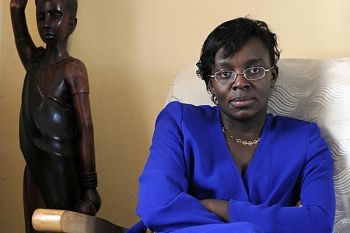
12 Weeks of Continued Isolation for Democracy Prisoner Victoire Ingabire

The government needs to stop its pressure and allow a proper, meticulous and thorough preparation of the defence for a lengthy political process.
Rwandan opposition leader Victoire Ingabire
Rwandan opposition leader Victoire Ingabire.
Photo courtesy: Christian Science Monitor

(KIGALI, Rwanda) - The political prisoner Victoire Ingabire, chair of FDU-Inkingi, is spending her 246th day in maximum security. For the 12th consecutive week she is refused any visits by party members.
A delegation of 11 colleagues was harshly turned back. All the leading political prisoners such as Bernard Ntaganda (Founding President of Parti Social Imberakuri), Deo Mushayidi (Chair of PDP Imanzi), Charles Ntakirutinka (Leader of PDR Ubuyanja), Dr. Theoneste Niyitegeka (presidential candidate in 2003) and Sylvère Mwizerwa (PS Imberakuri Permanent Secretary) are submitted to unrelenting cruel conditions.
The politically motivated trial of Madame Victoire Ingabire is resuming on 20th June 2011 despite new protest letters from her defence counsel who have not yet received all the pieces of the file.
The government needs to stop its pressure and allow a proper, meticulous and thorough preparation of the defence for a lengthy political process. No real trial start is possible before at least September 2011 as requested by the defence unless the government continues to push for a condemnation without hearings, cross-examinations, evidence challenge and calls for defence witnesses and subpoenas to foreign governments' leaders, UN experts, international companies and organisations.
The politically motivated detention aimed to destroy our party. It was well calculated as it took only four months to trigger an internal crisis within the party. Since then some groups of black-hearted dissidents have staged a hidden war against the imprisoned party leader and the interim Executive Committee based in Kigali under the leadership of Victoire Ingabire.
The internet invitations of party members to attend healing meetings on 18 and 25 June 2011 in Brussels to discuss Madame Ingabire's material support and the future of the party are just another distraction by the foes. The interim committee and the family of Madame Victoire Ingabire are not associated to any of those wild initiatives.
Nothing will deter our struggle for democracy and our dedication to her leadership.

FDU-INKINGI
Boniface Twagirimana
Interim Vice President

Rwanda 'misusing genocide law to curb dissent

From AFP Yahoonews
NAIROBI (AFP) – Amnesty International on Saturday called on Rwanda to stop using a law aimed preventing "genocide ideology" to stifle dissent and charge critics and journalists.
The London-based watchdog said it was "concerned that despite Rwanda?s recognition of the shortcomings of the genocide ideology law, the authorities continue to use it to prosecute government critics, including journalists."
"Abductions, enforced disappearances and incommunicado detention -- rare in Rwanda in recent years -- increased in 2010 as the authorities investigated a spate of grenade attacks," the statement said.
Earlier this month Amnesty asked Kigali to revise laws on "genocide ideology" and "divisionism".
In response, Justice Minister Tharcisse Karugarama said the legislation was aimed at avoiding a repetition of the 1994 genocide of the Tutsi, but that the laws were "undergoing revision".
Amnesty said on Saturday that it wanted Rwanda "to ensure that legislative changes are accompanied by prompt reviews of past cases -- including of opposition politicians and journalists convicted to lengthy prison sentences for merely expressing their opinions without advocating violence.
"Rwanda could demonstrate this commitment by re-opening investigations into the killing of journalist Jean-Leonard Rugambage on 24 June 2010," it said.
The group also called on Rwanda to respond "promptly" to communications from human rights organisations and family members regarding such cases