Africa Great Lakes Democracy Watch


Welcome to
Africa Great Lakes Democracy Watch Blog. Our objective is to promote the institutions of democracy,social justice,Human Rights,Peace, Freedom of Expression, and Respect to humanity in Rwanda,Uganda,DR Congo, Burundi,Sudan, Tanzania, Kenya,Ethiopia, and Somalia. We strongly believe that Africa will develop if only our presidents stop being rulers of men and become leaders of citizens. We support Breaking the Silence Campaign for DR Congo since we believe the democracy in Rwanda means peace in DRC. Follow this link to learn more about the origin of the war in both Rwanda and DR Congo:http://www.rwandadocumentsproject.net/gsdl/cgi-bin/library


Showing posts with label FDU-Ingabire Victoire. Show all posts

Thursday, June 16, 2011

Rwanda: Why sterilize the poor?

Rwanda’s economy is said to be doing well, so how does population size become a problem that requires dire, questionable voluntary vasectomies of the poor?

by Charles Kambanda, PhD
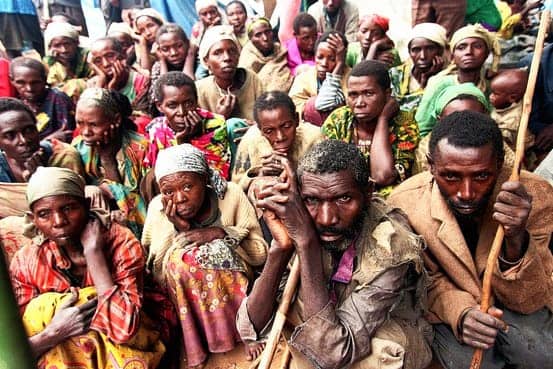

Poor Rwandans are targeted by the government’s call for voluntary vasectomies of 700,000 men who can’t support their children.
In controversy is the minister of health’s announcement of what the government of Rwanda calls voluntary vasectomies (sterilizing) of 700,000 males between 2011 and 2013. The target group is men who cannot pay bills for their children’s upkeep. The poor who make over 75 percent of Rwanda’s population are only uncertain of when their males will be sterilized. At issue is not whether the country needs sound family planning policy. Whether the political elite will stick to voluntary vasectomies is the main concern. Conceptualizing “voluntary” vasectomies in Rwanda’s contemporary public policy, history gloss and politics is utterly crucial.
The timing of sterilizing 700,000 males raises red flags. In Rwanda’s socio-political environment that swivels on passivity, apathy, suspicion and docile citizenry with militarized “civil society,” securing free will of the men to be sterilized borders on insanity.

Who are the poor?

The deprived are the Twa, a secluded ethnic group. The needy are the Hutu peasants who survived the Congo refugee camps’ massacres. The hard-up in Rwandan society are those few Tutsi survivors of genocide who have not benefited from the genocide survivors’ fund. The underprivileged are the Hutu populace that was uprooted from their land, without compensation, under the habitant and land reform government policy.
The poor are those Tutsi returnees who have no close relations in the Tutsi dominated government. The bitter fact is that poverty in Rwanda runs along the country’s ethnic divides. The poor are mostly victims of the country’s unresolved ethnic and power sharing crisis.
History is seldom a bad teacher. However, people are hardly good students of history. Rwanda’s post-independence history, not different from the country’s pre-independence era, insinuates a constant fight between the Hutu, the majority ethnic group making up about 86 percent of the population, and the Tutsi, the minority ethnic group making up about 14 percent. The Twa hardly make up 1 percent.
Growing or dropping in numbers of either ethnic group is an issue for each ethnic group’s political and physical survival. The Hutu-Tutsi co-existence failed on a win-win modus operandi. The victor seeks to depopulate the loser, or at least to delay the other ethnic group’s violent return to power.
War crimes, crimes against humanity and genocide have long been a “social engineering” and depopulation strategy geared at incapacitating the loser in the country’s power grabbing paradigm. In 1959 it was some Hutu’s turn to “depopulate” the Tutsi.
In the 1980s a Hutu-led government flocked the Tutsi to cannibals and crocodiles in the country’s national park, Akagera. Although scholars disagree on whether the 1994 genocide was committed by only the Hutu against the Tutsi, the scholars appear to concur that genocide was a strategy to “tame” the enemy’s unmanageable and unwanted population.
The brutal massacres of the Hutu refugees in Congo, which the United Nations’ Mapping Report accuses the Tutsi-dominated Rwandan troops of, could also be viewed from this perspective. With growing international enforcement of laws on war crimes, crimes against humanity and genocide, Rwandan society appears vulnerable to apparent legal methods of birth control like “voluntary” vasectomies to achieve the traditional ethnic depopulation conspiracy.
Sociologists, philosophers and psychologists have long discussed whether a poor person can make choices. Do the poor have free will? The Rwandan government does not appear uptight about this paradox. The poor, who cannot nourish their children, are said to be going for “voluntary” vasectomies. This is the proverbial hiding of the head in the sand.

If poverty is a criterion for vasectomies, free will cannot exist


This new policy forcefully encourages human beings to dispel with their primary animal instinct: reproduction. Image sourced at http://www.yorkmedicaltechnologies.co.uk
If the policy be voluntary, the 700,000-man target contradicts what the government of Rwanda calls voluntary vasectomies. Last year, 2010, the vice president of Rwanda’s parliament marketed, in vain, a policy proposal for compulsory sterilization of the “socially retarded” Rwandans. It took excessive efforts by international human rights organizations to thwart the policy proposal. The 2011 “voluntary” vasectomies policy may be a continuum of the 2010 policy proposal. Public policy analysts consent that current latent public policy ideas and motives of any country must be read in light of the similar previous policy. First, the government of Rwanda implemented the habitant and land reform policy. People were supposed to abandon their traditional homestead and go to live in settlement centers – imidugudu. The previous homesteads were meant to be for farming. Initially the government called it a voluntary policy.
Implementation of this policy turned out to be forceful and inhumane. Some government officials snatched victory from the jaws of defeat; they grabbed the land people had abandoned for settlement centers. Second, the government’s policy of what was called voluntary sharing of land between the Hutu owners and the Tutsi returnees ended in the forceful grabbing of land from the Hutu in many regions of the country. Will vasectomies of the unprivileged males be voluntary as the government suggests?
Self-propagation is a basic need and right. However, producing excessive children, as many Rwandans do, is a symptom of insecurity and poverty. There is a general demographic pattern for the well-off to produce between one to three children. The deprived generally produce more than six children. It is no surprise that in a country like Rwanda, where about 75 percent of the population survives on less that $1 a day, the population is increasing by 3 percent per annum. If quantity of the population be the problem, vasectomies are not a durable solution.

The first beneficiary of development is the human person

The quality of a country’s human resources and not the quantity is what matters. Investing in human development is the only sustainable solution. The Rwandan government has sustained one of the most expensive wars in Africa. It is well documented that Rwanda has one of the biggest and most heavily armed militaries in the Great Lakes region of Africa. Rwanda runs the most expensive presidential personal security unit in Africa.
Rwanda’s economy is said to be doing well. Ironically, money is available. How does quantity of the population become a problem that requires dire, questionable voluntary vasectomies?
Human history demonstrates habitual failure by some leaders to reconcile the existence of the poor in an environment that the political leadership project as prosperous. Adolf Hitler exterminated the gypsies alongside the Jews because the gypsies – the poor – would negate the economic prosperity of Germany. This is how seriously the world takes protection of the poor.

Crime against humanity

Rwandan American Law Professor Dr. Charles Kambanda
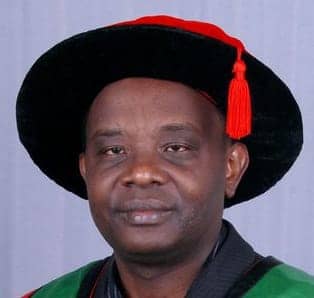

Denying people the right to self-propagation on the basis of their failure to meet costs for their children ought to be an issue of utmost concern for the international community. Targeting the poor with vasectomies is presumed forceful because the poor always lack free will. Vasectomy in this unique Rwandan context might amount to a crime against humanity. The essence and function of government is redistributing resources and power among the citizens. Vasectomy in a Rwandan context manifests government failure to perform its core functions and responsibilities. The policy mirrors incivility, lack of public conscience and negates the basic ethical tenets.
Dr. Charles Kambanda, Dip.Phil., BA, LLB, MA ETPM, MBA, MA HRTs, LLM, PhD, teaches at St. John’s University Law School, LLM Center, New York, and previously lectured at the National University of Rwanda, where, according to the Rwanda News Service, he was known for his outspoken nature. This story first appeared on The Proxy Lake: Views and News on the African Great Lakes Region.
Enhanced by Zemanta

Annual Report: Rwanda 2011

From Amnesty International
Head of state and government: Paul Kagame and Bernard Makuza
Death penalty: abolitionist for all crimes
Population: 10.3 million
Life expectancy: 51.1 years
Under-5 mortality (m/f): 167/143 per 1,000
Adult literacy: 70.3 per cent
The authorities restricted freedom of expression and association before presidential elections in August. Media outlets that criticized the government were closed down and editors fled Rwanda. Human rights defenders faced intimidation. Investigations into killings were inadequate. High-ranking military officers were detained without trial. Some improvements in the justice system were offset by laws criminalizing dissent. No country extradited genocide suspects to Rwanda.

Background

A clampdown on freedom of expression and association before August’s presidential elections prevented new opposition parties from fielding candidates. President Paul Kagame was re-elected with 93 per cent of the vote.
Growing splits emerged within the ruling party, the Rwandan Patriotic Front (RPF). The former head of the army, Faustin Kayumba Nyamwasa, fled to South Africa. Some senior military officers were arrested and held incommunicado. Others fled to neighbouring countries.
Tension grew between the government and supporters of Laurent Nkunda, the former leader of the Congolese armed group the National Congress for the Defence of the People (CNDP). Arrested in January 2009, he remained under house arrest in Rwanda without charge or trial.
Grenade attacks in Rwanda’s capital, Kigali, led to heightened security concerns.
Rwanda’s hostile response to a UN mapping report on human rights violations in the Democratic Republic of Congo (DRC) between 1993 and 2003 drew attention to impunity for past abuses by the Rwandan Patriotic Army.
International donors grew increasingly concerned about the deteriorating human rights situation. The EU, France, Spain, the UN and the USA publicly expressed concern before the elections.

Freedom of expression

Freedom of expression was further restricted. The RPF became increasingly sensitive to criticism in advance of the presidential elections. Laws on ‘genocide ideology’ and ‘sectarianism’
The authorities continued to misuse broad and ill-defined laws on "genocide ideology" and "sectarianism". The laws prohibit hate speech, but also criminalize legitimate criticism of the government.
In April, the government announced a review of the "genocide ideology" law, and indicated that the "sectarianism" law might also be reviewed. However, the government continued to use these laws and the timeframe for review remained unclear.
  • Bernard Ntaganda, the leader of an opposition party, PS-Imberakuri, was arrested in June and remained in detention in December. Charges against him included inciting ethnic division in relation to statements criticizing government policies.
  • Victoire Ingabire, the leader of FDU-Inkingi, an opposition party seeking registration, was arrested in April and rearrested in October. Charges against her included "genocide ideology" and were based, in part, on her public call for the prosecution of RPF war crimes.

Journalists

The government used regulatory sanctions, restrictive laws and criminal defamation cases to close down media outlets critical of the government. In July, the government began to enforce certain aspects of a 2009 media law which maintains defamation as a criminal offence. Some leading editors and journalists fled the country after facing threats and harassment.
  • The Rwandan Media High Council (MHC), a regulatory body close to the ruling party, suspended two private Kinyarwanda newspapers, Umuseso and Umuvugizi, from April to October. The MHC alleged that the newspapers had insulted the President and caused trouble in the army.
  • Jean-Léonard Rugambage, a journalist working for Umuvugizi, was shot dead on 24 June outside his home in Kigali. He had been investigating the shooting in South Africa of Kayumba Nyamwasa, and his newspaper published a story alleging that Rwandan intelligence was involved. In October, two men were convicted of Jean-Léonard Rugambage’s murder and sentenced to life imprisonment. The convicted men claimed that Jean-Léonard Rugambage had killed a member of one of their families during the 1994 genocide, although he had previously been acquitted in gacaca proceedings.
  • Jean-Bosco Gasasira, editor of Umuvugizi and Didas Gasana, editor of Umuseso, fled Rwanda in April and May respectively after receiving threats.
Human rights defenders
Human rights defenders faced renewed threats, including from government representatives. They self-censored their work to avoid confrontation with the authorities.
The government expelled a staff member of Human Rights Watch from Rwanda. Other international NGOs reported increased constraints on their work. International human rights groups, including Amnesty International, were attacked in speeches by senior government officials.
A Rwandan government representative criticized Rwandan human rights organizations at the African Commission on Human and Peoples’ Rights in May.

Freedom of association

Restrictions on freedom of association prevented new opposition parties from contesting the elections. FDU-Inkingi and the Democratic Green Party were unable to obtain security clearance to organize meetings needed for their registration. The only new party to secure registration, PS-Imberakuri, was infiltrated by dissident members and decided not to stand.
Opposition politicians were harassed and threatened. Investigations into threats were cursory and did not lead to prosecutions.

Prisoner of conscience

Charles Ntakirutinka, a former government minister, remained in Kigali Central Prison, serving a 10-year sentence due to end in 2012. He had been convicted, in an unfair trial, of inciting civil disobedience and association with criminal elements.

Justice system

Witness protection staff received training and kept better records. Concerns remained about the willingness of witnesses to testify, given restrictions on freedom of expression through laws on "genocide ideology" and "sectarianism".
In October, Rwanda promulgated a law on "life imprisonment with special provisions", the sentence which replaced the death penalty. The law requires prisoners to be kept in individual cells for up to 20 years, which could constitute prolonged solitary confinement for those whose family members are unwilling or unable to visit. Such prisoners would only have the right to communicate with a lawyer in the presence of a prison guard, violating their defence rights during appeal hearings and possibly preventing prisoners from reporting abuse. The sentence was not applied due to a lack of individual cells.
Prison overcrowding continued to be a problem.
The deadline to complete gacaca trials of genocide cases was postponed indefinitely in September.

Enforced disappearances

At least four individuals disappeared between March and May. Some were close to Laurent Nkunda’s wing of the CNDP or had past links to armed groups in the DRC. Their whereabouts remained unknown at the end of the year. At least one of these individuals, Robert Ndengeye Urayeneza, was believed to have been subjected to enforced disappearance and detained in Rwandan military custody.

Ill-treatment by police

Some members of PS-Imberakuri and FDU-Inkingi arrested in June and July were ill-treated by the police. They were beaten and were handcuffed to other prisoners, including while going to the toilet.

Military justice

Several high-ranking military officials were arrested and detained without charge. They were denied access to legal counsel and held under house arrest or incommunicado in military detention for several months.
  • Lt. Col. Rugigana Ngabo, the younger brother of Kayumba Nyamwasa, was arrested in August on allegations of destabilizing national security. He was held incommunicado without charge.

International justice

International Criminal Tribunal for Rwanda
The mandate of the International Criminal Tribunal for Rwanda (ICTR) was extended until the end of 2011 for first-instance trials and to the end of 2012 for appeals. Ten suspects subject to arrest warrants by the ICTR remained at large. The ICTR Prosecutor made new applications in November to transfer cases to Rwanda. Past applications failed after Trial Chambers decided that the accused would not receive fair trials.
Universal jurisdiction – genocide suspects living abroad
Judicial proceedings against genocide suspects took place in Belgium, Finland, Netherlands, Spain, Switzerland, and the USA. Sweden consented to extradition in 2009, but the case has yet to be decided before the European Court of Human Rights. No country extradited genocide suspects to Rwanda due to fair trial concerns.
International Criminal Court
The Rwandan executive secretary of the Democratic Forces for the Liberation of Rwanda (FDLR), Callixte Mbarushimana, was arrested in October in France after an arrest warrant was issued by the International Criminal Court (ICC) for war crimes and crimes against humanity committed in eastern DRC in 2009. France had granted him refugee status in 2003 and French prosecuting authorities had declined to open criminal investigations into earlier allegations of his involvement in the Rwandan genocide. In November, his surrender to the ICC was ordered by the Paris Appeal Court.
Impunity for war crimes and crimes against humanity
  • A Spanish judge requested the extradition of Kayumba Nyamwasa from South Africa, where he fled from Rwanda in February. He was indicted by Spain in 2008 on charges of war crimes and crimes against humanity committed in 1994, as well as the murder of three Spanish aid workers in 1997 in Rwanda. Rwanda also requested his extradition on charges of threatening state security. South Africa had not acted on either request by the end of the year.
  • French magistrates conducted investigations in Rwanda in September into the shooting down of the plane in April 1994 which killed Rwandan President Juvénal Habyarimana and sparked the genocide. It was the first time that French magistrates had visited Rwanda as part of their investigations. French judges dropped international arrest warrants issued in November 2006 against nine senior RPF members for shooting down the plane, in which French nationals were also killed, and instead placed some of these individuals under investigation.
Failure to investigate and prosecute killings
Rwandan authorities failed to adequately investigate and prosecute killings before the elections.
  • André Kagwa Rwisereka, Vice President of the opposition Democratic Green Party, was found dead in Butare on 14 July. André Rwisereka, who left the RPF to create the Democratic Green Party, had been concerned for his security in the weeks before his murder. The police opened investigations, but the prosecution claimed to have insufficient evidence to press charges.
  • Denis Ntare Semadwinga was stabbed to death at his home in Gisenyi on 20 June. Before his murder, he had been questioned by Rwandan security services about his relationship with Laurent Nkunda
Enhanced by Zemanta

Sunday, June 12, 2011

Man who inspired ‘Hotel Rwanda’ protests visit by nation’s leader

Story Image
Rwandan humanitarian Paul Rusesabagina participates in a protest outside the Hyatt Regency at 151 E. Wacker where Rwandan president Kagame is stayi
Tom Cruze~Sun-Times
By DARRYL HOLLIDAY Staff Reporter dholliday@suntimes.com
The man who inspired the award-winning film “Hotel Rwanda” led local Rwandans and others in a protest Saturday of Rwandan President Paul Kagame’s visit to Chicago for a conference. 
More than 100 Rwandan, Congolese and American protesters gathered at the Hyatt Regency Chicago to voice their anger over human rights violations committed by Kagame, including the killing of tens of thousands of Rwandans since he came to power in 1994 after the Rwandan genocide, according to a 2010 United Nations war crimes report. Leading the protest was Paul Rusesabagina, whose brave actions during the genocide were the basis for the movie “Hotel Rwanda.”
Though Kagame is given much of the credit for stopping the genocide, reports from the UN, Amnesty International and Human Rights Watch have all detailed violent abuses in the years during his regime.
“In Rwanda we say that the dancers have changed, but the music is the same,” Rusesabagina said. “I’m very much worried as I was [in the lead up to the 1994 genocide] because nothing has changed.”
Rusesabinga is well-known for his actions during the genocide when he saved 1,268 Rwandans from death by hiding them in the hotel that he was managing.
He has since made the transition from hotelier to activist.
“Today we have all gathered to tell the world that a dictator who has shed blood in Africa is now visiting the homeland of President Obama,” Rusesabagina said. “We preach equal rights and then reconciliation.”
According to many of the protestors, the event was held to raise awareness among Americans, and Chicagoans in particular, of the ongoing struggles facing the Congo and Rwanda. They said Kagame’s presence in the United States is an effort to legitimize his actions, which, according to United Nations Security Council, include driving a deadly proxy war for Congolese minerals.
Congolese protestors also denounced the rapes of more than 400,000 female soldiers from 2006 to 2007, as detailed in a report in the American Journal of Public Health, that they say were committed by Kagame’s troops with impunity.
“This is not a political party, this is a civil society,” said Patrick Ntula, 38, a Congolese-born resident of Chicago. “These are people expressing themselves to say enough is enough.”
Meanwhile, a counter-protest took place across the street as attendees of the Rwanda Day conference that Kagame attended came out to defend their president.
Rwandan, but separated by allegiance, the two groups echoed a plea for unity while disagreeing over fundamentals.
“I support Rwandans,” said 34-year-old Francis T., a Rwandan businessman, “But this protest is nonsense.”
© 2011 Sun-Times Media, LLC. All rights reserved. This material may not be copied or distributed without permission. For more information about reprints and permissions, visit www.suntimesreprints.com. To order a reprint of this article, click here.
Enhanced by Zemanta

Friday, June 10, 2011

Rwanda: Amnesty International Calls for Review of Genocide Ideology Law, Media Law

(Jun. 09, 2011) On June 3, 2011, Amnesty International (AI) issued a report titled Unsafe to Speak Out: Restrictions on Freedom of Expression in Rwanda, in which it criticizes the use of that country's 2008 genocide ideology law and 2009 media law to stifle legitimate criticism and calls upon the Rwandan government to fast track the review process of these laws so that they are in line with Rwanda's obligations under international law. (AI, Unsafe to Speak Out: Restrictions on Freedom of Expression in Rwanda (June 2011).)
One of the main problems with the laws is the abstract nature of their provisions, whose meaning is indiscernible even to experts, according to AI. For instance, the genocide ideology law defines the crime of "genocide ideology" as follows:
an aggregate of thoughts characterized by conduct, speeches, documents and other acts aiming at exterminating or inciting others to exterminate people basing [sic] on ethnic group, origin, nationality, region, color, physical appearance, sex, language, religion or political opinion, committed in normal periods or during war. (Law Relating to the Punishment of the Crime of Genocide Ideology, No. 2 of 2008 (July 23, 2008), art. 2, Ministry of Justice of Rwanda website.)
The law lays out a list of acts through which the crime may be manifested, including "marginalizing, laughing at one's misfortune, defaming, mocking, and boasting." (Id. art. 3.) A survey by AI found that even judges, attorneys, and human rights workers could not provide any concrete understanding of the definition and that these experts acknowledged the "broad and abstract" nature of the provision. (AI, supra.)
The Rwandan government's stance on the matter has been contradictory at best. On the one hand, it recognized the shortcomings of the laws and in 2010 initiated a review of the genocide ideology law, for the process of which it had invited the participation of international human rights advocacy groups including Human Rights Watch and AI. (Constance Johnson, Rwanda: Genocide Ideology Law Being Reviewed, GLOBAL LEGAL MONITOR (Aug. 20, 2010).) The government had also given indications that the review process would include the media law, which is said to have been used as a tool to stifle media outlets critical of the government in the months leading up to the 2010 presidential elections. (AI, supra.)
On the other hand, in its response to the recent AI report, the government claims that freedom of expression is guaranteed under the Rwandan Constitution and that Rwanda has "a vibrant and growing media community and varied political discourse." This seems to suggest that the government no longer recognizes the shortcomings of the two laws. (Kezio-Musoke David, Amnesty Urges Rwanda to Finish Genocide Law Review, REUTERS (June 3, 2011).)

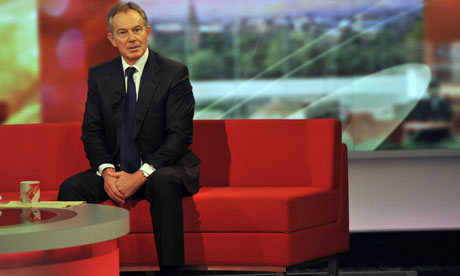
The journey's over, Tony Blair Tony Blair supports the Arab spring and wants to heal Africa. Laudable aims but breathtaking hypocrisy

  • The Guardian,
  • Tony Blair
    Tony Blair appears on the BBC Breakfast Show. Photograph: Ho/Reuters
    Switching on the Today programme yesterday, it was like an unwelcome blast from the past. There was Tony Blair, that familiar mixture of evangelical fervour and earnest sincerity, putting the world to rights with his views on the coalition, Europe and events in the Middle East. Money, of course, lay behind his appearance on the show, since he was promoting the paperback edition of his biography. Just as money lay behind his decision to take free holidays at the expense of the Egyptian people while in power, ignoring complaints from families of those being tortured in the country's notorious jails. At least he supported his old friend Hosni Mubarak after Egyptians risked their lives by rising up to shake off the shackles of despotism. As blood began to run in the streets during the tense standoff in Tahrir Square, Blair hailed Mubarak as "immensely courageous and a force for good". But what breathtaking hypocrisy to place himself in the vanguard of the movement for change in the region, diminishing the Arab spring to a struggle between modernisers and reactionaries and saying the Gulf states must change or lose our support. This is the man, after all, who earned a seven-figure sum advising the Kuwaiti royal family, and rakes in a fortune giving speeches in the region. Just recall, if you can bear to, how he cosied up to the Libyan leader he now wants to see overthrown, going far beyond what was needed to bring the maverick Muammar Gaddafi in from the cold as he brokered oil deals and oversaw prisoner transfer agreements that led to the release of the Lockerbie bomber. Little wonder the dictator's son saw him as "a personal family friend". Even worse was Blair's appeasement of the Saudi royal family in perhaps the most disgraceful episode of his time in office, when his pressure led to the halting of the landmark BAE bribery case. This was an incident that demeaned our country, usurping Britain's legal process to avoid upsetting a repressive and – to use his own words – reactionary regime. Indeed, it is hard to think of a more reactionary regime. Saudi Arabia is the country currently stopping women from driving cars, and is supplying the troops who crushed the protests in Bahrain with such brutality. It has used oil wealth to export a particularly hardline and corrosive creed around the globe, one that rather flies in the face of our former prime minister's sanctimonious statements on faith and harmony. The BAE move sent a signal round the world that Britain turned a blind eye to allegations of corruption, ensuring autocrats could feel safe laundering their stolen money here with the help of pin-striped pimps in our finance houses, law firms and estate agencies. Large-scale larceny by the likes of Mubarak, Gaddafi and the Assad family in Syria was one of the primary sparks for the explosion of protest – and all had substantial holdings in Britain. Shameless corruption is one of the primary causes of poor governance across Africa. Now Blair proclaims it as part of his mission to heal the continent he once called "a scar on the conscience of the world". This does not, however, stop him advising the president of Rwanda who heads a regime accused of atrocities in its invasions of the Congo, growing despotism at home, and sending hit squads to murder exiles living in Britain. After last year's sham election, during which rivals were jailed, newspapers shut down and dissidents shot, Blair sent the president a smarmy message of congratulations hailing his "popular mandate" after Paul Kagame won 93% of the vote. Now he has the effrontery to speak about the importance of freedom of expression in north Africa. You can almost admire the brazen way Blair ploughs on, ignoring his past and brushing aside uncomfortable facts as he seeks to play a part in shaping the future. But then you remember how he backed an ethical foreign policy before ending up an apologist for torture. And you recall how he promulgated the need for a moral dimension to statecraft before embarking on a war of doubtful legality. Yesterday, the man whose lack of foresight played such a key role in strengthening the hand of Iran did a round of interviews demanding a clear western strategy in response to the Arab spring. As well as promoting his book, it is part of a desperate bid to promote himself as a future elected president of Europe. Someone should tell him the journey's over.
Enhanced by Zemanta

Rwanda days in Chicago / Local budget as per Ambawashington and AmbaOttawa suggestions

Look, how RPF is wasting millions and millions for Kagame's trading in USA, while Students in Rwandese Universities do no longer get the scholarship!
 
 
To : Minister Louise Mushikiwabo, Ambassador James Kimonyo,   Mbaine, Ambassador Mukabagwiza Edda,Senator Munyabagisha,  Justine Niyibizi Mbbabazi,Gahamanyi Parfait
 
I hope this finds you well, As promised in yesterdays update, Please find attached, the Program for the event, budget (see below)for mobilization team, and proposed budget for transport and accomodation.
 
We have made head way, and are in the process of securing the Venue, Amba. Kimonyo is on his way from Chicago, and we will be comunicating this to you in our update tomorrow.
 
We had another meeting today with Sanotor Munyabagisha and although the attachment offers a detailed information, Here is a summery of our discussion and the areas we addresed. 
 
On the mobilization,(people form different states)  we continue to strategize on the best scenarios that would help us best draw in the largest number of participants, The scenario highlighted as number six is our recomendation,( sorounding Chicago-also refered to as Zone 1) 
 
Another area under mobilization is for theThe embassy team of 8 people who are going to mobilize people in the different states. three groups came up for consideration in our resouce allocation, 
 
1)Others delegates on ground, we need to provide them air tickets and hosting meetings.
 
2)      27we have 27 individuals as our go to people also refered to to as, Focal points. There is a needt to facilitate transport and allowances.
 
3)      10also Identified are  Delegates from Kigali who will need facilitation(communication and hosting meetings) we culculated this in terms of groups and believe that $ 500 is enough to cover this making a total of $ 1,000 for communication.
Another area we looked at was setting up structure of command that will over see different section of the event,for example event managers,security, protocal etc. We suggested each have 3 people, one from the Embassy, other form the diaspora and the third one from Kigali, We request that the all concerned parties start planning on who will be allocated to the specific area and that they meet on sunday 15th to confirm the choices.
We also brainstormed on the invitation and who to be invited, the Embassy has already sent out some invitations, we suggested that these invitations be followed by an E-invite and posiibly a phone call from Amba. Kimonyo. We also highlighted inviting Chicago's top Officials.
Currently, there are Approximately 80-90 students from Arkansas consortium group who have confirmed attendence with transportation and accomodation provided by university. The final list will be available by 16th May.

The University of Oklahoma is sponsering30 students and they will provide a van for transportation. we are waiting to find out if they will help them with accomodation as well. There are 10 Oklahoma students who will be in GE for internship , they will attend but would like discounts on accomodation.
 4 students from William penn university will attend they can drive but will let us know by end of this week if the university will assist them.We have 6 private students from BVU in IOWA who would love to attend if they are facilitated. About 29 students from CBU are espected to attend but they will need facilitation which i will be able to determine by Friday. We are expecting  these numbers to increase if facilitation is provided.
Lastly, In our mobilization process, senator Munyabagisha, has reached out to  one of the focal point intending to mobilize more than 500 people,we will updating you on the out come of his communication with him tonight.,Kayinamura of RINA is preparing a package that will also  help in the mobilization process. 
We look forward to your comments and suggestions.
Kind regards

 
Catherine Rwivanga Mubangizi
Cell: 443-955-1742
Email:
cathy.rwivanga@rwandaday.org
 
  
Enhanced by Zemanta

RWANDA:PEACEFUL PROTEST AGAINST KAGAME IN CHICAGO

Peaceful Protest Against Kagame in Chicago


Rwandan, Africans and Americans to protest presence of Pres. Kagame of Rwanda; a war criminal & corrupt dictator
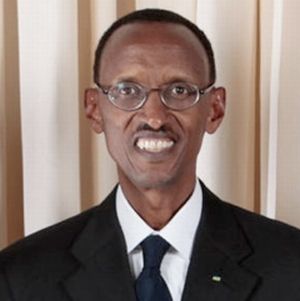
President Paul Kagame

(CHICAGO) - Rwandans will be joined by hundreds of other Africans and American citizens to protest the presence of President Kagame of Rwanda, war criminal and corrupt dictator, in Chicago on June 11, 2011.
President Kagame is responsible for millions of deaths of Rwandans and Congolese citizens, in what the United Nations Human Rights Commission, in its report of 1 October, 2010, described as war crimes, crimes against humanity and even possible acts of genocide.
Human Rights Watch published a report on May 31, 2011, that says in Rwanda justice has been compromised, and that flaws in trials have lead to miscarriages of justice. Amnesty International, in its June 3, 2011, report, says "freedom of expression in Rwanda has been unduly restricted for many years. The months leading up to the August 2010 presidential elections were marked by a clampdown on freedom of expression, which still shows no sign of abating"
President Kagame is in crisis, as he drives the country that has suffered genocide, war crimes and crimes against humanity further into the direction of civil war and more bloodshed. Currently he has jailed political opposition leaders, closed political space, banned independent media, and pursues Rwandans abroad to assassinate them. London Police in the United Kingdom on May 12, 2011, warned Rwandans that "reliable intelligence states that the Rwandan government poses an imminent threat to your life" . The same threat has now been exported to Chicago in the United States, Canada, Europe, Africa and wherever Rwandans reside. The United States and United Kingdom governments have been, and remain, leading supporters of the current Rwanda Government, but are beginning to have second thoughts.
Rwandans, Congolese , Burundians, other Africans and their American friends will be protesting in Chicago on June 11, 2011, 10 am-6 pm, to call for an immediate end to President Kagame's war crimes and impunity, and asking the international community to bring him to account for the crimes he has committed. The protesters will also be asking the international community, especially the United States and the United Kingdom, to support Rwandans searching for the permanent resolution to the current Rwandan refugee crisis; an end to chronic violent conflict and prevention of more bloodshed in Rwanda and the Great Lakes region of east and central Africa; support for human rights protection, dialogue, freedom, equal justice, democracy, and equitable prosperity; and, reconciliation and healing among many millions of Rwandans and their neighbors who have been subjected to untold suffering for so long.
_____________________________________
Theogene Rudasingwa, M.D., serves as vice-president for Global Affairs and Programs of Pangaea Global AIDS Foundation. Prior to coming to the United States, Dr. Rudasingwa was chief of staff for the Office of the President of the Republic of Rwanda (2000-04). During this time he worked closely with the head of state, the prime minister and cabinet ministers to develop and implement a strategic vision and direction for Rwanda and its people. Rudasingwa was a key player in establishing relationships with top U.S. and other international stakeholders to develop Rwanda’s strategy and effectively position the country within the competitive global marketplace.
Enhanced by Zemanta

Thursday, June 9, 2011

RWANDA:Memorandum to the Presidency of the European Union

2010 was an important year in the Great Lakes region because of the elections which took place. The  Burundian elections which confirmed President Nkurunziza in power also resulted, unfortunately, in the opposition being no longer represented in any of the institutions. The DRC celebrated its 50th  independence anniversary. The Head of State used this anniversary as a platform to launch his campaign for re-election, which he seeks to organise in as closely controlled a political environment as possible.

In Rwanda President Kagame’s re-election took some unexpected turns. The elections, expected  to  be  a  mere  formality,  were  marked  by  the  emergence  of  a  genuinely independent opposition and above all by the fact that individuals who had for long been part of the presidents inner circle of power turned against the President. Members of the international community, while recognising that the elections were  peaceful and well organised,  nonetheless  expressed  their  concerns  about  the  run-up  to  the  elections, particularly the  attacks  on  opponents and  the  restriction of  political  freedoms1. The Rwandan authorities, not being accustomed to truly competitive elections, tried to stifle any divergent  opinion.           Furthermore, from March 2010 onwards it appeared that the extreme nervousness shown by the Rwandan Patriotic Front (RPF) regime was due not so much to the existence of opposition parties as to the emerging rifts within the inner circle of power in Rwanda. General Kayumbas escape into exile provided a focal point around which various types of discontent could crystallize.

This situation raises the stakes with regard to regional stability beyond Rwanda, given this countrys central role in the African Great Lakes region. Lasting stability in Rwanda and good relations between  Rwanda and its neighbours are an essential condition for central Africa to break the cycle of violence  it has experienced over recent decades. However, the tragic events in Rwanda 16 years ago remain in everyones consciousness to such an extent that it has become difficult to form an analysis or express a point of view about Rwanda dispassionately, without emotion and without attracting accusations of partiality. The shock of the genocide and the guilt so widely felt have in some ways given rise to the continued lack of consensus about Rwanda on the international scene.

The destabilising potential of the internal divisions within the RPF

The emerging internal divisions and power struggle among members of the RPF political and military élite are a cause of growing concern for Rwanda’s internal stability, and that of the wider Great Lakes region.

1  See for example the statement made by the British Foreign Office http://www.fco.gov.uk/en/news/latest- news/?view=News&id=22695654