Africa Great Lakes Democracy Watch


Welcome to
Africa Great Lakes Democracy Watch Blog. Our objective is to promote the institutions of democracy,social justice,Human Rights,Peace, Freedom of Expression, and Respect to humanity in Rwanda,Uganda,DR Congo, Burundi,Sudan, Tanzania, Kenya,Ethiopia, and Somalia. We strongly believe that Africa will develop if only our presidents stop being rulers of men and become leaders of citizens. We support Breaking the Silence Campaign for DR Congo since we believe the democracy in Rwanda means peace in DRC. Follow this link to learn more about the origin of the war in both Rwanda and DR Congo:http://www.rwandadocumentsproject.net/gsdl/cgi-bin/library


Showing posts with label HYATT REGENCY HOTEL PAUL KAGAME. Show all posts

Wednesday, June 29, 2011

RWANDA:shooting of Rwandan exiled in South Africa


By Associated Press from Washington Post

Paul Kagame and RPF Soldiers
JOHANNESBURG — One of the men accused of trying to kill a former Rwandan general exiled in South Africa said that Rwandan soldiers with plenty of cash and cars were behind the plot, a friend testified Wednesday.
The testimony came on the second day of trial in the June 2010 shooting of Lt. Gen. Faustin Kayumba Nyamwasa. The former Rwandan military chief went into exile just months before he was attacked in Johannesburg.

Rwandan President Paul Kagame’s government has denied allegations of involvement in the case. However, witnesses in the trial have asked for special protection, saying they fear the Rwandan government.
Kalisa Mubarak, a 36-year-old Rwandan who immigrated to South Africa in 2003, testified Wednesday that he has known one of the six suspects since they were children.
He said that former Rwandan soldier Amani Uriwani told him about being recruited by some European-based Rwandans to help with a job in Johannesburg.
Mubarak said his friend would only say the target was also a soldier, and he tried to talk Uriwani out of taking part. Uriwani was offered 10,000 rand (about $1,400) for his part in the attack, according to his friend’s testimony.
Prosecutors say Mubarak has been moved with his wife and three children to a secret location under a witness protection program.
Two body guards sat nearby as he testified in English and Kinyarwanda. He wore dark glasses and sat in the witness stand with his chin sunk in a black-and-white checked scarf draped around his neck.
Three Rwandans and three Tanzanians are accused of attempted murder, conspiracy to commit murder and other charges in Nyamwasa’s shooting.
Nyamwasa and other Rwandans living abroad have accused the president of crushing dissent and democracy after he helped to end the 1994 genocide that left more than 500,000 people dead in Rwanda.
In May, British police warned some Rwandan exiles living in the U.K. that their lives were in danger, and the threat is believed to have emanated from the Rwandan government.
Human rights groups say opposition politicians, journalists and civil society activists have been subjected to crackdowns inside Rwanda as well.
The key suspect in the South Africa case is Pascal Kanyandekwe, a Rwandan businessman. He’s also accused of plotting to kill Nyamwasa while the general was hospitalized after the shooting.
Kanyandekwe and four men not linked to the shooting are to stand trial in the hospital plot later this month. He also is accused of bribery after two police officers said he offered them $1 million to let him go when they arrested him in July 2010.
The shooting victim, who has kept a low profile since the June 2010 attack, also faces international war crimes charges linked to the aftermath of the Rwandan genocide — allegations he denies.
Nyamwasa and other senior Tutsis are accused of waging an extermination campaign against Hutus in the chaotic aftermath of Rwanda’s genocide — charges that Nyamwasa denies.
A Spanish judge in 2008 charged Nyamwasa and 39 other members of the Rwandan military with the mass killings of civilians after they seized power in Rwanda.
A U.N. report last year echoed the 2008 Spanish charges, accusing invading Rwandan troops of killing tens of thousands of Hutus in 1996 and 1997 in neighboring Congo.
Copyright 2011 The Associated Press. All rights reserved. This material may not be published, broadcast, rewritten or redistributed.

Tuesday, June 28, 2011

Trial starts in shooting of Rwandan in S.Africa

First a gunman shot the exiled Rwandan army general. When he survived, prosecutors say the people who wanted him dead plotted to strangle him in his South African hospital bed.
Prosecutors won't say whether they believe Rwandan President Paul Kagame's government was behind the attack carried out in another corner of the continent.
But on Tuesday as the trial began, prosecutors disclosed that key witnesses are now under special protection in South Africa because they fear the Rwandan government.
Rwandan authorities have angrily denied the allegations of involvement in the June 2010 attack on Lt. Gen. Faustin Kayumba Nyamwasa, and have even hired a South African lawyer to monitor the court proceedings this week in Johannesburg.
"The government of Rwanda doesn't have anything to hide. They're not involved in this," their lawyer Gerhard van der Merwe told The Associated Press.
Prosecutor Shaun Abrahams refused to say Tuesday whether his case would implicate the Rwandan government. He said the evidence will speak for itself during the complex trial, which is being conducted in English and translated into three other languages: French, Swahili and Kinyarwanda.
The shooting victim, who has kept a low profile since the June 2010 attack, also faces international war crimes charges linked to the aftermath of the Rwandan genocide — allegations he denies.
Nyamwasa was once Rwanda's military chief before he fell out with the president and went into exile in South Africa last year. He and several other top Kagame aides have since been convicted in absentia on charges that include threatening state security.
Now three Rwandans and three Tanzanians are accused of attempted murder, conspiracy to commit murder and other charges in Nyamwasa's shooting in South Africa. They each pleaded not guilty to the charges Tuesday.
Nyamwasa and other Rwandans living abroad have accused the president of crushing dissent and democracy after he helped to end the 1994 genocide that left more than 500,000 people dead in Rwanda.
In May, British police warned some Rwandan exiles living in the UK that their lives were in danger, and the threat is believed to have emanated from the Rwandan government.
Human rights activists also charged last year that Rwanda's Tutsi-led government was pursuing Hutus in neighboring Uganda. Rwanda's government denied involvement in a series of attacks on Hutu Rwandans in Uganda.
Human rights groups say opposition politicians, journalists and civil society activists have been subjected to crackdowns inside Rwanda as well. Earlier this year, in a case Human Rights Watch said was politically motivated,
Rwanda's High Court sentenced an opposition leader to four years in prison on charges of endangering national security, attempting to organize unauthorized protests and inciting ethnic divisions.
The key suspect in the South Africa case is Pascal Kanyandekwe, a Rwandan businessman. He's also accused of plotting to kill Nyamwasa while the general was hospitalized after the shooting.
Kanyandekwe and four men not linked to the shooting are to stand trial in the hospital plot later this month. He also is accused of bribery after two police officers said he offered them $1 million to let him go when they arrested him in July 2010.
The other two Rwandans accused in the case are Nyamwasa's driver and a former Rwandan soldier, according to prosecutors.
While Nyamwasa portrays himself as a champion of democracy and is a victim in the trial that opened Tuesday, he also faces serious criminal charges.
He and other senior Tutsis are accused of waging an extermination campaign against Hutus in the chaotic aftermath of Rwanda's genocide — charges that Nyamwasa denies.

A Spanish judge in 2008 charged Nyamwasa and 39 other members of the Rwandan military with the mass killings of civilians after they seized power in Rwanda.
A U.N. report last year echoed the 2008 Spanish charges, accusing invading Rwandan troops of killing tens of thousands of Hutus in 1996 and 1997 in neighboring Congo.
South African refugee and human rights groups have gone to court to try to have Nyamwasa's asylum status stripped because of the allegations.
In a lawsuit filed earlier this month, the groups acknowledge it might not be safe for Nyamwasa to return to Rwanda and instead proposed that he be tried in South Africa.
Copyright 2011 The Associated Press. All rights reserved. This material may not be published, broadcast, rewritten or redistributed.

Kagame's critics keep eye on SA trial

Johannesburg - Critics of Rwandan President Paul Kagame will be watching an attempted murder trial that started on Tuesday in South Africa for evidence the east African leader tried to have a former general killed.

Three Rwandans and three Tanzanians are accused of attempted murder, conspiracy to commit murder and other charges in the June 2010 shooting of Lieutenant General Faustin Kayumba Nyamwasa, once Kagame's military chief.

They each pleaded not guilty on Tuesday at the start of a trial that required French, Swahili and Kinyarwanda translation, and that drew an observer for the Rwandan embassy and family members for the accused and the victim.

Since the Kagame and Nyamwasa fell out and the former general left for exile in South Africa last year, Nyamwasa has joined other Rwandans living abroad in accusing Kagame of crushing dissent and democracy after helping to end the 1994 genocide during which extremist Hutus killed more than 500 000 Tutsis and moderate Hutus in Rwanda.

Rwanda-South Africa relations strained

Rwandan dissidents accuse Kagame's government of being behind the attack on Nyamwasa, charges that it has angrily denied.

The case has strained Rwandan-South African relations, but officials here have refused to say whether they believe Nyamwasa was the target of an official assassination attempt.

Evidence on that point might form part of the trial.

Suspicions have fallen on Kagame's government elsewhere. It emerged in May that British police had warned some Rwandan exiles living in Britain that their lives were in danger, and the threat is believed to have emanated from the Rwandan government.

In Rwanda, human rights groups say opposition politicians, journalists and civil society activists have been subjected to crackdowns.

Suspect in suit and tie

Earlier this year, in a case Human Rights Watch said was politically motivated, Rwanda's High Court sentenced an opposition leader to four years in prison and fined three others opposition figures convicted of endangering national security, attempting to organise unauthorised protests and inciting ethnic divisions.

In the Nyamwasa case, the key suspect is Pascal Kanyandekwe, a Rwandan businessman and the only suspect to appear on Tuesday in a suit and tie.

In addition to charges stemming from the shooting, Kanyandekwe is accused of plotting to kill Nyamwasa while the general was hospitalised after the shooting.

Kanyandekwe and four men not linked to the shooting are to stand trial in the hospital plot later this month.

Kanyandekwe also is accused of bribery after two police officers said he offered them $1m to let them go when they arrested him in July 2010. Kanyandekwe allegedly left South Africa after the murder attempt on Nyamwasa and was arrested at Johannesburg's OR Tambo Airport upon his return.

The other two Rwandans accused are the general's driver and another had been a Rwandan soldier, according to prosecutors.

Rwanda wants accused home

In May, Nyamwasa and three other men who had once been top aides to Kagame were convicted in absentia by a Rwandan military court of disturbing public order, threatening state security, sectarianism and criminal conspiracy.

Rwanda has demanded the four be sent home to be imprisoned, but the countries where they have found refuge - South Africa and the United States - have made no move to hand them over.

While Nyamwasa portrays himself as a champion of democracy and is a victim in the case that opened Tuesday in a downtown Johannesburg court room, he and other senior Tutsis are accused of waging an extermination campaign against Hutus in the chaotic aftermath of Rwanda's genocide.

A Spanish judge in 2008 charged Nyamwasa and 39 other members of the Rwandan military with the mass killings of civilians after they seized power in Rwanda.

A UN report last year echoed the 2008 Spanish charges, accusing invading Rwandan troops of killing tens of thousands of Hutus in 1996 and 1997.

South African refugee and human rights groups have gone to court to try to have Nyamwasa's asylum status stripped because of the allegations, which the general denies.

In a lawsuit filed earlier this month, the refugee and rights groups acknowledge it might not be safe for Nyamwasa to return to Rwanda. The groups suggest instead he be tried in South Africa.
- SAPA

Friday, June 24, 2011

Rwanda: Police dismantled a "terror network" from DRC (Read in French below)

Le général Faustin Kayumba Nyamwasa, le 4 janvier 2001 à Kigali. Rwandan police announced the arrest of six men from the Democratic Republic of Congo (DRC) to commit "acts of terror." The network infrastructure was designed and leaders.

According to an official of the Rwandan authorities, six men from the DRC and owned by a "network of terror" were arrested Wednesday, June 22 "Criminals are arrested under Colonel Norbert Ndererimana," it said. The same source, the latter was also arrested and is known to be at the head of "an armed group based in Binza, Rutchuru in the Virunga National Park, North Kivu."

An action-driven and Kayumba Habyaramina?

Investigators say they have established "a strong link between this group and the activities of terror [General Faustin] Kayumba (Nyamwasa]", former Chief of Staff of the Army currently exiled in South Africa. They point out that during their arrest, members of the squad have also "reported receiving their orders from Emmanuel Habyaramina." the latter, in exile in Europe, is the former defense minister of the government of Rwandan President Paul Kagame.

The six men "focused heavily populated areas, stocks of fuel, vehicles carrying fuel, national leaders and diplomats," added the police. (With AFP)

Read the article on Jeuneafrique.com: Rwanda: Police dismantle "terror network" from DRC | Jeuneafrique.com - the first site of information and news on Africa
 
Le général Faustin Kayumba Nyamwasa, le 4 janvier 2001 à Kigali. © AFP
 
La police rwandaise a annoncé l’arrestation de six hommes venus de la République démocratique du Congo (RDC) pour commettre des "actes de terreurs". Le réseau visait des infrastructures et des dirigeants du pays.
Selon un communiqué officiel des autorités rwandaises, six hommes en provenance de la RDC et appartenant à un « réseau de la terreur » ont été arrêtés le mercredi 22 juin. « Les criminels arrêtés sont dirigés par le colonel Norbert Ndererimana », poursuit le texte. Selon la même source, ce dernier a été également interpellé et est connu pour être à la tête d’« un groupe armé basé à Binza, Rutchuru, dans le Parc national des Virunga, Nord-Kivu ».
Une action pilotée par Kayumba et Habyaramina ?

Les enquêteurs affirment avoir établi « un lien fort entre ce groupe et les activités de terreur du [général Faustin] Kayumba (Nyamwasa] », ancien chef d’état-major de l’armée actuellement exilé en Afrique du Sud. Ils précisent qu’au cours de leur arrestation, les membres du commando ont aussi « déclaré avoir reçu leurs ordres d’Emmanuel Habyaramina ». Ce dernier, exilé en Europe, est l’ancien ministre de la Défense du gouvernement du président rwandais Paul Kagamé.
Les six hommes « visaient des endroits fortement peuplés, des stocks de carburant, des véhicules transportant du carburant, des dirigeants nationaux et des diplomates », ajoute la police . (Avec AFP)

Lire l'article sur Jeuneafrique.com : Rwanda : la police démantèle un "réseau de la terreur" venant de RDC | Jeuneafrique.com - le premier site d'information et d'actualité sur l'Afrique

Thursday, June 16, 2011

Rwanda: Why sterilize the poor?

Rwanda’s economy is said to be doing well, so how does population size become a problem that requires dire, questionable voluntary vasectomies of the poor?

by Charles Kambanda, PhD


Poor Rwandans are targeted by the government’s call for voluntary vasectomies of 700,000 men who can’t support their children.
In controversy is the minister of health’s announcement of what the government of Rwanda calls voluntary vasectomies (sterilizing) of 700,000 males between 2011 and 2013. The target group is men who cannot pay bills for their children’s upkeep. The poor who make over 75 percent of Rwanda’s population are only uncertain of when their males will be sterilized. At issue is not whether the country needs sound family planning policy. Whether the political elite will stick to voluntary vasectomies is the main concern. Conceptualizing “voluntary” vasectomies in Rwanda’s contemporary public policy, history gloss and politics is utterly crucial.
The timing of sterilizing 700,000 males raises red flags. In Rwanda’s socio-political environment that swivels on passivity, apathy, suspicion and docile citizenry with militarized “civil society,” securing free will of the men to be sterilized borders on insanity.

Who are the poor?

The deprived are the Twa, a secluded ethnic group. The needy are the Hutu peasants who survived the Congo refugee camps’ massacres. The hard-up in Rwandan society are those few Tutsi survivors of genocide who have not benefited from the genocide survivors’ fund. The underprivileged are the Hutu populace that was uprooted from their land, without compensation, under the habitant and land reform government policy.
The poor are those Tutsi returnees who have no close relations in the Tutsi dominated government. The bitter fact is that poverty in Rwanda runs along the country’s ethnic divides. The poor are mostly victims of the country’s unresolved ethnic and power sharing crisis.
History is seldom a bad teacher. However, people are hardly good students of history. Rwanda’s post-independence history, not different from the country’s pre-independence era, insinuates a constant fight between the Hutu, the majority ethnic group making up about 86 percent of the population, and the Tutsi, the minority ethnic group making up about 14 percent. The Twa hardly make up 1 percent.
Growing or dropping in numbers of either ethnic group is an issue for each ethnic group’s political and physical survival. The Hutu-Tutsi co-existence failed on a win-win modus operandi. The victor seeks to depopulate the loser, or at least to delay the other ethnic group’s violent return to power.
War crimes, crimes against humanity and genocide have long been a “social engineering” and depopulation strategy geared at incapacitating the loser in the country’s power grabbing paradigm. In 1959 it was some Hutu’s turn to “depopulate” the Tutsi.
In the 1980s a Hutu-led government flocked the Tutsi to cannibals and crocodiles in the country’s national park, Akagera. Although scholars disagree on whether the 1994 genocide was committed by only the Hutu against the Tutsi, the scholars appear to concur that genocide was a strategy to “tame” the enemy’s unmanageable and unwanted population.
The brutal massacres of the Hutu refugees in Congo, which the United Nations’ Mapping Report accuses the Tutsi-dominated Rwandan troops of, could also be viewed from this perspective. With growing international enforcement of laws on war crimes, crimes against humanity and genocide, Rwandan society appears vulnerable to apparent legal methods of birth control like “voluntary” vasectomies to achieve the traditional ethnic depopulation conspiracy.
Sociologists, philosophers and psychologists have long discussed whether a poor person can make choices. Do the poor have free will? The Rwandan government does not appear uptight about this paradox. The poor, who cannot nourish their children, are said to be going for “voluntary” vasectomies. This is the proverbial hiding of the head in the sand.

If poverty is a criterion for vasectomies, free will cannot exist


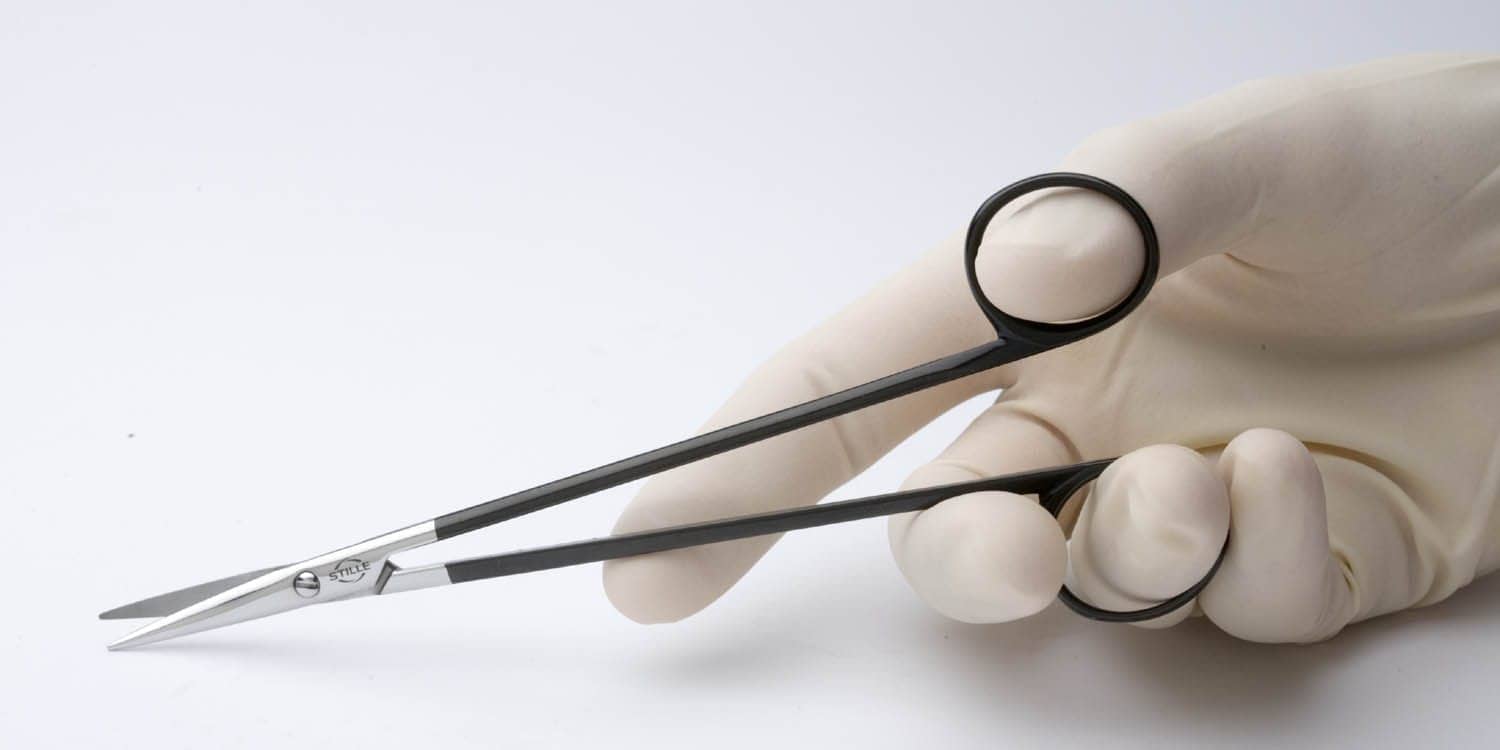
This new policy forcefully encourages human beings to dispel with their primary animal instinct: reproduction. Image sourced at http://www.yorkmedicaltechnologies.co.uk
If the policy be voluntary, the 700,000-man target contradicts what the government of Rwanda calls voluntary vasectomies. Last year, 2010, the vice president of Rwanda’s parliament marketed, in vain, a policy proposal for compulsory sterilization of the “socially retarded” Rwandans. It took excessive efforts by international human rights organizations to thwart the policy proposal. The 2011 “voluntary” vasectomies policy may be a continuum of the 2010 policy proposal. Public policy analysts consent that current latent public policy ideas and motives of any country must be read in light of the similar previous policy. First, the government of Rwanda implemented the habitant and land reform policy. People were supposed to abandon their traditional homestead and go to live in settlement centers – imidugudu. The previous homesteads were meant to be for farming. Initially the government called it a voluntary policy.
Implementation of this policy turned out to be forceful and inhumane. Some government officials snatched victory from the jaws of defeat; they grabbed the land people had abandoned for settlement centers. Second, the government’s policy of what was called voluntary sharing of land between the Hutu owners and the Tutsi returnees ended in the forceful grabbing of land from the Hutu in many regions of the country. Will vasectomies of the unprivileged males be voluntary as the government suggests?
Self-propagation is a basic need and right. However, producing excessive children, as many Rwandans do, is a symptom of insecurity and poverty. There is a general demographic pattern for the well-off to produce between one to three children. The deprived generally produce more than six children. It is no surprise that in a country like Rwanda, where about 75 percent of the population survives on less that $1 a day, the population is increasing by 3 percent per annum. If quantity of the population be the problem, vasectomies are not a durable solution.

The first beneficiary of development is the human person

The quality of a country’s human resources and not the quantity is what matters. Investing in human development is the only sustainable solution. The Rwandan government has sustained one of the most expensive wars in Africa. It is well documented that Rwanda has one of the biggest and most heavily armed militaries in the Great Lakes region of Africa. Rwanda runs the most expensive presidential personal security unit in Africa.
Rwanda’s economy is said to be doing well. Ironically, money is available. How does quantity of the population become a problem that requires dire, questionable voluntary vasectomies?
Human history demonstrates habitual failure by some leaders to reconcile the existence of the poor in an environment that the political leadership project as prosperous. Adolf Hitler exterminated the gypsies alongside the Jews because the gypsies – the poor – would negate the economic prosperity of Germany. This is how seriously the world takes protection of the poor.

Crime against humanity

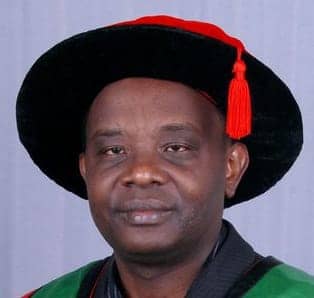
Rwandan American Law Professor Dr. Charles Kambanda


Denying people the right to self-propagation on the basis of their failure to meet costs for their children ought to be an issue of utmost concern for the international community. Targeting the poor with vasectomies is presumed forceful because the poor always lack free will. Vasectomy in this unique Rwandan context might amount to a crime against humanity. The essence and function of government is redistributing resources and power among the citizens. Vasectomy in a Rwandan context manifests government failure to perform its core functions and responsibilities. The policy mirrors incivility, lack of public conscience and negates the basic ethical tenets.
Dr. Charles Kambanda, Dip.Phil., BA, LLB, MA ETPM, MBA, MA HRTs, LLM, PhD, teaches at St. John’s University Law School, LLM Center, New York, and previously lectured at the National University of Rwanda, where, according to the Rwanda News Service, he was known for his “outspoken nature.” This story first appeared on The Proxy Lake: Views and News on the African Great Lakes Region.
Enhanced by Zemanta

Sunday, June 12, 2011

"Kagame Stop Killing": Rwandans and Congolese protest in Chicago

By Ann Garrison from the ANNGARRISON
CLick here to listen to the KPF ANNGARRSION RADION
Rwandan, Congolese, and American activists rallied at the city of Chicago's Hyatt Regency Hotel on Saturday, 06.11.2011, to protest Rwandan President Paul Kagame's presence in the city. from 


Rwandan, Congolese, and American activists demonstrate against Rwandan President Paul Kagame's presence in Chicago, 06.11.2011.


Transcript: 
KPFA Weekend News Host:  Rwandan, Congolese, and American activists rallied in Chicago today to protest the appearance of Rwandan President Paul Kagame at "Rwanda Day," a Chicago event produced by a multimillionaire commodities trader at Chicago’s Hyatt Regency Hotel.   KPFA’s Ann Garrison has more.
Rwandan opposition leader Victoire Ingabire Umuhoza
KPFA/Ann Garrison: The June 3, 2011 report from Amnesty International condemns Rwandan President Kagame’s government, saying that “the Rwandan Patriotic Front (RPF), in power since the 1994 genocide, tightly controls political space, civil society and the media, contending that this is necessary to prevent renewed violence.  Human rights defenders, journalists and political opponents cannot openly criticize the government without facing repression, and Victoire Ingabire Umuhoza, leader of the FDU-Inkingi coalition of opposition parties remains in maximum security prison, charged with terrorism and genocide ideology, which means disagreeing with the government or the official government history of the Rwanda Genocide. 
KPFA spoke to Celestin Muhindura, a Rwandan American and President of the Initiative for Democracy and Development, a non-profit organization that advocates for peace, democracy, and development in Africa, with focus on Rwanda and Congo, whose histories and struggles have been inextricable since the 1994 Rwanda Genocide.
Celestin, can you tell us how the demonstration went today? 
Celestin Muhindura:  The demonstration went very well as planned. The goal was to show, to the American people and to the Chicago people in particular, the true color of the Rwandan government, and the true color of the leader General Paul Kagame.
As you know, Victoire Ingabire left the Netherlands to go run for president. She tried to follow the rules in Rwanda, and once she got there, she was denied the right to register her political party, and the violence against her continued until she was arrested, arbitrary. She was not able to run for president, when the Constitution allows her to run. So it's not just for Victoire Ingabire. It's the same for Bernard Ntaganda. Bernard Ntaganda was in the country. He registered his party, which presented him as a candidate, but, when the time came for running, he was put in prison. So, there are many other signs that the Rwandan government doesn't offer a political space.  Any journalist who tries to speak out is either killed or put in prison.  People who try to free the government, their spies follow them in exile, to try to kill them.  
Rwandan opposition leader Bernard Ntaganda
KPFA:  Do you believe that if she were freed from prison, Victoire Ingabire Umuhoza could bring reconciliation to Rwanda?  
Celestin Muhindura:  As I know her, Victoire Ingabire is a Rwandan patriot, who love people and who love the country, and who has the capability to bring people together. If freed, she's gonna be the hope for the country.  
KPFA:  And do you think there's any chance of her being freed?  
Celestin Muhindura:  I believe, if the international community puts pressure on Kagame, he will end up freeing her. 
KPFA:  Many people seem to fear that there could be another outbreak of violence in Rwanda, possibly even worse than before, because the Hutu majority is so repressed.  Are you worried about this yourself?
Celestin Muhindura:  I'm worried about that and that's why we put together this organization, to try to advocate for a peaceful solution.  So we are afraid because Kagame is pushing hard on people, and if he continues, the volcano will erupt.  
KPFA:  Celestin Muhindura, I certainly hope that that does not happen, and thank you for speaking to KPFA. 
Celestin Muhindura:  Thank you very much.
KPFA/Ann Garrison:  For Pacifica, KPFA, and AfrobeatRadio, I'm Ann Garrison.
Enhanced by Zemanta

Man who inspired ‘Hotel Rwanda’ protests visit by nation’s leader

Story Image
Rwandan humanitarian Paul Rusesabagina participates in a protest outside the Hyatt Regency at 151 E. Wacker where Rwandan president Kagame is stayi
Tom Cruze~Sun-Times
By DARRYL HOLLIDAY Staff Reporter dholliday@suntimes.com
The man who inspired the award-winning film “Hotel Rwanda” led local Rwandans and others in a protest Saturday of Rwandan President Paul Kagame’s visit to Chicago for a conference. 
More than 100 Rwandan, Congolese and American protesters gathered at the Hyatt Regency Chicago to voice their anger over human rights violations committed by Kagame, including the killing of tens of thousands of Rwandans since he came to power in 1994 after the Rwandan genocide, according to a 2010 United Nations war crimes report. Leading the protest was Paul Rusesabagina, whose brave actions during the genocide were the basis for the movie “Hotel Rwanda.”
Though Kagame is given much of the credit for stopping the genocide, reports from the UN, Amnesty International and Human Rights Watch have all detailed violent abuses in the years during his regime.
“In Rwanda we say that the dancers have changed, but the music is the same,” Rusesabagina said. “I’m very much worried as I was [in the lead up to the 1994 genocide] because nothing has changed.”
Rusesabinga is well-known for his actions during the genocide when he saved 1,268 Rwandans from death by hiding them in the hotel that he was managing.
He has since made the transition from hotelier to activist.
“Today we have all gathered to tell the world that a dictator who has shed blood in Africa is now visiting the homeland of President Obama,” Rusesabagina said. “We preach equal rights and then reconciliation.”
According to many of the protestors, the event was held to raise awareness among Americans, and Chicagoans in particular, of the ongoing struggles facing the Congo and Rwanda. They said Kagame’s presence in the United States is an effort to legitimize his actions, which, according to United Nations Security Council, include driving a deadly proxy war for Congolese minerals.
Congolese protestors also denounced the rapes of more than 400,000 female soldiers from 2006 to 2007, as detailed in a report in the American Journal of Public Health, that they say were committed by Kagame’s troops with impunity.
“This is not a political party, this is a civil society,” said Patrick Ntula, 38, a Congolese-born resident of Chicago. “These are people expressing themselves to say enough is enough.”
Meanwhile, a counter-protest took place across the street as attendees of the Rwanda Day conference that Kagame attended came out to defend their president.
Rwandan, but separated by allegiance, the two groups echoed a plea for unity while disagreeing over fundamentals.
“I support Rwandans,” said 34-year-old Francis T., a Rwandan businessman, “But this protest is nonsense.”
© 2011 Sun-Times Media, LLC. All rights reserved. This material may not be copied or distributed without permission. For more information about reprints and permissions, visit www.suntimesreprints.com. To order a reprint of this article, click here.
Enhanced by Zemanta

Saturday, June 11, 2011

Rwanda opposition challenges Kagame in Chicago

Rwanda opposition challenges Kagame in Chicago AFP/File – Rwandan opposition leaders called President Paul Kagame, pictured in March 2011, a corrupt dictator and …
CHICAGO (AFP) – Rwandan opposition leaders called President Paul Kagame a corrupt dictator and war criminal Saturday at a protest outside the Chicago hotel where Kagame was set to address the Rwandan diaspora.
"Kagame is the worst dictator you can even think about because the entire political space has been closed," said Theogene Rudasingwa, Kagame's former cabinet chief and a leader of the opposition in exile.
"If you tried to write this story in Rwanda you'd be dead," he told AFP.
"Opposition leaders have been killed. Journalists have been killed."
The human rights violations resulting from Kagame's stranglehold on Rwanda and proxy war in the Democratic Republic of Congo have been well documented, Rudasingwa said.
"We are here to say can the world help us to bring accountability for these crimes and also for these crimes to stop because they are still going on," he said.
"On a positive note, the message of hope we are telling Rwandans and the international community is we Hutus and Tustis and Twa want truth, reconciliation, and healing."
Rudasingwa said he has been inspired by the democratic movements sweeping the Middle East and is hopeful that Rwanda can find a peaceful path to democracy, even though he does not believe Kagame will "easily relinquish power."
"We want freedom and of course the basics of democracy, that is something we aspire for," he said. "It's possible. We only need to work towards it."
Paul Rusesabagina, the man who inspired the film Hotel Rwanda by saving 1,268 people during the 1994 genocide, helped organize the protest.
"What happened in Rwanda in 1994 is not yet over," he said in an interview.
"It has been going on in the Congo led by these men who have been looting blood minerals and killing Congolese."
Rusesabagina cited human rights reports which show that approximately 4,500 people are killed every month in the Congo, where rape is used as a weapon of war.
Kagame's war crimes and dictatorship must end, he said, so that Rwanda can achieve reconciliation through open political dialogue and true democracy.
"What happened in Arab countries in North Africa might also be the next step in sub-Saharan Africa and if it is, it will start in Rwanda," Rusesabagina said.
"Dialogue -- not guns -- will solve our conflicts. Guns have failed. Let us silence guns and give hope."
Nathan Ndajeh was among the dozens of protesters who chanted "Kagame! War criminal!" outside the Rwanda Day conference.
"If you say something against the government you are signing your death," he said as he clutched a photograph of two jailed female journalists.
Ndajeh was out of the country when the genocide ravaged Rwanda and has been too afraid to go back.
"I know they have been killed, but I don't know how they've been killed," he said of his father and other relatives.
"It will trouble me for the rest of my life, and this is the guy who did it," he said of Kagame.
But Kagame got and extremely warm welcome inside the hotel, where thousands of Rwandan emigrants cheered his arrival and applauded his work in transforming their homeland.
Enhanced by Zemanta

Rwanda: Memo to President Obama

June 8, 2011    Click here to view the original PDF Document         
                        No: 32/CSPR/MK/611
MEMORANDUM

MEMORANDUM
FROM RWANDAN ORGANIZATIONS BASED ABROAD

                                                                                                         
TO: His Excellency Barrack Obama
President of The United States of America
1600 Pennsylvania Avenue NW
Washington, DC 20500


Subject: President Kagame’s visit to New York and Chicago

Your Excellency:

With our respects, we, Rwandan organizations listed below, urge your government to not welcome President Paul Kagame on the US soil for a trip that is leading him to New York and Chicago as one of the ways to pressure him and his government to open a genuine democratic process that accepts critics, dialogue with political opponents and allows freedom of speech.

We strongly praised your vision and the prospect that you would like to project on Africa through primarily the speech that you delivered in the Ghana’s parliament on July 11, 2009 addressing not only the population of Ghana but also of the whole African continent in general[1].  You did lay down your views, proposed policies and whishes for Africa which reiterated and re-energized us on our commitments to continue our fight for hope of true democracy and stronger institutions particularly in Rwanda that give everyone equal rights in front of justice and economical opportunities. It has been however deceiving on the Rwanda’s side as while the situation on the ground was getting worse with more political opponents to President Kagame and journalists being put in jail or simply killed, we’ve not only seen unweave red US aid to the current regime maintained or increased in some areas but also we are seeing President Kagame often being welcomed on the US soil.

We know how much the US people in general and your administration in particular have so generously helped Rwanda in response to the aftermaths of the 1990-1994 civil war followed by genocide, mass murder and massive population movements which devastated Rwanda’s physical infrastructure and social fabric. From the ‘‘support hope’’ mission and different forms of assistance to the Government of Rwanda and civil society groups, let alone different initiatives aiming at restoring peace in the Great Lakes region, the United States has proven to be a true friend and a key player in the economic and political landscape of post-genocide Rwanda.

Nevertheless, over the past seventeen years, our concerns have been increasing with respect to seeing the donor community in general and the Unites States of America in particular not only fail to achieve their higher-order aims of fostering peace, justice, democracy and reconciliation values in post-genocide, but also to even run counter to them by encouraging the culture of impunity, dictatorship and state-capture practices. Indeed, Since 1994, as numerous key observers including Human Rights Watch, Freedom House and your own State Department through the annually Human Rights report have noted, the RPF (Rwandan Patriotic Front)-led government has been accused of committing numerous human rights abuses, assassinating or harassing political opponents, targeting human rights defenders and narrowing the space for freedom of expression and independent civil society. In addition to have invaded a neighboring country and deliberately massacred thousands of Rwandan refugees and Congolese people in the Democratic Republic of Congo, President Kagame’s regime has maintained security arrangements with and provided weapons to armed proxy groups who continue to operate and commit serious human rights abuses in the DRC, including killings and rape.2

On October 1, 2010, the UN Office of the High Commissioner for Human Rights published the report of its human rights mapping exercise on Congo[2]. The report covers the most serious violations of human rights and international humanitarian law committed in Congo between March 1993 and June 2003 that also shaded some light on how President Kagame’s led regime was implicated in most of those tragic events. Our organizations along with many other Human Rights organizations have urged the United Nations members with US leadership to make a concerted international effort to initiate judicial investigations into grave human rights violations in the Democratic Republic of Congo documented by the UN and bring those responsible to justice.

As Human Rights Watch (HRW) stated in its today’s Council of June 7th, 2011 titled “Rwanda: Serious Concerns Regarding Freedom of Expression”[3], it remains seriously concerned that freedom of expression is not respected in practice, as evidenced by these recent cases: 
  • In February 2011, Agnès Uwimana and Saidati Mukakibibi, journalists with the newspaper Umurabyo, were found guilty of endangering public order and sentenced to 17 years and 7 years respectively, in connection with articles viewed as critical of the government. Uwimana was also found guilty of minimizing the genocide, “divisionism” and defamation.
  • Bernard Ntaganda, leader of the opposition party P.S.-Imberakuri, was sentenced to four years' imprisonment in February 2011 for endangering national security and “divisionism”, in connection with his statements criticizing government policies.
  • Several other members of the PS-Imberakuri and the FDU-Inkingi opposition parties, including FDU-Inkingi leader Victoire Ingabire, remain in detention.
  • To HRW knowledge, there has been no progress in the investigation into the murder of Democratic Green Party Vice-President André Kagwa Rwisereka in July 2010.
In addition, President Kagame has expanded his terrorist activities abroad where assassination of any critic voices has been reported. As recent as last month, U.K. police warned two Rwandans in exile of evidence that they may be assassinated by the government of Rwanda[4]. One recalls that in June 2010, Lt General Kayumba Nyamwasa, former close aide to Kagame and High Commissioner of Rwanda to India, now living in exile in South Africa, was victim of an assassination attempt in Johannesburg[5]. South Africa authorities suspected the involvement of the government of Rwanda and since then has recalled his Ambassador to Rwanda. The list of critics to President Kagame who have been assassinated abroad is long, it includes Seth Sendashonga, former Minister of Interior in post genocide government assassinated in Nairobi, Kenya in 1998, Col. Theoneste Lizinde, a RPF officer who has just fled Kagame regime was killed in Nairobi, Kenya the same year of 1998[6]. It is feared that these Kagame criminal activities towards his political opponents and critics are now in high gear mode as shown by recent activities in UK and that he may be using venue in Chicago on June 10-11, 2011 as a launching pad of the same criminal activities in North American, where American and Canadian citizens will be harmed.

We have been strongly disappointed to see how President Kagame and his RPF-led government have cynically been levering genocide as a tool used for covering some leaders and protégé’s with a mantle of impunity and for monopolizing power by capturing by force state institutions and by delegitimizing, disarming and silencing dissent voices. They skillfully exploited the guilt and debt of the international community, which means that, with genocide, international community has lost the right to ask ‘awkward’ question of President Paul Kagame and his government’s agenda.

Against this deceitful background and in response to the sheer complexity of the post-genocide challenges and the incapacity of the international community to bring down the conflict potential, we believe that time has come to break the siege of silence and give Rwandans a chance to sit down, talk openly about their tragedy and forge a common vision to shape their future as did the American people three centuries ago. This is why we strongly believe that time has come to take a bold step with courage and engage Rwandans of all walks of life in a genuine process of sincere Dialogue, Truth and Reconciliation in order to break away from the longstanding cycle of violence and impunity and to pave the way for a lasting solution.

We believe you have the potential and good will to help Rwandans bring out the best of themselves and overcome the culture of fear and despair, get rid of politics of warlordism and ethno-centric tyranny as your predecessors did in Europe a half-century ago. Above all, we believe you have the potential and good will to restore hope and America’s image in Rwanda and in the Great Lakes region of Africa. We believe that we can speak on behalf of a great many voiceless Rwandans if we tell you that Rwandan people as a whole expect from your administration policy a strong support to their hope to see sincere and inclusive dialogue about the past and the future of their country prevail over the longstanding culture of repression and the cycle of violence and humanitarian crisis it brings about.

Once again, we thank you Excellency Mr. President for all efforts you deployed in an attempt to make a positive difference in Rwanda and request your considerations in assisting us in sparing future tragedy and give the next Rwandan generations the prospect of living in harmony with a lasting peace. Your critical support can mostly be achieved by asking President Kagame to do the right thing and open a roadmap of a genuine democratic process and dialogue and only until then can he be welcomed on the US soil for either private or official visits.  In hope to hear from you soon, we wish you a productive trip and thank you for your understanding and cooperation.


Sincerely,

For the Rwandese Community
                   Pascal Kalinganire


Honorable Hillary Clinton
Secretary of State
U.S. Department of State
2201 C Street NW
Washington, DC 20520
    
Honorable Governor Pat Quinn
James R. Thompson Center
100 W. Randolph, 16-100
Chicago, IL 60601
Phone: 312-814-2121

Honorable Rahm Emanuel
Mayor of City of Chicago
121 N La Salle St
Chicago City Hall 4th Floor
Chicago, IL 60602


List of Civil Society and Political Organizations for this initiative.

Mr. Félicien NDINDABAHIZI                                   Mr. Jean-Marie Vianney Ndagijimana
CERCI –Cote D’Ivoire (se)                                        FEIDAR-France (se)

Mr. Théobald Gakwaya Rwaka                                  Mr. Raphael Rwambonera
CNR-Switzerland (se)                                                RFIEKU-Suede (se)

Mr. Gerard Karangwa Semushi                                   Mme. Agnes Mukarugomwa
PDP-Imanzi  Netherlands (se)                         Dialogue & Convivialité – Belgium (se)

Théobald RUTIHUNZA                                             Mr. Eustache Habumuremyi
RIPRODHOR (se)                                                     Jambo-Belgium (se)

Mr. Léon Ngarukiye                                                   Mr. Joseph Matata
Amical-Rwandais  Danermark (se)                              CLIIR-Belgium (se)

Mr. Jean-Baptiste Ngarambe                                      Mme. Daphrose Nyirankundwankize
HRRF-Belgium (se)                                                    RIFDP-Belgium/Canada/Netherlands (se)

Mr. Jean-Paul Mihigo                                                 Mr. Gilbert NIZEYIMANA
RAYA-USA (se)                                                        CORWABEL-Belgium (se)

Mr. Pacifique Kabalisa                                    Mr. Pierre-Claver Nkinamubanzi                    
CPCH-Belgium (se)                                                    CRC-Canada (se)

Mr. Elysee Ndayisaba                                                 Mr. Theophile Murengerantwari          
AVICA-Belgium (se)                                                  MDPR-Intiganda  Germany (se)                                            
Mr. Etienne Mutabazi                                                  Mr. Jean-Paul Rwasamanzi
RDTJ-South Africa (se)                                              AKAGERA-RHEIN  Germany (se)                           
Mr. Ildephonse Murengezi                                          
UMUNTU-Switzerland (se)                                        

Mr. Callixte Kanani                                                     Mme. Marthe-Antoinette Balihe
CRES-Switzerland (se)                                               ARL-Luxemburg (se)

Mr. Jean-Damascene Rugomboka                              Mr. Pascal Kalinganire
CARP-Netherlands (se)                                              OPJDR-USA (se)
                                                                                 
Mr. Jean-Marie Vianney Ndagijimana
COVIGLA Collectif des victimes des crimes de masse
commis dans la région des grands lacs africains
France (se)
Enhanced by Zemanta

Protest for Peace in Rwanda, Chicago, June 11, 2011

Paul KagameKagame of Rwanda
Rwandans, Congolese and Americans Join Together In Support of Peace and Reconciliation to Protest the Appearance to President Paul Kagame of Rwanda  in Chicago on June 11
Immediate Release                   Contact: Kitty Kurth 
June 8, 2011                     Cell Phone: 312-617-7288

Rwandans, Congolese and Americans Join Together In Support of Peace and Reconciliation to Protest the Appearance to President Paul Kagame of Rwanda 
in Chicago on June 11 

Paul Rusesabagina will join with his fellow Rwandans, other Africans and Americans to peacefully protest the presence of Rwandan President Paul Kagame in Chicago on Saturday, June 11 at the Hyatt Regency Chicago, 151 E. Wacker Drive at 2:00 p.m.  

According to the United Nations Human Rights Commission, President Kagame is responsible for millions of deaths of Rwandans and Congolese citizens. The UN in its Mapping report of 1 October, 2010, details those war crimes, crimes against humanity and even possible acts of genocide (http://www.ohchr.org/en/Countries/AfricaRegion/Pages/RDC ... ). For years, the United Nations Security Council has been reporting that Rwanda is responsible for driving a proxy war for minerals in neighboring Congo. 

Hotel Rwanda Rusesabagina Foundation President Paul Rusesabagina said, “I believe that the dictatorial practices of President Kagame should not be condoned by Chicagoans.  I will gather with my fellow Rwandans who wish for Truth and Reconciliation and lasting peace for our country. We will protest the presence of Kagame’s bloody hands and oppressive fists. His acts as President are creating a situation that will likely devolve in to more violence for Rwanda.”

The June 3, 2011 report from Amnesty International condemns Kagame’s government, saying “The Rwandan Patriotic Front (RPF), in power since the 1994 genocide, tightly controls political space, civil society and the media, contending that this is necessary to prevent renewed violence. Human rights defenders, journalists and political opponents cannot openly and publicly criticize. 
the authorities. People who do speak out risk prosecution and imprisonment.” The report, entitled UNSAFE TO SPEAK OUT: RESTRICTIONS ON FREEDOM OF EXPRESSION IN RWANDA says "freedom of expression in Rwanda has been unduly restricted for many years.
The months leading up to the August 2010 presidential elections were marked by a clampdown on freedom of expression, which still shows no sign of abating" (http://www.amnesty.org/en/library/info/AFR47/002/2011/en ).     

Human Rights Watch published it’s latest Rwanda report on May 31, 2011, ( http://www.hrw.org/en/reports/2011/05/31/justice-compromised ) that says in Rwanda justice has been compromised, and that flaws in trials have lead to miscarriages of justice. Human Rights Watch declared that President Kagame is in crisis (http://www.hrw.org/en/news/2010/09/21/rwanda-president-crisis ), as he drives the country that has suffered genocide, war crimes and crimes against humanity further into the direction of civil war and more bloodshed. 

Kagame has jailed political opposition leaders, closed political space, banned independent media, and pursues Rwandans abroad to assassinate them and harass them. Last year he sent thugs to ransack the house of Paul Rusesabagina in Belgium. Last month law enforcement in the United Kingdom warned Rwandans that "reliable intelligence states that the Rwandan government poses an imminent threat to your life" (http://www.nytimes.com/2011/05/20/world/africa/20rwanda.html ). 

The peaceful protesters who gather in Chicago on Saturday will call for an immediate end to President Kagame's war crimes and impunity, and will ask the international community to bring him to account for the crimes he has committed. The protesters will also be asking the international community, especially the United States and the United Kingdom, to support Rwandans searching for the permanent resolution to the current Rwandan refugee crisis; an end to chronic violent conflict and prevention of more bloodshed in Rwanda and the Great Lakes region of east and central Africa; support for human rights protection, dialogue, freedom, equal justice, democracy, and equitable prosperity. They will call for reconciliation and healing among many millions of Rwandans and their neighbors who have been subjected to untold suffering for so long.
Enhanced by Zemanta