Africa Great Lakes Democracy Watch


Welcome to
Africa Great Lakes Democracy Watch Blog. Our objective is to promote the institutions of democracy,social justice,Human Rights,Peace, Freedom of Expression, and Respect to humanity in Rwanda,Uganda,DR Congo, Burundi,Sudan, Tanzania, Kenya,Ethiopia, and Somalia. We strongly believe that Africa will develop if only our presidents stop being rulers of men and become leaders of citizens. We support Breaking the Silence Campaign for DR Congo since we believe the democracy in Rwanda means peace in DRC. Follow this link to learn more about the origin of the war in both Rwanda and DR Congo:http://www.rwandadocumentsproject.net/gsdl/cgi-bin/library


Showing posts with label AFRICA-RWANDA. Show all posts

Friday, July 8, 2011

RWANDA:Rethinking Rwanda, 1994

Professor of Peace Studies, Political Science, and Sociology
Kroc Institute for International Peace Studies Click Here for the video

Click here to view the video of this lecture. 

10davenport.jpg

Christian Davenport

Sixteen years ago, the world watched as Rwanda descended into large-scale violence that left up to a million people dead. This was followed by massive out-migration (nearly half the country), untold amounts of internal displacement, and a deluge of articles, TV news features, movies, and commentary from human rights activists, political leaders, and ordinary people from around the world. 
Exactly what happened during Rwanda’s hundred days of horror?  Christian Davenport has spent more than a decade researching this question. His answer takes all the elements of what has become the conventional story — civil war, genocide, ethnic conflict, refugees, French UN missions, Tutsi rebels, the Hutu army — and combines them in unexpected ways.  His research turns on its head the way we understand Rwanda, political violence, intervention, and the study of conflict itself.
Christian Davenport is a scholar of political conflict, from genocide to domestic spying. He directs two research and action projects: the Radical Information Project and Stop Our States. He is the author or editor of four books: State Repression and the Domestic Democratic Peace, Media Bias, Perspective and State Repression, Repression and Mobilization, and Paths to State Repression.
Free and open to the public.
A light lunch will be available before the lecture.

Saturday, July 2, 2011

RWANDA: A Brief History of Rwandan Leaders and Rulers since 1950

A TRUE REPRESENTATION OF A RWANDAN LEADERSHIP AND RULERSHIP SINCE INDEPENDENCE

By TURATSINZE RUKARA

This is a true representation of those who led Rwanda and those who ruled Rwanda from left to right
The history of Rwanda is one of the mysterious history of all time. I was born a decade after my country Rwanda gained its independence not only from the colonial rulers like most of African countries did but also from its own people who had customized their ruling system to be one of the ruthless leadership on earth. If it was during the Egyptian time we could have compared the Rwandan Tutsi monarchy of that of that of Pharaoh who induced the children of God into slavery for over 400 years. This was the same case in Rwanda Tutsi monarchy induced 90% of Rwandans into slaves in their own country. I could not believe when I read the history of Rwanda as I was doing my studies both in primary and high school in Musanze-Ruhengeri when I learned that my ancestors were slaves of Tutsi monarchy for generations. I had many questions and one of them being why did 90% of Hutus and poor Tutsis accept to be enslaved by a small clique of Tutsi. To answer this question during the 49th celebration of Rwandan independence Day one must analyse briefly of  what has been happening in Rwandan leadership and Rulership.

The first inhabitants of Rwanda were Twa people originated from DR Congo in Ituli forest. For those of us who were forced to flee Rwanda to Zaire the today's DRC had opportunities to interact with the indigenous Twa from Congo. They are good people despite what the Western media say about their cannibalism. This people who were hunters and gatherers until late 20th century came to Rwanda in search of good hunting game. They loved the area and a wide variety of species for game hunting ang settled in this virgin land of "Thousand Hills." They did not have a well sophisticated leadership system because they lived in a communistic system. They hunted and collected fruits together and shared among themselves. This continued for centuries until a Bantueid people came in from Northern Congo around Tchad and Cameroon. This people are called Hutu from the kiswahili word Utu or an African philosophy of Ubuntu (generosity). They were farmers who led a sedimentary lifestyle across the Equatorial forest. They were looking for farms. Because of their sedentary life they had an organized system of leadership. They had kings called ABAHINZA. The history tells us that the first Rwandan king was called GIHANGA NYAMIFANA WAHANZE INGOMA. This kind of leadership system was purely based on UBUNTU philosphy which means that I AM WHO I AM BECAUSE WE ALL ARE. This facilitated the integration of other tribes in the region. Twas coexisted very well with Hutus for centuries. This continued this way under the leadership of ABAHINZA until when another pastoralist tribe came in from the horn of Africa, specifically in Turkana-Kenya.

Tutsi people came as pastoralist in search for green pastures for their cows. THe history tells us that this people were full of pride and could not get a long well with other people they found in Rwanda. They always believed in their superiority over other tribes. Wherever they went they killed and looted. However in Rwanda because they were the minority they found that their ambition of ruling others could not work very well through violent means. They started exploiting the Bantu philosophy of Ubuntu. Hutus and Twas accommodated Tutsis as brothers who are there because we all are philosophy. They were given land to graze their cattle and were given grains to eat since they did not have enough time to farm due to the fact that they always learn after their cows. Tutsis told themselves that since these people Hutus and Twas do not have problem lcoexisting with us why don't we induce them to intermarrying with us whereby our daughters would be sexually deceptive and show their young men a superficial love that would make them marry to our daughters but our young men are instructed to never marry to Hutu or Twa girls. This started with winning over the sons of ABAHINZA who married to Tutsi women and later these Tutsi women plotted to assassinate their husbands in their matrimonial beds. Most of matrimonial homicide were done using poison. It is known that Tutsi people are good in using "charms." So after years of poisoning ABAHINZA who were to take over from as kings of Rwanda then those who remained to take over were uncles as the kings to be were still young to assume kingship. This was traditionally accepted by Rwandan traditions but very little did they know that it was a plot to overthrow a Hutu leadership. Centuries later all Hutu ABAHINZA were assassinated by a well established mechanism assisted by their Tutsi daughters who had intermarried with Hutu kings. That is when Tutsi took over from Hutu leadership to Tutsi rulership styel as we are going to see it. From this time Hutus had to deal with 400 years of serfdom and assassination characterized by mother queens like Kanjogera and rituals like INGOMA KARINGA where the mother queen Kanjogera ordered the castration of Hutu men and use their genital parts as KARINGA decoration. This went on until 1950s when some Hutu intellectuals who had been educated by white missionaries such as ANDREE PERRAUDIN got opportunity to learn how other countries were fighting for their independence from colonial powers. For these Rwandan intellectuals the fight for independence meant more than chasing colonial powers of Belgians out of Rwanda but also to fight against the deadly Tutsi monarchy which has enslaved our forefathers for over 4 centuries.

In 1950s Rwandan intellectuals led by Mbonyummutwa Dominique and Greogoire Kayibanda started PARMEHUTU a political party which was to make sure that all Rwandans are free in their own country and benefit the same from their own country. They wanted to bring an end to a 400 years monarchy rule and establish democracy. MBONYUMUTWA, KAYIBANDA, AND GITERA JOSEPH and others who fought for this independence we are celebrating today on the Rwandan 49 Independence Day are our heroes. They fought to the lasy man standing so that we can be free in our own country. So that Hutus and poor tutsis and Twas could stop toiling for the minority Tutsis but work in their own farms and pay taxes to the country like anyo responsible citizen in his own land. This is what happened in July 1, 1962 Rwanda gained its own independence and all Rwandans regardless of their own tribal background managed to breathe a sigh of freedom again. However, because of greedy Hutus who do not remember where they came from, 30 years after independence, greedy Hutus such as Twagiramungu Faustin, Bizimungu Pasteur, Kanyarengwe Alexis and others led all Rwandans back into their darker ages whereby they associated themselves with some Tutsis who wanted to bring back modern monarchy and Tutsi rule. This happened on October 1, 1990s when a Tutsis led rebellion invaded Rwanda from Uganda killing, looting, and maiming any Hutu they found on their way to Kigali. Four years after killing whoever they could and rendering millions of Rwandans refugees from both Ruhengeri and Byumba, they killed Rwandan President Habyarimana Juvenal and Burundian President Ntaryamira Cyprian. This act of terrorism outraged Rwandans and Hutus decided to protect themselves from the Tutsi monarchy which was prominent enjoying a free ride on the backs of greedy Hutus such as Twagiramungu, Kanyarengwe, Gasana, Rwigema, Bizimungu and many others. The massacre started allover Rwandans people fighting for their freedom but little did they know that America of BILL CLINTON and UK of TONY BLAIR were behind this invasion of independent state. USA imposed both economic and military embargo against Hutu regime so that their favorite RPF Tutsi led group could win militarily. It came to happen in July 1994 more than 3/4 of Hutus were sent into exile in Zaire, Burundi, Uganda, and Tanzania others remained in internal refugee camps such as Kibeho where the newly established Tutsi regime under RPF came and massacred over 250000 of Hutus who had taken refuge here. Now 20 years later since AMERICA AND UK forced a Tutsi regime on Rwandans, millions of Rwandans are still suffering and need your moral support to fight this dictatorial regime from the West. TWESE HAMWE  TUZATSINDA.

Tuesday, June 28, 2011

In Rwanda: What to expect from the divided RPF “family”.

From RWANDANEWS
Tutsi Soldiers mutilating a Hutu young lady in DRC 1997
As the saying goes, when two elephants fight it is the grass that suffers. The feud between Kayumba Nyamwasa et al. and Paul Kagame is likely to have a far from pleasant end. The peasants might once again be entangled into a conflict they little understand and as a result, forced to pay a heavy price.

The wrangle between the two heavyweights seems to have reached a point of no return. What is now left is a dog-eats-dog strategy, or an equivalent of the Darwinian survival for the fittest. This was the message directly implied when Kayumba was shot last year in the streets of Johannesburg. Kayumba and his family believe that the government is still trying to kill them. For Mr. Kagame, actions speak louder than words!

But is Kayumba hitting back as well? This is hard to tell. At the moment, there is no clear evidence that this might be the case, although the Rwandan government has accused him of forming terror zones within the country. Knowing that Kayumba was the chief of the Rwandan army for many years, and is still said to be very popular among the ranks of the military, everything is possible. Moreover, some claim that he enjoys very strong ties with the Ugandan government. The thought of him mobilizing a fighting force, no doubt exaggerated at the moment, is not a complete impossibility.

As of yesterday, the government of Rwanda claims to have arrested five dissidents, including a colonel in the Rwandan army. They are accused of planning sabotage attacks against Rwanda under Kayumba’s authority. Of course, such accusations need to be taken with a pinch of salt. After all, these are the exact same charges that are always leveled on political dissidents in Rwanda. If so, it might be the case of a boy crying wolf.

As expected, Kayumba’s vehemently denied any links to the arrested individuals. Because this is the first time that an insider of the ruling Rwanda Patriotic Front (RPF) is wrestling with the regime, it might be hard to tell where the truth lies.

We know that an investigative report released by the United Nations earlier this month refuted any links between Kayumba et al and other fighting groups based in the DRC such as FDLR and RUD Urunana. We also know that it is in Kagame’s best interest to portray Kayumba as a military trouble maker who is threatening Tutsi hegemony by collaborating with Hutu extremists. In Kagame’s threatening words, he is “excrement” that must be eliminated from the body.

As I said in my post earlier, these are troubling times in Rwanda. The “warrior refugees” that once won the praise of Philip Gourevtitch now have guns pointed at each other. They threaten the stability of a country they fought for and some of them have already been exiled again. It is not a pretty sight.

To be honest, Kayumba’s opposition to Kagame bears more hope for democracy than an event in Rwanda’s recent history. Kayumba has challenged Kagame’s totalitarian control in a way that leaves the man humbled. He often likes to say that, “absolute power corrupts absolutely”. By extension, Kayumba, at least in rhetoric, wants the RPF to undergo a process of reformation; which will allow for competitive politics.

Part of Kayumba’s problem with the RPF party is that Kagame has personalized it. He has built a personality cult akin to that of the late Juvenal Habyarimana. As such, Kayumba and other RPF compatriots feel their vision betrayed. They are longing for change.

It needs to be emphasized that the RPF, under Paul Kagame, has been a major stumbling block to democratic reform. They have established complete control over the military, the church and the civil society. They are like the despot king who must die in order for democracy to arise. We also need to be aware that Kayumba et al. were the yesterday’s champions of this corrupted system. But human being can learn from their mistakes. And there are few untainted hands in Rwanda.

I may not be a fan of Kayumba et al., but I think they deserve a chance. After all, they are Rwandans as well and their love for the country is evident. So far, they have been busy trying to spearhead for reconciliation among the Diaspora of Hutus and Tutsis. They efforts seem to be wielding success. In particular, Theogene Rudasingwa, the group’s most vocal member, has shown the willingness to acknowledge the crimes committed by the RPF against Hutu civilians. This is a BIG and unprecedented step—one that needs to be celebrated. By any indications, Rudasingwa looks like a reformed man who is hungry for peace and reconciliation. Rwanda desperately needs more of his kind.

I view the confrontations as a necessary step for Rwanda’s rebirth. It is completely disheartening to think that the peasants will once again bear the brunt. However, can there be gain without pain? Are the peasants better off under a cruel dictatorship? I welcome comments from my readers

Trial starts in shooting of Rwandan in S.Africa

First a gunman shot the exiled Rwandan army general. When he survived, prosecutors say the people who wanted him dead plotted to strangle him in his South African hospital bed.
Prosecutors won't say whether they believe Rwandan President Paul Kagame's government was behind the attack carried out in another corner of the continent.
But on Tuesday as the trial began, prosecutors disclosed that key witnesses are now under special protection in South Africa because they fear the Rwandan government.
Rwandan authorities have angrily denied the allegations of involvement in the June 2010 attack on Lt. Gen. Faustin Kayumba Nyamwasa, and have even hired a South African lawyer to monitor the court proceedings this week in Johannesburg.
"The government of Rwanda doesn't have anything to hide. They're not involved in this," their lawyer Gerhard van der Merwe told The Associated Press.
Prosecutor Shaun Abrahams refused to say Tuesday whether his case would implicate the Rwandan government. He said the evidence will speak for itself during the complex trial, which is being conducted in English and translated into three other languages: French, Swahili and Kinyarwanda.
The shooting victim, who has kept a low profile since the June 2010 attack, also faces international war crimes charges linked to the aftermath of the Rwandan genocide — allegations he denies.
Nyamwasa was once Rwanda's military chief before he fell out with the president and went into exile in South Africa last year. He and several other top Kagame aides have since been convicted in absentia on charges that include threatening state security.
Now three Rwandans and three Tanzanians are accused of attempted murder, conspiracy to commit murder and other charges in Nyamwasa's shooting in South Africa. They each pleaded not guilty to the charges Tuesday.
Nyamwasa and other Rwandans living abroad have accused the president of crushing dissent and democracy after he helped to end the 1994 genocide that left more than 500,000 people dead in Rwanda.
In May, British police warned some Rwandan exiles living in the UK that their lives were in danger, and the threat is believed to have emanated from the Rwandan government.
Human rights activists also charged last year that Rwanda's Tutsi-led government was pursuing Hutus in neighboring Uganda. Rwanda's government denied involvement in a series of attacks on Hutu Rwandans in Uganda.
Human rights groups say opposition politicians, journalists and civil society activists have been subjected to crackdowns inside Rwanda as well. Earlier this year, in a case Human Rights Watch said was politically motivated,
Rwanda's High Court sentenced an opposition leader to four years in prison on charges of endangering national security, attempting to organize unauthorized protests and inciting ethnic divisions.
The key suspect in the South Africa case is Pascal Kanyandekwe, a Rwandan businessman. He's also accused of plotting to kill Nyamwasa while the general was hospitalized after the shooting.
Kanyandekwe and four men not linked to the shooting are to stand trial in the hospital plot later this month. He also is accused of bribery after two police officers said he offered them $1 million to let him go when they arrested him in July 2010.
The other two Rwandans accused in the case are Nyamwasa's driver and a former Rwandan soldier, according to prosecutors.
While Nyamwasa portrays himself as a champion of democracy and is a victim in the trial that opened Tuesday, he also faces serious criminal charges.
He and other senior Tutsis are accused of waging an extermination campaign against Hutus in the chaotic aftermath of Rwanda's genocide — charges that Nyamwasa denies.

A Spanish judge in 2008 charged Nyamwasa and 39 other members of the Rwandan military with the mass killings of civilians after they seized power in Rwanda.
A U.N. report last year echoed the 2008 Spanish charges, accusing invading Rwandan troops of killing tens of thousands of Hutus in 1996 and 1997 in neighboring Congo.
South African refugee and human rights groups have gone to court to try to have Nyamwasa's asylum status stripped because of the allegations.
In a lawsuit filed earlier this month, the groups acknowledge it might not be safe for Nyamwasa to return to Rwanda and instead proposed that he be tried in South Africa.
Copyright 2011 The Associated Press. All rights reserved. This material may not be published, broadcast, rewritten or redistributed.

Monday, June 27, 2011

Rwanda blocks website of independent newspaper

Exactly one year after the murder of independent newspaper Umuvugizi’s deputy editor, the paper's website is again inaccessible in Rwanda. Its editor has just re-launched the paper as an online-only publication.
Last weekend, Umuvugizi went online with a re-launched version of its website, publishing in Kinyarwanda and English. According to reports on Twitter, the site is currently inaccessible in Rwanda.
Umuvugizi has been a constant victim of Internet filtering since the offline publication was suspended for six months in April 2010 by Rwanda’s Media High Council for undisclosed reasons. The suspension effectively prevented the independent weekly from covering that year’s presidential elections in August. Chief editor John Bosco Gasasira fled for exile, first in Uganda, now in Sweden, aiming to ensure continued publication.
Umuvugizi online was launched merely a month after the ruling, prompting immediate threats of censorship by members of the Media High Council who claimed the publication was “defying its suspension”. The website was blocked for the first time by June 3, 2010, perhaps in response to a story about the lavish travel expenses of President Paul Kagame, as the Committee to Protect Journalists speculates.
Umuvugizi’s deputy editor Jean-Leonard Rugambage Cheriff was shot in the capital Kigali on June 22, 2010, in what the newspaper claims to have been an attack by government security forces. Rugambage's alleged killers were later tried and received life sentences, but Umuvugizi continues to claim that these were mere scapegoats.
Converted into an online-only publication, Umuvugizi has faced on-and-off filtering throughout the last year. In early June 2011, the website was again blocked for three days prior to a court ruling that sentenced chief editor Gasasira in absentia to 2.5 years in prison for insulting the president and inciting civil disobedience.
Herdict: Help us track whether Umuvugizi is blocked!
Internet censorship reporting site Herdict allows Internet users to track which sites are blocked in their countries. If you are in Rwanda, please let us know whether you can access Umugivizi.com. You can submit a report via the Herdict reporter or using Twitter or e-mail.

Friday, June 24, 2011

Telephone leak of the murder List in Rwanda

This post is also available in: Kinyarwanda by UMUVUGIZI

Gen Nziza: The brain behind the continued murders!!
With the continued search for truth and justice, Umuvugizi newspaper has once again managed to unearth evidence of how the regime in Kigali continues to shade blood of the unsuspecting victims notably those who fall out with the powers that be.
This time the newspaper brings out the telephone conversation of the head of military spy network Col. Dan Munyuza with those who were supposed to assassinate Gen. Kayumba Nyamwasa mid 2010 in South Africa. According to the conversation, though the attempt failed, plans to have him killed continue, this time in a more sophisticated manner; a slow death that no medics will get to its bottom.
In the conversation, Col Munyuza informed those supposed to carry out the bloody mission that the list of those to be killed had over ten people whose death should not raise any suspicions like the attempted assassination on Kayumba did.
The colonel says that since killing with guns is more dangerous and failing them. The machinery have introduced the use of a liquid poison to be put in food or drink. According to the conversation, the poison has been tested beyond doubt that even medics cannot find the cause of death when they carryout post-mortems on its victim.
Those on the urgent death list include Gen. Kayumba Nyamwasa, col. Patrick Karegeya, the tycoon Tilbert Rujugiro who fell out with the regime and the former Principle Private Secretary to the president Dr David Himbara. Attempts to have Himbara hijacked off Nairobi airport in 2010 failed after they found that he possessed a Canadian passport. The list also has some Rwandans in the USA and Europe.
According to the leaked telephone conversation, Gen Jack Nziza and company carry out the bloody mission with Kagame full knowledge and support. This is evidenced in the way they bargain on how much the killing will cost and how Kagame will get to their throats if they failed him.
In the coded telephone conversation, they refer to Karegeya as Umuzungu (Whiteman)
This article comes as a warning to all those Rwandans who ran away from Kagame’s blood-thirsty regime not to eat or drink from any places for their security just as Col Dan Munyuza explains in the attached telephone conversation.
Johnson, Europe

Rwanda: Police dismantled a "terror network" from DRC (Read in French below)

Le général Faustin Kayumba Nyamwasa, le 4 janvier 2001 à Kigali. Rwandan police announced the arrest of six men from the Democratic Republic of Congo (DRC) to commit "acts of terror." The network infrastructure was designed and leaders.

According to an official of the Rwandan authorities, six men from the DRC and owned by a "network of terror" were arrested Wednesday, June 22 "Criminals are arrested under Colonel Norbert Ndererimana," it said. The same source, the latter was also arrested and is known to be at the head of "an armed group based in Binza, Rutchuru in the Virunga National Park, North Kivu."

An action-driven and Kayumba Habyaramina?

Investigators say they have established "a strong link between this group and the activities of terror [General Faustin] Kayumba (Nyamwasa]", former Chief of Staff of the Army currently exiled in South Africa. They point out that during their arrest, members of the squad have also "reported receiving their orders from Emmanuel Habyaramina." the latter, in exile in Europe, is the former defense minister of the government of Rwandan President Paul Kagame.

The six men "focused heavily populated areas, stocks of fuel, vehicles carrying fuel, national leaders and diplomats," added the police. (With AFP)

Read the article on Jeuneafrique.com: Rwanda: Police dismantle "terror network" from DRC | Jeuneafrique.com - the first site of information and news on Africa
 
Le général Faustin Kayumba Nyamwasa, le 4 janvier 2001 à Kigali. © AFP
 
La police rwandaise a annoncé l’arrestation de six hommes venus de la République démocratique du Congo (RDC) pour commettre des "actes de terreurs". Le réseau visait des infrastructures et des dirigeants du pays.
Selon un communiqué officiel des autorités rwandaises, six hommes en provenance de la RDC et appartenant à un « réseau de la terreur » ont été arrêtés le mercredi 22 juin. « Les criminels arrêtés sont dirigés par le colonel Norbert Ndererimana », poursuit le texte. Selon la même source, ce dernier a été également interpellé et est connu pour être à la tête d’« un groupe armé basé à Binza, Rutchuru, dans le Parc national des Virunga, Nord-Kivu ».
Une action pilotée par Kayumba et Habyaramina ?

Les enquêteurs affirment avoir établi « un lien fort entre ce groupe et les activités de terreur du [général Faustin] Kayumba (Nyamwasa] », ancien chef d’état-major de l’armée actuellement exilé en Afrique du Sud. Ils précisent qu’au cours de leur arrestation, les membres du commando ont aussi « déclaré avoir reçu leurs ordres d’Emmanuel Habyaramina ». Ce dernier, exilé en Europe, est l’ancien ministre de la Défense du gouvernement du président rwandais Paul Kagamé.
Les six hommes « visaient des endroits fortement peuplés, des stocks de carburant, des véhicules transportant du carburant, des dirigeants nationaux et des diplomates », ajoute la police . (Avec AFP)

Lire l'article sur Jeuneafrique.com : Rwanda : la police démantèle un "réseau de la terreur" venant de RDC | Jeuneafrique.com - le premier site d'information et d'actualité sur l'Afrique

Thursday, June 23, 2011

Why we should be concerned about Rwanda

Rwandan Protesters in Europe
from NEWSRWANDA-NKUNDA
For all the façade on stability in Rwanda, there is more than enough proof that the situation might be worsening. Indeed, we should be afraid if not concerned about this tiny central African state with a penchant for ethnic violence.

Someone is beating the drums of war and like a teenager hungry for attention; he wants us to take him seriously. The signs are more ominous than ever. We ignore them at our own peril.

Rwanda has gone through many phases for the last seventeen years since the 1994 genocide. Throughout, violence has been an important and undisputed part of the package. However, the latest signs of violence are in a category of their own.

In the past, violence has for the most part pitted two groups, Hutu and Tutsi against each other. More than ever before, as Kagame’s autocracy worsens, the prospects of a united and multi-ethnic force rising against him are becoming more pronounced. Although the likely protagonists keep denying this, the breeze of violent resistance is very much palpable.

Frantz Fanon in his book The Wretched of the Earth talks about the concept of liberating violence. If violence spreads out the oppressed (Fanon’s primary concern is the colonized), having nothing of value to lose, and are the first to embrace violence. In Rwanda the oppressed are a handful many.

The hope for Fanon is that violence would become the greatest equalizer as the “last become the first”. Many might rightfully say that Rwandans have had enough of this. I am personally skeptical of the likelihood of violence to liberate. However, what is left for Rwandans to try? Is it acceptable that Rwandans hide in exile because they cannot express their views back home? When and where does the cycle of violence stop?

Somehow, as a people, we seem incapable of conceptualizing a life that guarantees equal freedom for all. Paul Kagame is going down in history as just another despot, having failed to reconcile Rwanda and heal the ethnic divide. Even worse, Kagame’s recklessness seems to have divided the Rwandan Patriotic Front, the ruling party. As a testament, his former allies are now his most vicious opponents. They are barking so loud and are eagerly waiting for the chance to bite him hard. If war breaks out, it will most likely be the RPF against the rpf.

Kagame’s former allies and top ranking members of the RPF now describe him as a bloody thirsty dictator with no respect for human life. Theogene Rudasingwa former RPF secretary general and director of Kagame’s cabinet, a Tutsi himself has this to say, “….” Knowing very well that these men fought alongside Kagame during the 1994 liberation war, we do well to give them an ear.

Even harder to ignore at home are assassinations and nihilistic violence. Just before the last presidential elections, Kigali was gaining the notoriety as the city of grenade explosions. Whether this was an inside job as some have speculated or not, it is a highly disturbing precursor. Moreover, several members of the former CNDP, a proxy militia of the Rwandan government based in Eastern DRC, have been executed. High ranking military personnel (most of them Tutsi) are languishing in Rwandan jails accused of treason.

The fallout between Kagame and Kayumba an equally highly respected Tutsi leader might well be the ultimate sign of this instability. The subsequent attempt to assassinate Kayumba brings to light the dangerous and highly alarming inner struggles of power in Rwanda politics. You kill me or I kill you!

Given the inter-ethnic alliances that are blooming, it is likely that the second wave of violence might not be as bloody as the first. That for now is our source of hope. Our politicians do not want to talk, making violence seem rather inescapable.

Thursday, June 16, 2011

Rwanda: Why sterilize the poor?

Rwanda’s economy is said to be doing well, so how does population size become a problem that requires dire, questionable voluntary vasectomies of the poor?

by Charles Kambanda, PhD


Poor Rwandans are targeted by the government’s call for voluntary vasectomies of 700,000 men who can’t support their children.
In controversy is the minister of health’s announcement of what the government of Rwanda calls voluntary vasectomies (sterilizing) of 700,000 males between 2011 and 2013. The target group is men who cannot pay bills for their children’s upkeep. The poor who make over 75 percent of Rwanda’s population are only uncertain of when their males will be sterilized. At issue is not whether the country needs sound family planning policy. Whether the political elite will stick to voluntary vasectomies is the main concern. Conceptualizing “voluntary” vasectomies in Rwanda’s contemporary public policy, history gloss and politics is utterly crucial.
The timing of sterilizing 700,000 males raises red flags. In Rwanda’s socio-political environment that swivels on passivity, apathy, suspicion and docile citizenry with militarized “civil society,” securing free will of the men to be sterilized borders on insanity.

Who are the poor?

The deprived are the Twa, a secluded ethnic group. The needy are the Hutu peasants who survived the Congo refugee camps’ massacres. The hard-up in Rwandan society are those few Tutsi survivors of genocide who have not benefited from the genocide survivors’ fund. The underprivileged are the Hutu populace that was uprooted from their land, without compensation, under the habitant and land reform government policy.
The poor are those Tutsi returnees who have no close relations in the Tutsi dominated government. The bitter fact is that poverty in Rwanda runs along the country’s ethnic divides. The poor are mostly victims of the country’s unresolved ethnic and power sharing crisis.
History is seldom a bad teacher. However, people are hardly good students of history. Rwanda’s post-independence history, not different from the country’s pre-independence era, insinuates a constant fight between the Hutu, the majority ethnic group making up about 86 percent of the population, and the Tutsi, the minority ethnic group making up about 14 percent. The Twa hardly make up 1 percent.
Growing or dropping in numbers of either ethnic group is an issue for each ethnic group’s political and physical survival. The Hutu-Tutsi co-existence failed on a win-win modus operandi. The victor seeks to depopulate the loser, or at least to delay the other ethnic group’s violent return to power.
War crimes, crimes against humanity and genocide have long been a “social engineering” and depopulation strategy geared at incapacitating the loser in the country’s power grabbing paradigm. In 1959 it was some Hutu’s turn to “depopulate” the Tutsi.
In the 1980s a Hutu-led government flocked the Tutsi to cannibals and crocodiles in the country’s national park, Akagera. Although scholars disagree on whether the 1994 genocide was committed by only the Hutu against the Tutsi, the scholars appear to concur that genocide was a strategy to “tame” the enemy’s unmanageable and unwanted population.
The brutal massacres of the Hutu refugees in Congo, which the United Nations’ Mapping Report accuses the Tutsi-dominated Rwandan troops of, could also be viewed from this perspective. With growing international enforcement of laws on war crimes, crimes against humanity and genocide, Rwandan society appears vulnerable to apparent legal methods of birth control like “voluntary” vasectomies to achieve the traditional ethnic depopulation conspiracy.
Sociologists, philosophers and psychologists have long discussed whether a poor person can make choices. Do the poor have free will? The Rwandan government does not appear uptight about this paradox. The poor, who cannot nourish their children, are said to be going for “voluntary” vasectomies. This is the proverbial hiding of the head in the sand.

If poverty is a criterion for vasectomies, free will cannot exist


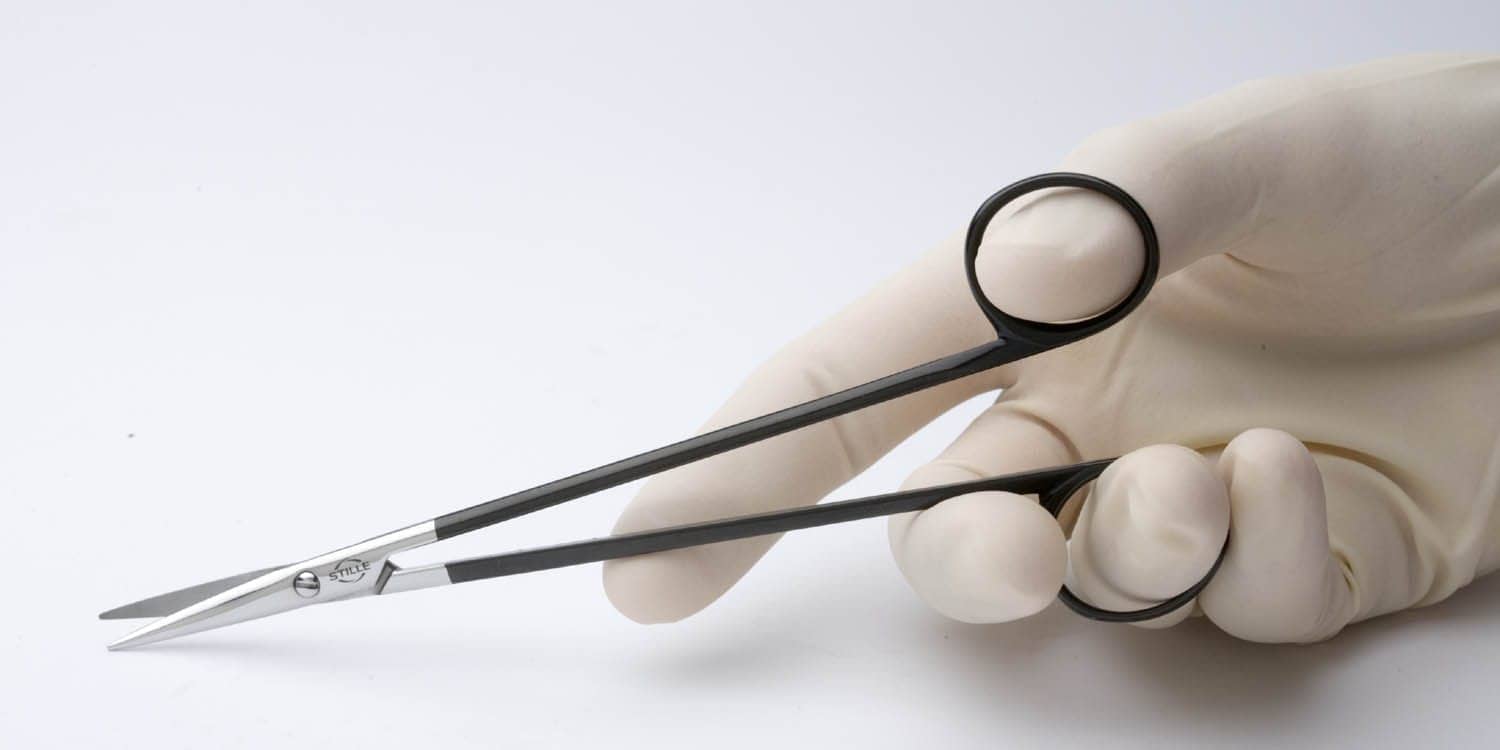
This new policy forcefully encourages human beings to dispel with their primary animal instinct: reproduction. Image sourced at http://www.yorkmedicaltechnologies.co.uk
If the policy be voluntary, the 700,000-man target contradicts what the government of Rwanda calls voluntary vasectomies. Last year, 2010, the vice president of Rwanda’s parliament marketed, in vain, a policy proposal for compulsory sterilization of the “socially retarded” Rwandans. It took excessive efforts by international human rights organizations to thwart the policy proposal. The 2011 “voluntary” vasectomies policy may be a continuum of the 2010 policy proposal. Public policy analysts consent that current latent public policy ideas and motives of any country must be read in light of the similar previous policy. First, the government of Rwanda implemented the habitant and land reform policy. People were supposed to abandon their traditional homestead and go to live in settlement centers – imidugudu. The previous homesteads were meant to be for farming. Initially the government called it a voluntary policy.
Implementation of this policy turned out to be forceful and inhumane. Some government officials snatched victory from the jaws of defeat; they grabbed the land people had abandoned for settlement centers. Second, the government’s policy of what was called voluntary sharing of land between the Hutu owners and the Tutsi returnees ended in the forceful grabbing of land from the Hutu in many regions of the country. Will vasectomies of the unprivileged males be voluntary as the government suggests?
Self-propagation is a basic need and right. However, producing excessive children, as many Rwandans do, is a symptom of insecurity and poverty. There is a general demographic pattern for the well-off to produce between one to three children. The deprived generally produce more than six children. It is no surprise that in a country like Rwanda, where about 75 percent of the population survives on less that $1 a day, the population is increasing by 3 percent per annum. If quantity of the population be the problem, vasectomies are not a durable solution.

The first beneficiary of development is the human person

The quality of a country’s human resources and not the quantity is what matters. Investing in human development is the only sustainable solution. The Rwandan government has sustained one of the most expensive wars in Africa. It is well documented that Rwanda has one of the biggest and most heavily armed militaries in the Great Lakes region of Africa. Rwanda runs the most expensive presidential personal security unit in Africa.
Rwanda’s economy is said to be doing well. Ironically, money is available. How does quantity of the population become a problem that requires dire, questionable voluntary vasectomies?
Human history demonstrates habitual failure by some leaders to reconcile the existence of the poor in an environment that the political leadership project as prosperous. Adolf Hitler exterminated the gypsies alongside the Jews because the gypsies – the poor – would negate the economic prosperity of Germany. This is how seriously the world takes protection of the poor.

Crime against humanity

Rwandan American Law Professor Dr. Charles Kambanda


Denying people the right to self-propagation on the basis of their failure to meet costs for their children ought to be an issue of utmost concern for the international community. Targeting the poor with vasectomies is presumed forceful because the poor always lack free will. Vasectomy in this unique Rwandan context might amount to a crime against humanity. The essence and function of government is redistributing resources and power among the citizens. Vasectomy in a Rwandan context manifests government failure to perform its core functions and responsibilities. The policy mirrors incivility, lack of public conscience and negates the basic ethical tenets.
Dr. Charles Kambanda, Dip.Phil., BA, LLB, MA ETPM, MBA, MA HRTs, LLM, PhD, teaches at St. John’s University Law School, LLM Center, New York, and previously lectured at the National University of Rwanda, where, according to the Rwanda News Service, he was known for his “outspoken nature.” This story first appeared on The Proxy Lake: Views and News on the African Great Lakes Region.
Enhanced by Zemanta

Annual Report: Rwanda 2011

From Amnesty International
Head of state and government: Paul Kagame and Bernard Makuza
Death penalty: abolitionist for all crimes
Population: 10.3 million
Life expectancy: 51.1 years
Under-5 mortality (m/f): 167/143 per 1,000
Adult literacy: 70.3 per cent
The authorities restricted freedom of expression and association before presidential elections in August. Media outlets that criticized the government were closed down and editors fled Rwanda. Human rights defenders faced intimidation. Investigations into killings were inadequate. High-ranking military officers were detained without trial. Some improvements in the justice system were offset by laws criminalizing dissent. No country extradited genocide suspects to Rwanda.

Background

A clampdown on freedom of expression and association before August’s presidential elections prevented new opposition parties from fielding candidates. President Paul Kagame was re-elected with 93 per cent of the vote.
Growing splits emerged within the ruling party, the Rwandan Patriotic Front (RPF). The former head of the army, Faustin Kayumba Nyamwasa, fled to South Africa. Some senior military officers were arrested and held incommunicado. Others fled to neighbouring countries.
Tension grew between the government and supporters of Laurent Nkunda, the former leader of the Congolese armed group the National Congress for the Defence of the People (CNDP). Arrested in January 2009, he remained under house arrest in Rwanda without charge or trial.
Grenade attacks in Rwanda’s capital, Kigali, led to heightened security concerns.
Rwanda’s hostile response to a UN mapping report on human rights violations in the Democratic Republic of Congo (DRC) between 1993 and 2003 drew attention to impunity for past abuses by the Rwandan Patriotic Army.
International donors grew increasingly concerned about the deteriorating human rights situation. The EU, France, Spain, the UN and the USA publicly expressed concern before the elections.

Freedom of expression

Freedom of expression was further restricted. The RPF became increasingly sensitive to criticism in advance of the presidential elections. Laws on ‘genocide ideology’ and ‘sectarianism’
The authorities continued to misuse broad and ill-defined laws on "genocide ideology" and "sectarianism". The laws prohibit hate speech, but also criminalize legitimate criticism of the government.
In April, the government announced a review of the "genocide ideology" law, and indicated that the "sectarianism" law might also be reviewed. However, the government continued to use these laws and the timeframe for review remained unclear.
  • Bernard Ntaganda, the leader of an opposition party, PS-Imberakuri, was arrested in June and remained in detention in December. Charges against him included inciting ethnic division in relation to statements criticizing government policies.
  • Victoire Ingabire, the leader of FDU-Inkingi, an opposition party seeking registration, was arrested in April and rearrested in October. Charges against her included "genocide ideology" and were based, in part, on her public call for the prosecution of RPF war crimes.

Journalists

The government used regulatory sanctions, restrictive laws and criminal defamation cases to close down media outlets critical of the government. In July, the government began to enforce certain aspects of a 2009 media law which maintains defamation as a criminal offence. Some leading editors and journalists fled the country after facing threats and harassment.
  • The Rwandan Media High Council (MHC), a regulatory body close to the ruling party, suspended two private Kinyarwanda newspapers, Umuseso and Umuvugizi, from April to October. The MHC alleged that the newspapers had insulted the President and caused trouble in the army.
  • Jean-Léonard Rugambage, a journalist working for Umuvugizi, was shot dead on 24 June outside his home in Kigali. He had been investigating the shooting in South Africa of Kayumba Nyamwasa, and his newspaper published a story alleging that Rwandan intelligence was involved. In October, two men were convicted of Jean-Léonard Rugambage’s murder and sentenced to life imprisonment. The convicted men claimed that Jean-Léonard Rugambage had killed a member of one of their families during the 1994 genocide, although he had previously been acquitted in gacaca proceedings.
  • Jean-Bosco Gasasira, editor of Umuvugizi and Didas Gasana, editor of Umuseso, fled Rwanda in April and May respectively after receiving threats.
Human rights defenders
Human rights defenders faced renewed threats, including from government representatives. They self-censored their work to avoid confrontation with the authorities.
The government expelled a staff member of Human Rights Watch from Rwanda. Other international NGOs reported increased constraints on their work. International human rights groups, including Amnesty International, were attacked in speeches by senior government officials.
A Rwandan government representative criticized Rwandan human rights organizations at the African Commission on Human and Peoples’ Rights in May.

Freedom of association

Restrictions on freedom of association prevented new opposition parties from contesting the elections. FDU-Inkingi and the Democratic Green Party were unable to obtain security clearance to organize meetings needed for their registration. The only new party to secure registration, PS-Imberakuri, was infiltrated by dissident members and decided not to stand.
Opposition politicians were harassed and threatened. Investigations into threats were cursory and did not lead to prosecutions.

Prisoner of conscience

Charles Ntakirutinka, a former government minister, remained in Kigali Central Prison, serving a 10-year sentence due to end in 2012. He had been convicted, in an unfair trial, of inciting civil disobedience and association with criminal elements.

Justice system

Witness protection staff received training and kept better records. Concerns remained about the willingness of witnesses to testify, given restrictions on freedom of expression through laws on "genocide ideology" and "sectarianism".
In October, Rwanda promulgated a law on "life imprisonment with special provisions", the sentence which replaced the death penalty. The law requires prisoners to be kept in individual cells for up to 20 years, which could constitute prolonged solitary confinement for those whose family members are unwilling or unable to visit. Such prisoners would only have the right to communicate with a lawyer in the presence of a prison guard, violating their defence rights during appeal hearings and possibly preventing prisoners from reporting abuse. The sentence was not applied due to a lack of individual cells.
Prison overcrowding continued to be a problem.
The deadline to complete gacaca trials of genocide cases was postponed indefinitely in September.

Enforced disappearances

At least four individuals disappeared between March and May. Some were close to Laurent Nkunda’s wing of the CNDP or had past links to armed groups in the DRC. Their whereabouts remained unknown at the end of the year. At least one of these individuals, Robert Ndengeye Urayeneza, was believed to have been subjected to enforced disappearance and detained in Rwandan military custody.

Ill-treatment by police

Some members of PS-Imberakuri and FDU-Inkingi arrested in June and July were ill-treated by the police. They were beaten and were handcuffed to other prisoners, including while going to the toilet.

Military justice

Several high-ranking military officials were arrested and detained without charge. They were denied access to legal counsel and held under house arrest or incommunicado in military detention for several months.
  • Lt. Col. Rugigana Ngabo, the younger brother of Kayumba Nyamwasa, was arrested in August on allegations of destabilizing national security. He was held incommunicado without charge.

International justice

International Criminal Tribunal for Rwanda
The mandate of the International Criminal Tribunal for Rwanda (ICTR) was extended until the end of 2011 for first-instance trials and to the end of 2012 for appeals. Ten suspects subject to arrest warrants by the ICTR remained at large. The ICTR Prosecutor made new applications in November to transfer cases to Rwanda. Past applications failed after Trial Chambers decided that the accused would not receive fair trials.
Universal jurisdiction – genocide suspects living abroad
Judicial proceedings against genocide suspects took place in Belgium, Finland, Netherlands, Spain, Switzerland, and the USA. Sweden consented to extradition in 2009, but the case has yet to be decided before the European Court of Human Rights. No country extradited genocide suspects to Rwanda due to fair trial concerns.
International Criminal Court
The Rwandan executive secretary of the Democratic Forces for the Liberation of Rwanda (FDLR), Callixte Mbarushimana, was arrested in October in France after an arrest warrant was issued by the International Criminal Court (ICC) for war crimes and crimes against humanity committed in eastern DRC in 2009. France had granted him refugee status in 2003 and French prosecuting authorities had declined to open criminal investigations into earlier allegations of his involvement in the Rwandan genocide. In November, his surrender to the ICC was ordered by the Paris Appeal Court.
Impunity for war crimes and crimes against humanity
  • A Spanish judge requested the extradition of Kayumba Nyamwasa from South Africa, where he fled from Rwanda in February. He was indicted by Spain in 2008 on charges of war crimes and crimes against humanity committed in 1994, as well as the murder of three Spanish aid workers in 1997 in Rwanda. Rwanda also requested his extradition on charges of threatening state security. South Africa had not acted on either request by the end of the year.
  • French magistrates conducted investigations in Rwanda in September into the shooting down of the plane in April 1994 which killed Rwandan President Juvénal Habyarimana and sparked the genocide. It was the first time that French magistrates had visited Rwanda as part of their investigations. French judges dropped international arrest warrants issued in November 2006 against nine senior RPF members for shooting down the plane, in which French nationals were also killed, and instead placed some of these individuals under investigation.
Failure to investigate and prosecute killings
Rwandan authorities failed to adequately investigate and prosecute killings before the elections.
  • André Kagwa Rwisereka, Vice President of the opposition Democratic Green Party, was found dead in Butare on 14 July. André Rwisereka, who left the RPF to create the Democratic Green Party, had been concerned for his security in the weeks before his murder. The police opened investigations, but the prosecution claimed to have insufficient evidence to press charges.
  • Denis Ntare Semadwinga was stabbed to death at his home in Gisenyi on 20 June. Before his murder, he had been questioned by Rwandan security services about his relationship with Laurent Nkunda
Enhanced by Zemanta

RWANDA: The Chatteau, the lives of Rwandan prisoners in Rwanda

Le Château: the lives of prisoners in Rwanda tells the story of life in Rwanda’s prisons in the ten years which followed the 1994 genocide.  In 2004, around 85,500 people were detained in Rwanda.  Most are accused of participation in the genocide, which claimed more than 500,000 lives.  Many have spent more than ten years in prison without being tried.
In Rwanda, every aspect of prison life is defined by overcrowding.  The standard width of a prisoner’s living space is 40 centimetres.  The prisoners call this their “château”, their castle.  Many prisoners sleep outside, exposed to the sun and the rain.  Family visits last just three minutes.
Yet prisoners have succeeded in imposing order on chaos.  The prisons are effectively run by the prisoners themselves, through a highly efficient hierarchical system which mirrors the society outside.
This book presents a vivid portrait of humanity pushed to the extreme:  an intense and disturbing picture of suffering, ruthlessness, creativity, humour and resilience.  It confronts the reader with a morally complex world, full of contradictions, where the absence of justice makes it almost impossible to differentiate between the guilty and the innocent

“In turn captivating, horrifying, thought-provoking and deeply moving, this account of life inside Rwandan prisons shows how human beings can and do survive in the most extreme conditions.  Listen to the prisoners speak and you will hear tales that transcend the limits of time and place.”

Alison Des Forges, historian and writer on Rwanda


Scope of this book
Why Rwanda’s prisons are unique
Recent events in Rwanda


PREFACE

Chapter I
Forty centimetres:  space
“Hell on earth”: the early years (1994-1999)
Improvements in prison conditions since 1999
The state of prisons in 2004
Health care
Food
Trading space
A life of luxury
Fashion
Chapter Ii
The prisoners’ government:  organisation
The structure
The capita général
Elections
Getting rich inside
The prison administration
Searches
Chapter Iii
Tomatoes, blackboards and guitars:  work and leisure
Work
Education
Entertainment
Chapter Iv
God
Chapter v
“Living as sisters – a survival strategy”:  women in prison
Conditions and organisation of the women’s blocks
Relations between the women
Babies in prison
Relations between women and men
Chapter vI
Real minors and false minors:  children in prison
Absolute minors
Genocide minors
Minors’ living conditions
Activities for minors
Sexual abuse
Chapter viI
Families in prison
Chapter viiI
Waiting to die:  the elderly in prison


 Lists and more lists
Ill-treatment in detention
The survival of the elderly in the central prisons
Activities for the elderly
The vulnerable among the vulnerable
The memory of the family
The response of the government
Enhanced by Zemanta

Crouch End dad Jimi Mistry sees poverty firsthand in Rwanda


HOLLYWOOD actor and devoted dad Jimi Mistry has visited Rwanda to highlight child poverty in the run up to Father’s Day.

The star of The Guru and East Is East, who lives in Crouch End, made the journey with ActionAid to meet children growing up without parents.
He has sponsored a child through the charity for many years and shared the experience with 10-year-old daughter Elin.
Jimi said: “As a dad, I want the best for my daughter, Elin. I kept telling her how excited I was about the visit, but I had no idea what to expect.
“I was amazed. Rwanda is a beautiful country with warm, humble and dignified people and given the genocide in 1994 what I saw is even more remarkable.”
Jimi visited Mpanga Primary School, which has moved from the top to the bottom of a mountain thanks to ActionAid’s child sponsorship scheme.
The children had been left exhausted and teachers were hard to find because the five kilometre hike up the mountainside was so perilous.
The actor spoke to 13-year-old schoolgirl Martina, who had faced wild hunting dogs on one journey to school, and made the trek himself.
He also overcame a personal fear and milked a cow at the primary school - which has helped the children recover from malnutrition.
“Often the basics, like milk are taken for granted,” said Jimi. “It was an unforgettable moment watching a little girl called Rachel, who is just a little younger than my daughter, being given a regular drink of milk and therefore the chance of a brighter future.”
ActionAid is asking people to support its Unforgettable Moments campaign by donating 50p a day - the cost of a pint of milk.
To sponsor a child visit www.actionaid.org.uk/moments
Enhanced by Zemanta