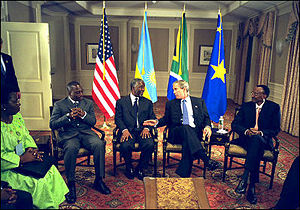
You will shortly see the light a UN report detailing a decade of continued violence in Central Africa
De los genocidios de Rwanda y Congo a un tribunal español Of the genocide in Rwanda and Congo to a Spanish court
¿Tiene relación los genocidios de Rwanda y Congo con España y sus tribunales; con la ONU, EEUU y Gran Bretaña? Do you have regarding the genocide in Rwanda and Congo with Spain and its courts, with the UN, the U.S. and Britain? Más de la que parece. More than meets the eye. ¿Y qué nos importa? What do we care? Nos toca más de cerca de lo que podemos pensar. We get closer than we think. Hace pocos días la prensa internacional se hacía eco de la filtración de un informe del Alto Comisionado para los Derechos Humanos de la ONU (UNHCHR) sobre 10 años de violencia continuada en la República Democrática del Congo (1993-2003). A few days ago the international press echoed a leaked report of the High Commissioner for UN Human Rights (UNHCHR) on 10 years of continued violence in the Democratic Republic of Congo (1993-2003). Este informe de casi 600 páginas debe ver la luz en los próximos días y veremos en qué términos después del revuelo internacional y las enormes amenazas –veladas ya plena luz- que se están produciendo por numerosos actores internacionales- incluidos gobiernos- en múltiples direcciones. The report of nearly 600 pages to see the light in the coming days and see what terms after the huge international outcry and veiled threats and full-light-being brought about by many international actors, including governments, in multiple directions.
La ONU dice que Rwanda podría ser culpable de genocidio en la RD Congo The UN said that Rwanda could be guilty of genocide in the DR Congo
Dicho informe filtrado de la ONU pone de manifiesto con contundencia, después del estudio de miles de documentos y de más de mil testimonios recogidos por los expertos, la crudeza de las matanzas producidas de forma sistemática contra población de la etnia hutu, tanto refugiados rwandeses como población civil congoleña, principalmente durante las dos guerras (de septiembre de 1996 a julio de 1998 y agosto de 1998 en adelante). This leaked report from the UN shows forcefully, after studying thousands of documents and over a thousand testimonies gathered by the experts, the rawness of a systematic massacres against Hutu population, both Rwandan refugees as Congolese civilians, mostly during the two wars (September 1996 to July 1998 and August 1998 onwards).
Según dicho informe, se procedió a la masacre deliberada de personas, incluyendo en especial ancianos, niños y mujeres, hutus rwandeses y congoleños sin excepción y sin poder ser en ningún caso consideradas muertes accidentales o colaterales de la guerra. According to the report, proceeded to deliberate slaughter of people, including especially the elderly, children and women, Rwandan and Congolese Hutus without exception and without in any case to be considered accidental deaths or side of the war. Según las pruebas recogidas, dichas masacres estuvieron “bien planeadas y altamente organizadas”, haciéndose referencia a más de 600 actos criminales sistemáticos con cientos de miles de víctimas como resultado. According to evidence gathered, such killings were "well planned and highly organized" and referred to more than 600 criminal acts systematically with hundreds of thousands of casualties as a result.
En la misma línea que las resoluciones judiciales españolas, la ONU pone de manifiesto ahora que, además de la muerte directa por armas ligeras o pesadas, las muertes se tuvieron lugar también por otras formas de producir genocidio como privación de alimentación y desplazamientos forzosos de población (refugiados hutus y población civil congoleña, cuyas víctimas fueron también mayoritariamente hutus), agresiones sexuales o sometiéndoles a condiciones de inanición y enfermedades que provocarían con toda probabilidad su muerte. In the same line as the Spanish judicial decisions, the UN now shows that in addition to direct killing by light and heavy weapons, deaths also occurred for other ways to produce genocide as deprivation of food and forced population displacement (Hutu refugees and Congolese civilians, the victims were also mainly Hutus), sexual assault or subjecting them to conditions of starvation and disease that most likely would cause his death. Sólo hay que detenerse un instante para ir más allá de las cifras (millones, en plural, más allá de las 800.000 víctimas del genocidio oficial en Rwanda) y tomar consciencia del sufrimiento –individual, familiar y colectivo- que hay tras cada víctima para acercarse a la magnitud de la tragedia (que desgraciadamente continúa). Just pause a moment to go beyond the numbers (millions, plural, beyond the 800,000 victims of genocide in Rwanda official) and become aware of suffering-individual, family and community, which is behind every victim to come the magnitude of the tragedy (which unfortunately continues).
Aunque en dicho informe no se establecen responsabilidades individuales por dichos crímenes, sí se atribuye la responsabilidad principal al ejército de Rwanda -y sus aliados locales- y también se concretan los crímenes que podrían haberse producido en esa década estudiada, pudiendo los hechos constituir crímenes contra la humanidad, crímenes de guerra e incluso susceptibles de ser calificados como genocidio. Although the report does not establish individual responsibility for these crimes, it is attributed primary responsibility for the army of Rwanda, and its local allies, and make concrete the crimes that may have occurred in the decade studied, the facts may constitute crimes against humanity, war crimes and even that could be classified as genocide.
Curiosamente lo que ha levantado revuelo en el Gobierno de Rwanda es este último crimen, el de genocidio, no los dos primeros, no discutidos por Rwanda y ya de por sí crímenes internacionales gravísimos. Interestingly it has raised a stir in the Government of Rwanda is the latter crime, genocide, not the first two, not challenged by Rwanda and already very serious international crimes. Y no es por casualidad: la prensa internacional, sin dejar de recordar la enorme tragedia producida en el genocidio de Rwanda de 1994 con mayoría de víctimas tutsis, no ha dejado de replantearse el papel de Paul Kagame y sus acólitos en dicho genocidio, cuestionando severamente la versión de éste y su cúpula que reclama que él fue quien detuvo dicho genocidio. It is no coincidence: the international press, still remember the great tragedy produced in the 1994 Rwandan genocide with a majority of Tutsi victims, has continued to redefine the role of Paul Kagame and his acolytes in the genocide, severely questioning version of this and its dome claims he was the one who stopped the genocide. Esta versión se va desmontando como un castillo de naipes y este informe de la ONU no hace más que acelerar la caída. This version of the whole structure like a house of cards and the UN report does nothing but accelerate the decline.
Muchos afirman que habrá que reinvestigar lo que sucedió realmente durante en genocidio del año 1994 en Rwanda, incluido el informe secreto de 1994 del representante norteamericano del ACNUR en Rwanda Robert Gersony, embargado por la propia ONU, recogido en la investigación de los tribunales españoles a través del testimonio del ex ministro de exteriores ruandés –entre otros- y que documentó más de 30.000 asesinatos en sólo tres meses después que Kagame tomara el poder por la fuerza después de cuatro años de guerra tras su invasión de Rwanda desde Uganda y “parara oficialmente el genocidio”. Many say they will have to reinvestigate what really happened during the 1994 genocide in Rwanda, including the secret report in 1994 the U.S. representative of UNHCR in Rwanda Robert Gersony, embargoed by the UN, included in the investigation of the Spanish courts Through the testimony of former Rwandan Foreign Minister, among others, and documented more than 30,000 murders in just three months after Kagame took power by force after four years of war after its invasion of Rwanda from Uganda and "officially stop genocide. " Sólo de esta manera los responsables de crímenes internacionales – sin distinción étnica ni política de ningún tipo, como prevé el Estatuto del Tribunal Penal Internacional para Rwanda- podrían rendir cuentas ante la justicia sin distinción partidista. Only in this way those responsible for international crimes - no ethnic or political distinction of any kind, as envisaged in the Statute of the International Criminal Tribunal for Rwanda, could be accountable to the law without distinction partisan.
Hay que decir que la planificación precisa y el alto grado de organización del ejército de Rwanda en la ejecución de crímenes ya fueron puestas de manifiesto en otros dos Informes de la ONU de los años 2001 y 2002 ( http://www.veritasrwandaforum.org/informes.htm ), en ese caso en relación al pillaje sistemático de recursos naturales como oro, diamantes, coltan, estaño, y casiterita, entre otros, junto a multinacionales norteamericanas, europeas, africanas y orientales (minerales preciosos incorporados en nuestros móviles, ordenadores, consolas además de armamento inteligente y estratégico). It must be said that the precise planning and the high degree of organization of the Rwandan army in the execution of crimes and were highlighted in two UN reports in 2001 and 2002 ( http://www.veritasrwandaforum.org / informes.htm ), in this case in relation to the systematic plundering of natural resources like gold, diamonds, coltan, tin, and cassiterite, among others, with U.S. multinationals, European, African and Eastern (precious minerals embedded in our mobile computers, consoles in addition to smart weapons and strategic).
¿Qué tribunal puede investigar estos crímenes internacionales en la RD Congo? What court can investigate these international crimes in DR Congo?
El informe acaba preguntándose qué tribunal podrá hacerse cargo de la investigación y enjuiciamiento de estos crímenes. The report just wondering what the court may take over the investigation and prosecution of these crimes. Es una pregunta esencial para que la impunidad de los mismos, ya de hace años, no continúe retroalimentando el conflicto violento como lo hace hasta nuestros días. Is an essential question for the impunity of those, and years ago, do not continue feeding back the violent conflict as it does today. Aunque la idea de investigar estos crímenes en la RD Congo es anterior, los expertos de la ONU empezaron a trabajar en ello en julio de 2008, pocos meses después de que el 6 de febrero de 2008 los tribunales españoles hicieran público un Auto de Procesamiento de 40 altos mandos político-militares de Rwanda por crímenes de genocidio, crímenes contra la humanidad y crímenes de guerra, entre otros, presuntamente ejecutados en Rwanda y el Zaire/RD Congo en el período que media entre el año 1990 y el 2002. Although the idea of investigating these crimes in DR Congo is earlier, the UN experts began to work on it in July 2008, just months after the February 6, 2008 the Spanish courts made public an indictment of 40 senior political and military control of Rwanda for genocide, crimes against humanity and war crimes, among others, allegedly carried out in Rwanda and Zaire / DR Congo in the period between 1990 and 2002.
Dicho Auto ( http://www.veritasrwandaforum.org/dosier/resol_auto_esp_06022008.pdf ) concretaba tres años de investigación iniciada mediante una querella presentada en 2005 por las familias de 9 españoles asesinados en 1994, 1996, 1997 y 2000 en estos dos países y por sobrevivientes rwandeses y congoleños, por el premio Nobel de la Paz Adolfo Perez Esquivel, la ex congresista norteamericana Cynthia McKinney, los ayuntamientos de Sevilla, Manresa, Figueres, Navata y Tremp, y ONG nacionales e internacionales englobadas bajo el Forum Internacional señalado más abajo. This Auto ( http://www.veritasrwandaforum.org/dosier/resol_auto_esp_06022008.pdf ) identifies three years of research initiated by a complaint filed in 2005 by families of 9 Spanish killed in 1994, 1996, 1997 and 2000 in these two countries and Rwandan and Congolese survivors, for the Nobel Peace Prize Adolfo Perez Esquivel, the former U.S. Congresswoman Cynthia McKinney, the municipalities of Sevilla, Manresa, Figueres, Navata and Tremp, and national and international NGOs included under the International Forum noted more below. Numerosos sobrevivientes de dichas masacres en la RD Congo, que huyeron casi dos mil kilómetros a pie, e imágenes obtenidas sobre el terreno como las de Hubert Sauper han relatado lo que ahora expone públicamente la ONU: ataques sistemáticos de campos de refugiados, bombardeos con armamento pesado y persecuciones sistemáticas en caminos, selvas, pueblos y ciudades –muy especialmente Kisangani, en diversas ocasiones- e incluso repatriaciones forzadas por parte del ACNUR de refugiados que posteriormente serían asesinados o encarcelados, según expuso el propio Auto judicial español. Many survivors of these massacres in the DR Congo, who fled nearly two thousand miles on foot, and images from the field as those of Hubert Sauper have reported what is now publicly exposed the UN's systematic attacks on refugee camps, weapons bombing systematic persecution heavy roads, forests, villages and cities-especially Kisangani, on several occasions, and even forced repatriation by the UNHCR refugee who would later be killed or imprisoned, according exposed himself Writ Spanish.
Ya en 2008 la amenaza de Paul Kagame y Rwanda ante la investigación judicial y la efectividad de la orden de arresto internacional (que los propios ayuntamientos personados pidieron directamente al Secretario General de la ONU) era la misma que ahora ante este informe: si uno de los 40 buscados, el general rwandés Karake Karenzi no era confirmado en su puesto como segundo comandante en la fuerza híbrida de paz de la ONU en Sudán a pesar de la orden de arresto internacional española, Rwanda retiraría todas las fuerzas de paz de Sudán. Already in 2008 the threat of Paul Kagame and Rwanda to the judicial investigation and the effectiveness of the international arrest warrant (which people asked for the councils themselves directly to the Secretary General of the UN) was the same as now to this report: if one of the 40 searches, the Rwandan general Karenzi Karake was not confirmed in his post as deputy commander in the hybrid force of UN peacekeepers in Sudan despite the Spanish international arrest warrant, Rwanda withdraw all forces of peace in Sudan. Karake Karenzi, después de que las Rwandan Defense Forces recibieran el 3 de septiembre de 2008 del Departamento de Estado de EEUU la cantidad de 20 millones de dólares, fue confirmado en su puesto por la ONU. Karenzi Karake, after the Rwandan Defense Forces received the September 3, 2008 the U.S. State Department the amount of $ 20 million, was confirmed in office by the UN. Hace escasos días se ha repetido la amenaza de Rwanda: si el ejército comandado por Paul Kagame es acusado de genocidio, Rwanda retirará sus fuerzas de las operaciones de mantenimiento de la paz. A few days ago has repeated the threat to Rwanda, if the army commanded by Paul Kagame is accused of genocide, Rwanda will withdraw its forces from the maintenance of peace.
Para responder a la pregunta hay a quien le interesa complicar las cosas más de la cuenta para que al final no se haga nada. To answer the question is who cares more complicated than the account so that the end nothing is done. Para los crímenes de 1993 a 2003 hay dos tribunales a nivel internacional que ya están investigando y tienen procesos abiertos: para los crímenes de 1993 al 1 de julio de 2002 el único tribunal del mundo que está ya investigando estos crímenes es el tribunal español, de acuerdo con el principio de justicia universal (baste señalar, a título de ejemplo, que de las 40 órdenes de arresto internacional emitidas por el tribunal español en 2008 una de ellas se ha traducido en solicitud de extradición por crímenes producidos tanto en Rwanda como la RD Congo en el mismo período que el informe respecto al general Kayumba Nyamwasa, ex brazo derecho del Presidente Paul Kagame y actualmente huido en Sudáfrica); For crimes from 1993 to 2003 there are two courts at the international level and are investigating and have open processes: for crimes of 1993 to July 1, 2002 the only court in the world which is already investigating these crimes is the Spanish court of According to the principle of universal justice (suffice it to say, by way of example, that of the 40 international arrest warrants issued by the Spanish court in 2008, one of them has resulted in the extradition request produced crimes in both Rwanda and the DR Congo during the same period that the report regarding the general Kayumba Nyamwasa, former right hand man of President Paul Kagame and currently fled South Africa);
Para los crímenes a partir del 1 de julio de 2002 hasta 2003 la Corte Penal Internacional (CPI) tiene dos procesos abiertos y en curso. For crimes from July 1, 2002 until 2003 the International Criminal Court (ICC) has two open and ongoing processes. Ambos tribunales son competentes aunque gozan de escasísimos recursos para realizar su cometido. Both courts have jurisdiction even though they enjoy very little resources to perform their duties. La Audiencia Nacional recibe el silencio como respuesta cuando pide a la ONU con todas las formalidades las pruebas de estos crímenes contra las personas de los años 1996 y 1997 o las pruebas del pillaje de recursos minerales valiosos de esos mismos años y posteriores. The High Court receives the silence for an answer when asked the UN with all the formalities the evidence of these crimes against the people of the years 1996 and 1997 or evidence of looting of valuable mineral resources of those years and thereafter. Los medios internacionales que han tenido acceso al informe han puesto de manifiesto que la Alta Comisionada de la ONU responsable del texto guarda una base de datos confidencial –separada del Informe- con pruebas que implican de forma individual a cargos militares rwandeses y ugandeses de los crímenes antes relatados. The international media have had access to the report have highlighted the UN High Commissioner responsible for the text maintains a confidential database, separate from the report, with evidence implicating individually to Rwandan and Ugandan military officers for crimes reported before. La Alta Comisionada –casualmente sudafricana- Navanethem Pillay, buena conocedora de las implicaciones y de la dimensión de la tragedia en el África Central al haber sido jueza del Tribunal para Rwanda (TPIR) y de la Corte Penal Internacional, debería poner a disposición de la CPI y de la Audiencia Nacional las pruebas que implican a personas determinadas de dichos crímenes internacionales en aplicación del derecho internacional. The South African High Commissioner-chance-Navanethem Pillay, well aware of the implications and the extent of the tragedy in Central Africa, having been a judge of the Tribunal for Rwanda (ICTR) and the International Criminal Court, should make available to the ICC and National Hearing tests involving such persons certain international crimes under international law.
Importantes implicaciones internacionales en los crímenes ejecutados en África Important international executed for crimes in Africa
Esto no es sólo una cuestión entre hutus y tutsis rwandeses y congoleños o una cuestión de África Central, siendo que es el conflicto violento que se ha llevado más vidas humanas desde la Segunda Guerra Mundial, según palabras del Fiscal de la CPI, Moreno Ocampo. This is not just a matter between Hutu and Tutsi Rwandans and Congolese or a matter of Central Africa, where it is the violent conflict that has claimed more lives since World War II, in the words of the ICC Prosecutor, Moreno Ocampo. Aparece una historia de violencia, guerra y neoesclavitud por el control geoeconómico, geopolítico y geoestratégico de África Central después de la caída del muro de Berlín, cuyos capítulos van saliendo a la luz poco a poco. Shows a history of violence, war and geo-economic control by the neo-slavery, geopolitical and geostrategic Central Africa after the fall of the Berlin Wall, whose chapters are coming to light gradually. Antaño los europeos y norteamericanos utilizaron a una minoría africana para que se beneficiara y explotara a sus hermanos de sangre. Europeans and Americans once used a minority to benefit African and exploit their siblings. Las dinámicas de explotación y esclavitud de los siglos XV a XIX (de las entonces potencias europeas como España, Francia, Portugal, Gran Bretaña, Bélgica, Holanda y más tarde Estados Unidos) se reproducen con nuevos modelos a finales del siglo XX y principios del XXI, sólo que ahora –sin necesidad de desplazar a los esclavos del territorio- son gobiernos, multinacionales y grupos de poder que utilizan y manipulan a “elites” africanas para que masacren y exploten a sus hermanos africanos a cambio de un pequeño porcentaje de poder y dinero del pillaje sistemático de guerra, que deja unas migas en África pero que sus grandes beneficios se esfuman a Norteamérica, Europa y aliados bajo complejas formas de transacciones de grupos empresariales, como ha señalado en dichos informes de 2001 y 2002 la propia ONU. The dynamics of exploitation and enslavement of the XV to XIX (of the then European powers like Spain, France, Portugal, Britain, Belgium, Holland and later the U.S.) will play with new models in the late twentieth and early XXI, only now, no need to move to the slaves of the territory, are governments, multinationals and power groups who use and manipulate the "elites" to massacre and Africa to exploit their fellow Africans in exchange for a small percentage of power and systematic looting money from the war, leaving a few crumbs in Africa but its major benefits are disappearing in North America, Europe and allies in complex forms of transactions of business groups, as noted in these reports for 2001 and 2002 the UN itself.
La ONU, que debería ser la esperanza y apoyo a los pueblos ya la humanidad, se ha convertido en el juguete de los gobiernos y de las multinacionales y grandes poderes que les guían según sus propios intereses. The UN, which should be the hope and support to people and humanity, has become the plaything of governments and multinational corporations and large powers that guide them in their own interests. En este caso los capítulos ocultos que vamos conociendo gracias a investigadores tenaces e independientes nos permiten conocer cómo agencias gubernamentales norteamericanas, canadienses y británicas, junto con multinacionales y grupos empresariales se unen para conseguir el control de los territorios, los riquísimos recursos naturales de los mismos y los gobiernos locales: sólo como ejemplo, la ex congresista norteamericana McKinney -descendiente de esclavos, como la actual Primera Dama norteamericana y enviada especial en 1996 por el presidente Clinton a África Central- reveló más tarde que descubrió que el avión en el que viajó -fletado por directivos de la multinacional American Mineral Fields- transportaba también traficantes de armas y que había un plan previsto para financiar la guerra para deponer a Mobutu en el entonces Zaire y controlar las zonas mineras con el fin de pillar primero y explotar después las minas, hechos que fueron corroborados posteriormente por los propios informes de la ONU de 2001 y 2002. In this case the hidden chapters we meet, thanks to tenacious and independent researchers allow us to know how U.S. government agencies, Canadian and British, along with multinational companies and business groups join forces to gain control of territories, the very rich natural resources of the same and local governments, just as an example, former U.S. Congresswoman McKinney, a descendant of slaves, as the current First Lady and U.S. Special Envoy in 1996 by President Clinton to Central Africa, revealed later that he discovered that the plane that flew -chartered by executives of multinational American Mineral Fields, also carrying arms dealers and had a plan in place to fund the war to oust Mobutu in the then Zaire and control mining areas in order to catch first and then exploit mines facts which were corroborated later by the UN's own reports of 2001 and 2002.
A ello se puede unir el hecho, también corroborado, que Paul Kagame fue llamado en octubre de 1990 desde Estados Unidos (donde se estaba formando militarmente en la Comandancia del Ejército de Estados Unidos de América –conectado con la tristemente conocida Escuela de las Américas-, concretamente en la base de Fort Leavenworth, Kansas) a Uganda para liderar la rebelión que debía deponer al entonces presidente de Rwanda Habyarimana. To this can be added the fact, also confirmed that Paul Kagame was called in October 1990 from the U.S. (where it was forming militarily in the Army Command United States-connected with the notorious School of the Americas specifically in the Fort Leavenworth, Kansas) to Uganda to lead the rebellion that had deposed the then Rwandan President Habyarimana.
ONU, Kagame, Zapatero y política internacional UN Kagame, Zapatero and international politics
Este informe de la ONU, contundente con Rwanda, se ha filtrado con delicadeza diplomática, casualmente justo tres semanas después –no antes- de haberse celebrado elecciones presidenciales en Rwanda, donde Paul Kagame (acusado de crímenes internacionales por el Tribunal español en relación a dichos crímenes en la RD Congo y que goza del asesoramiento personal gratuito del ex premier británico Tony Blair, entre otros) ha sido reelegido presidente por un 93% de los votos, donde los candidatos de la oposición o han sido encarcelados o asesinados. The UN report, blunt with Rwanda, has leaked diplomatic gently, coincidentally just three weeks later, not before the presidential elections have been held in Rwanda, Paul Kagame (accused of international crimes by the Spanish court in relation to such crimes in the DR Congo and enjoying the free personal advice of former British premier Tony Blair, among others) has been reelected president by 93% of the vote, where opposition candidates or have been imprisoned or killed. Elecciones validadas a pesar de las grandes reservas internacionales de diplomacias y ONG's internacionales. Elections validated despite the large reserves of diplomacy and international NGOs. Sin duda el secretario general de la ONU debía conocer el contenido de dicho informe cuando en julio se desplazó a Madrid para asistir a la cumbre de la ONU convocada por él mismo preparatoria de los Objetivos del Milenio, junto a los dos co-presidentes que él mismo –aparentemente- escogió: el presidente Zapatero, presidente de un país donde sus tribunales investigan justamente esos crímenes, y Paul Kagame – presidente investigado y acusado por un tribunal español de ser el máximo responsable de esos crímenes, incluidos de los 9 españoles asesinados en Rwanda y RD Congo. No doubt the UN secretary general should know the contents of that report in July when he moved to Madrid to attend the UN summit convened by him in preparation for the Millennium Development Goals, with the two co-presidents that he same, apparently chosen: President Zapatero, president of a country where the courts are investigating just such crimes, and Paul Kagame - President investigated and charged by a Spanish court of being most responsible for these crimes, including the 9 killed in Spanish Rwanda and DR Congo.
Afortunadamente el Presidente Zapatero, después de la petición por parte de las nueve familias españolas, de una plataforma de ong's nacional (bastayadeimpunidadenruanda.org) e internacional, de peticiones en embajadas de todo el mundo y de la petición expresa de senadores y de siete grupos políticos del Congreso (entre los que no estaban ni el PSOE ni el PP), decidió en último momento no reunirse con Kagame y desplazar la reunión a un hotel privado. Fortunately, the President Zapatero, following the request from the nine Spanish families, a platform of national NGOs (bastayadeimpunidadenruanda.org) and international requests in embassies around the world and the request of Senators and seven groups Congressional politicians (which were neither the PSOE nor the PP), decided at the last minute not to meet with Kagame and move the meeting to a private hotel. Sin embargo, la reunión oficial que se celebrará en la sede de la ONU en Nueva York el próximo 20 de septiembre contará, si no hay cambio de última hora, con la co-presidencia de Zapatero y Kagame, junto al secretario general de la ONU que está por publicar este informe demoledor. However, the official meeting to be held at the UN headquarters in New York on September 20 will, if no last minute change, co-chaired by Zapatero and Kagame, along with UN Secretary General that is about to publish the damning report.
Para cumplir con los objetivos del milenio de erradicar el hambre y las enfermedades en el mundo y demás loables e imprescindibles objetivos convienen quizás otras medidas más eficaces que esta reunión, con un encuentro indecente e indigno entre bambalinas: como señala Carlos Castresana (Fiscal de las causas de justicia universal de Argentina y Chile), quizás será necesario al final aprobar un gran acuerdo estilo “Plan Marshal” para África, con la contribución determinante de EEUU, China, Gran Bretaña, Francia, Alemania, India, Cánada y Brasil u otros países, que permita a la par que abrir nuevos mercados y nuevos consumidores para estas ávidas potencias y sus multinacionales, beneficiar de forma definitiva a los actuales africanos –y de retoque a todos nosotros- y al menos a las siete generaciones que les seguirán. To meet the Millennium Development Goals of eradicating hunger and disease in the world and other laudable and necessary goals may agree to other measures more effective than this meeting, a meeting backstage indecent and unworthy, as pointed out by Carlos Castresana (Attorney of the cause of universal justice in Argentina and Chile), it may be necessary to pass a great deal final style "Marshal Plan" for Africa, with the decisive contribution of the United States, China, Britain, France, Germany, India, Canada and Brazil or other countries, allowing the couple to open new markets and new customers for these greedy powers and their multinational definitely benefit from the current African-retouching and all of us-and at least seven generations that will follow. Sí, la ley del boomerang es implacable y todo esto nos toca más de cerca de lo que podemos pensar. Yes, the law of the boomerang is relentless and all that touches us more closely than we think.
Jordi Palou-Loverdos es abogado acreditado ante la Corte Penal Internacional y mediador en conflictos internacionales. Jordi Palou-Loverdos a lawyer accredited to the International Criminal Court and mediator in international conflicts. Es representante legal de víctimas españolas, rwandeses y congoleñas y del Forum Internacional por la Verdad y la Justicia en el África de los Grandes Lagos ante los Tribunales españoles. Legal representative of Spanish victims, Rwandan and Congolese and the International Forum for Truth and Justice in the African Great Lakes before the Spanish Courts.
Dicho informe filtrado de la ONU pone de manifiesto con contundencia, después del estudio de miles de documentos y de más de mil testimonios recogidos por los expertos, la crudeza de las matanzas producidas de forma sistemática contra población de la etnia hutu, tanto refugiados rwandeses como población civil congoleña, principalmente durante las dos guerras (de septiembre de 1996 a julio de 1998 y agosto de 1998 en adelante). This leaked report from the UN shows forcefully, after studying thousands of documents and over a thousand testimonies gathered by the experts, the rawness of a systematic massacres against Hutu population, both Rwandan refugees as Congolese civilians, mostly during the two wars (September 1996 to July 1998 and August 1998 onwards).
Según dicho informe, se procedió a la masacre deliberada de personas, incluyendo en especial ancianos, niños y mujeres, hutus rwandeses y congoleños sin excepción y sin poder ser en ningún caso consideradas muertes accidentales o colaterales de la guerra. According to the report, proceeded to deliberate slaughter of people, including especially the elderly, children and women, Rwandan and Congolese Hutus without exception and without in any case to be considered accidental deaths or side of the war. Según las pruebas recogidas, dichas masacres estuvieron “bien planeadas y altamente organizadas”, haciéndose referencia a más de 600 actos criminales sistemáticos con cientos de miles de víctimas como resultado. According to evidence gathered, such killings were "well planned and highly organized" and referred to more than 600 criminal acts systematically with hundreds of thousands of casualties as a result.
En la misma línea que las resoluciones judiciales españolas, la ONU pone de manifiesto ahora que, además de la muerte directa por armas ligeras o pesadas, las muertes se tuvieron lugar también por otras formas de producir genocidio como privación de alimentación y desplazamientos forzosos de población (refugiados hutus y población civil congoleña, cuyas víctimas fueron también mayoritariamente hutus), agresiones sexuales o sometiéndoles a condiciones de inanición y enfermedades que provocarían con toda probabilidad su muerte. In the same line as the Spanish judicial decisions, the UN now shows that in addition to direct killing by light and heavy weapons, deaths also occurred for other ways to produce genocide as deprivation of food and forced population displacement (Hutu refugees and Congolese civilians, the victims were also mainly Hutus), sexual assault or subjecting them to conditions of starvation and disease that most likely would cause his death. Sólo hay que detenerse un instante para ir más allá de las cifras (millones, en plural, más allá de las 800.000 víctimas del genocidio oficial en Rwanda) y tomar consciencia del sufrimiento –individual, familiar y colectivo- que hay tras cada víctima para acercarse a la magnitud de la tragedia (que desgraciadamente continúa). Just pause a moment to go beyond the numbers (millions, plural, beyond the 800,000 victims of genocide in Rwanda official) and become aware of suffering-individual, family and community, which is behind every victim to come the magnitude of the tragedy (which unfortunately continues).
Aunque en dicho informe no se establecen responsabilidades individuales por dichos crímenes, sí se atribuye la responsabilidad principal al ejército de Rwanda -y sus aliados locales- y también se concretan los crímenes que podrían haberse producido en esa década estudiada, pudiendo los hechos constituir crímenes contra la humanidad, crímenes de guerra e incluso susceptibles de ser calificados como genocidio. Although the report does not establish individual responsibility for these crimes, it is attributed primary responsibility for the army of Rwanda, and its local allies, and make concrete the crimes that may have occurred in the decade studied, the facts may constitute crimes against humanity, war crimes and even that could be classified as genocide.
Curiosamente lo que ha levantado revuelo en el Gobierno de Rwanda es este último crimen, el de genocidio, no los dos primeros, no discutidos por Rwanda y ya de por sí crímenes internacionales gravísimos. Interestingly it has raised a stir in the Government of Rwanda is the latter crime, genocide, not the first two, not challenged by Rwanda and already very serious international crimes. Y no es por casualidad: la prensa internacional, sin dejar de recordar la enorme tragedia producida en el genocidio de Rwanda de 1994 con mayoría de víctimas tutsis, no ha dejado de replantearse el papel de Paul Kagame y sus acólitos en dicho genocidio, cuestionando severamente la versión de éste y su cúpula que reclama que él fue quien detuvo dicho genocidio. It is no coincidence: the international press, still remember the great tragedy produced in the 1994 Rwandan genocide with a majority of Tutsi victims, has continued to redefine the role of Paul Kagame and his acolytes in the genocide, severely questioning version of this and its dome claims he was the one who stopped the genocide. Esta versión se va desmontando como un castillo de naipes y este informe de la ONU no hace más que acelerar la caída. This version of the whole structure like a house of cards and the UN report does nothing but accelerate the decline.
Muchos afirman que habrá que reinvestigar lo que sucedió realmente durante en genocidio del año 1994 en Rwanda, incluido el informe secreto de 1994 del representante norteamericano del ACNUR en Rwanda Robert Gersony, embargado por la propia ONU, recogido en la investigación de los tribunales españoles a través del testimonio del ex ministro de exteriores ruandés –entre otros- y que documentó más de 30.000 asesinatos en sólo tres meses después que Kagame tomara el poder por la fuerza después de cuatro años de guerra tras su invasión de Rwanda desde Uganda y “parara oficialmente el genocidio”. Many say they will have to reinvestigate what really happened during the 1994 genocide in Rwanda, including the secret report in 1994 the U.S. representative of UNHCR in Rwanda Robert Gersony, embargoed by the UN, included in the investigation of the Spanish courts Through the testimony of former Rwandan Foreign Minister, among others, and documented more than 30,000 murders in just three months after Kagame took power by force after four years of war after its invasion of Rwanda from Uganda and "officially stop genocide. " Sólo de esta manera los responsables de crímenes internacionales – sin distinción étnica ni política de ningún tipo, como prevé el Estatuto del Tribunal Penal Internacional para Rwanda- podrían rendir cuentas ante la justicia sin distinción partidista. Only in this way those responsible for international crimes - no ethnic or political distinction of any kind, as envisaged in the Statute of the International Criminal Tribunal for Rwanda, could be accountable to the law without distinction partisan.
Hay que decir que la planificación precisa y el alto grado de organización del ejército de Rwanda en la ejecución de crímenes ya fueron puestas de manifiesto en otros dos Informes de la ONU de los años 2001 y 2002 ( http://www.veritasrwandaforum.org/informes.htm ), en ese caso en relación al pillaje sistemático de recursos naturales como oro, diamantes, coltan, estaño, y casiterita, entre otros, junto a multinacionales norteamericanas, europeas, africanas y orientales (minerales preciosos incorporados en nuestros móviles, ordenadores, consolas además de armamento inteligente y estratégico). It must be said that the precise planning and the high degree of organization of the Rwandan army in the execution of crimes and were highlighted in two UN reports in 2001 and 2002 ( http://www.veritasrwandaforum.org / informes.htm ), in this case in relation to the systematic plundering of natural resources like gold, diamonds, coltan, tin, and cassiterite, among others, with U.S. multinationals, European, African and Eastern (precious minerals embedded in our mobile computers, consoles in addition to smart weapons and strategic).
¿Qué tribunal puede investigar estos crímenes internacionales en la RD Congo? What court can investigate these international crimes in DR Congo?
El informe acaba preguntándose qué tribunal podrá hacerse cargo de la investigación y enjuiciamiento de estos crímenes. The report just wondering what the court may take over the investigation and prosecution of these crimes. Es una pregunta esencial para que la impunidad de los mismos, ya de hace años, no continúe retroalimentando el conflicto violento como lo hace hasta nuestros días. Is an essential question for the impunity of those, and years ago, do not continue feeding back the violent conflict as it does today. Aunque la idea de investigar estos crímenes en la RD Congo es anterior, los expertos de la ONU empezaron a trabajar en ello en julio de 2008, pocos meses después de que el 6 de febrero de 2008 los tribunales españoles hicieran público un Auto de Procesamiento de 40 altos mandos político-militares de Rwanda por crímenes de genocidio, crímenes contra la humanidad y crímenes de guerra, entre otros, presuntamente ejecutados en Rwanda y el Zaire/RD Congo en el período que media entre el año 1990 y el 2002. Although the idea of investigating these crimes in DR Congo is earlier, the UN experts began to work on it in July 2008, just months after the February 6, 2008 the Spanish courts made public an indictment of 40 senior political and military control of Rwanda for genocide, crimes against humanity and war crimes, among others, allegedly carried out in Rwanda and Zaire / DR Congo in the period between 1990 and 2002.
Dicho Auto ( http://www.veritasrwandaforum.org/dosier/resol_auto_esp_06022008.pdf ) concretaba tres años de investigación iniciada mediante una querella presentada en 2005 por las familias de 9 españoles asesinados en 1994, 1996, 1997 y 2000 en estos dos países y por sobrevivientes rwandeses y congoleños, por el premio Nobel de la Paz Adolfo Perez Esquivel, la ex congresista norteamericana Cynthia McKinney, los ayuntamientos de Sevilla, Manresa, Figueres, Navata y Tremp, y ONG nacionales e internacionales englobadas bajo el Forum Internacional señalado más abajo. This Auto ( http://www.veritasrwandaforum.org/dosier/resol_auto_esp_06022008.pdf ) identifies three years of research initiated by a complaint filed in 2005 by families of 9 Spanish killed in 1994, 1996, 1997 and 2000 in these two countries and Rwandan and Congolese survivors, for the Nobel Peace Prize Adolfo Perez Esquivel, the former U.S. Congresswoman Cynthia McKinney, the municipalities of Sevilla, Manresa, Figueres, Navata and Tremp, and national and international NGOs included under the International Forum noted more below. Numerosos sobrevivientes de dichas masacres en la RD Congo, que huyeron casi dos mil kilómetros a pie, e imágenes obtenidas sobre el terreno como las de Hubert Sauper han relatado lo que ahora expone públicamente la ONU: ataques sistemáticos de campos de refugiados, bombardeos con armamento pesado y persecuciones sistemáticas en caminos, selvas, pueblos y ciudades –muy especialmente Kisangani, en diversas ocasiones- e incluso repatriaciones forzadas por parte del ACNUR de refugiados que posteriormente serían asesinados o encarcelados, según expuso el propio Auto judicial español. Many survivors of these massacres in the DR Congo, who fled nearly two thousand miles on foot, and images from the field as those of Hubert Sauper have reported what is now publicly exposed the UN's systematic attacks on refugee camps, weapons bombing systematic persecution heavy roads, forests, villages and cities-especially Kisangani, on several occasions, and even forced repatriation by the UNHCR refugee who would later be killed or imprisoned, according exposed himself Writ Spanish.
Ya en 2008 la amenaza de Paul Kagame y Rwanda ante la investigación judicial y la efectividad de la orden de arresto internacional (que los propios ayuntamientos personados pidieron directamente al Secretario General de la ONU) era la misma que ahora ante este informe: si uno de los 40 buscados, el general rwandés Karake Karenzi no era confirmado en su puesto como segundo comandante en la fuerza híbrida de paz de la ONU en Sudán a pesar de la orden de arresto internacional española, Rwanda retiraría todas las fuerzas de paz de Sudán. Already in 2008 the threat of Paul Kagame and Rwanda to the judicial investigation and the effectiveness of the international arrest warrant (which people asked for the councils themselves directly to the Secretary General of the UN) was the same as now to this report: if one of the 40 searches, the Rwandan general Karenzi Karake was not confirmed in his post as deputy commander in the hybrid force of UN peacekeepers in Sudan despite the Spanish international arrest warrant, Rwanda withdraw all forces of peace in Sudan. Karake Karenzi, después de que las Rwandan Defense Forces recibieran el 3 de septiembre de 2008 del Departamento de Estado de EEUU la cantidad de 20 millones de dólares, fue confirmado en su puesto por la ONU. Karenzi Karake, after the Rwandan Defense Forces received the September 3, 2008 the U.S. State Department the amount of $ 20 million, was confirmed in office by the UN. Hace escasos días se ha repetido la amenaza de Rwanda: si el ejército comandado por Paul Kagame es acusado de genocidio, Rwanda retirará sus fuerzas de las operaciones de mantenimiento de la paz. A few days ago has repeated the threat to Rwanda, if the army commanded by Paul Kagame is accused of genocide, Rwanda will withdraw its forces from the maintenance of peace.
Para responder a la pregunta hay a quien le interesa complicar las cosas más de la cuenta para que al final no se haga nada. To answer the question is who cares more complicated than the account so that the end nothing is done. Para los crímenes de 1993 a 2003 hay dos tribunales a nivel internacional que ya están investigando y tienen procesos abiertos: para los crímenes de 1993 al 1 de julio de 2002 el único tribunal del mundo que está ya investigando estos crímenes es el tribunal español, de acuerdo con el principio de justicia universal (baste señalar, a título de ejemplo, que de las 40 órdenes de arresto internacional emitidas por el tribunal español en 2008 una de ellas se ha traducido en solicitud de extradición por crímenes producidos tanto en Rwanda como la RD Congo en el mismo período que el informe respecto al general Kayumba Nyamwasa, ex brazo derecho del Presidente Paul Kagame y actualmente huido en Sudáfrica); For crimes from 1993 to 2003 there are two courts at the international level and are investigating and have open processes: for crimes of 1993 to July 1, 2002 the only court in the world which is already investigating these crimes is the Spanish court of According to the principle of universal justice (suffice it to say, by way of example, that of the 40 international arrest warrants issued by the Spanish court in 2008, one of them has resulted in the extradition request produced crimes in both Rwanda and the DR Congo during the same period that the report regarding the general Kayumba Nyamwasa, former right hand man of President Paul Kagame and currently fled South Africa);
Para los crímenes a partir del 1 de julio de 2002 hasta 2003 la Corte Penal Internacional (CPI) tiene dos procesos abiertos y en curso. For crimes from July 1, 2002 until 2003 the International Criminal Court (ICC) has two open and ongoing processes. Ambos tribunales son competentes aunque gozan de escasísimos recursos para realizar su cometido. Both courts have jurisdiction even though they enjoy very little resources to perform their duties. La Audiencia Nacional recibe el silencio como respuesta cuando pide a la ONU con todas las formalidades las pruebas de estos crímenes contra las personas de los años 1996 y 1997 o las pruebas del pillaje de recursos minerales valiosos de esos mismos años y posteriores. The High Court receives the silence for an answer when asked the UN with all the formalities the evidence of these crimes against the people of the years 1996 and 1997 or evidence of looting of valuable mineral resources of those years and thereafter. Los medios internacionales que han tenido acceso al informe han puesto de manifiesto que la Alta Comisionada de la ONU responsable del texto guarda una base de datos confidencial –separada del Informe- con pruebas que implican de forma individual a cargos militares rwandeses y ugandeses de los crímenes antes relatados. The international media have had access to the report have highlighted the UN High Commissioner responsible for the text maintains a confidential database, separate from the report, with evidence implicating individually to Rwandan and Ugandan military officers for crimes reported before. La Alta Comisionada –casualmente sudafricana- Navanethem Pillay, buena conocedora de las implicaciones y de la dimensión de la tragedia en el África Central al haber sido jueza del Tribunal para Rwanda (TPIR) y de la Corte Penal Internacional, debería poner a disposición de la CPI y de la Audiencia Nacional las pruebas que implican a personas determinadas de dichos crímenes internacionales en aplicación del derecho internacional. The South African High Commissioner-chance-Navanethem Pillay, well aware of the implications and the extent of the tragedy in Central Africa, having been a judge of the Tribunal for Rwanda (ICTR) and the International Criminal Court, should make available to the ICC and National Hearing tests involving such persons certain international crimes under international law.
Importantes implicaciones internacionales en los crímenes ejecutados en África Important international executed for crimes in Africa
Esto no es sólo una cuestión entre hutus y tutsis rwandeses y congoleños o una cuestión de África Central, siendo que es el conflicto violento que se ha llevado más vidas humanas desde la Segunda Guerra Mundial, según palabras del Fiscal de la CPI, Moreno Ocampo. This is not just a matter between Hutu and Tutsi Rwandans and Congolese or a matter of Central Africa, where it is the violent conflict that has claimed more lives since World War II, in the words of the ICC Prosecutor, Moreno Ocampo. Aparece una historia de violencia, guerra y neoesclavitud por el control geoeconómico, geopolítico y geoestratégico de África Central después de la caída del muro de Berlín, cuyos capítulos van saliendo a la luz poco a poco. Shows a history of violence, war and geo-economic control by the neo-slavery, geopolitical and geostrategic Central Africa after the fall of the Berlin Wall, whose chapters are coming to light gradually. Antaño los europeos y norteamericanos utilizaron a una minoría africana para que se beneficiara y explotara a sus hermanos de sangre. Europeans and Americans once used a minority to benefit African and exploit their siblings. Las dinámicas de explotación y esclavitud de los siglos XV a XIX (de las entonces potencias europeas como España, Francia, Portugal, Gran Bretaña, Bélgica, Holanda y más tarde Estados Unidos) se reproducen con nuevos modelos a finales del siglo XX y principios del XXI, sólo que ahora –sin necesidad de desplazar a los esclavos del territorio- son gobiernos, multinacionales y grupos de poder que utilizan y manipulan a “elites” africanas para que masacren y exploten a sus hermanos africanos a cambio de un pequeño porcentaje de poder y dinero del pillaje sistemático de guerra, que deja unas migas en África pero que sus grandes beneficios se esfuman a Norteamérica, Europa y aliados bajo complejas formas de transacciones de grupos empresariales, como ha señalado en dichos informes de 2001 y 2002 la propia ONU. The dynamics of exploitation and enslavement of the XV to XIX (of the then European powers like Spain, France, Portugal, Britain, Belgium, Holland and later the U.S.) will play with new models in the late twentieth and early XXI, only now, no need to move to the slaves of the territory, are governments, multinationals and power groups who use and manipulate the "elites" to massacre and Africa to exploit their fellow Africans in exchange for a small percentage of power and systematic looting money from the war, leaving a few crumbs in Africa but its major benefits are disappearing in North America, Europe and allies in complex forms of transactions of business groups, as noted in these reports for 2001 and 2002 the UN itself.
La ONU, que debería ser la esperanza y apoyo a los pueblos ya la humanidad, se ha convertido en el juguete de los gobiernos y de las multinacionales y grandes poderes que les guían según sus propios intereses. The UN, which should be the hope and support to people and humanity, has become the plaything of governments and multinational corporations and large powers that guide them in their own interests. En este caso los capítulos ocultos que vamos conociendo gracias a investigadores tenaces e independientes nos permiten conocer cómo agencias gubernamentales norteamericanas, canadienses y británicas, junto con multinacionales y grupos empresariales se unen para conseguir el control de los territorios, los riquísimos recursos naturales de los mismos y los gobiernos locales: sólo como ejemplo, la ex congresista norteamericana McKinney -descendiente de esclavos, como la actual Primera Dama norteamericana y enviada especial en 1996 por el presidente Clinton a África Central- reveló más tarde que descubrió que el avión en el que viajó -fletado por directivos de la multinacional American Mineral Fields- transportaba también traficantes de armas y que había un plan previsto para financiar la guerra para deponer a Mobutu en el entonces Zaire y controlar las zonas mineras con el fin de pillar primero y explotar después las minas, hechos que fueron corroborados posteriormente por los propios informes de la ONU de 2001 y 2002. In this case the hidden chapters we meet, thanks to tenacious and independent researchers allow us to know how U.S. government agencies, Canadian and British, along with multinational companies and business groups join forces to gain control of territories, the very rich natural resources of the same and local governments, just as an example, former U.S. Congresswoman McKinney, a descendant of slaves, as the current First Lady and U.S. Special Envoy in 1996 by President Clinton to Central Africa, revealed later that he discovered that the plane that flew -chartered by executives of multinational American Mineral Fields, also carrying arms dealers and had a plan in place to fund the war to oust Mobutu in the then Zaire and control mining areas in order to catch first and then exploit mines facts which were corroborated later by the UN's own reports of 2001 and 2002.
A ello se puede unir el hecho, también corroborado, que Paul Kagame fue llamado en octubre de 1990 desde Estados Unidos (donde se estaba formando militarmente en la Comandancia del Ejército de Estados Unidos de América –conectado con la tristemente conocida Escuela de las Américas-, concretamente en la base de Fort Leavenworth, Kansas) a Uganda para liderar la rebelión que debía deponer al entonces presidente de Rwanda Habyarimana. To this can be added the fact, also confirmed that Paul Kagame was called in October 1990 from the U.S. (where it was forming militarily in the Army Command United States-connected with the notorious School of the Americas specifically in the Fort Leavenworth, Kansas) to Uganda to lead the rebellion that had deposed the then Rwandan President Habyarimana.
ONU, Kagame, Zapatero y política internacional UN Kagame, Zapatero and international politics
Este informe de la ONU, contundente con Rwanda, se ha filtrado con delicadeza diplomática, casualmente justo tres semanas después –no antes- de haberse celebrado elecciones presidenciales en Rwanda, donde Paul Kagame (acusado de crímenes internacionales por el Tribunal español en relación a dichos crímenes en la RD Congo y que goza del asesoramiento personal gratuito del ex premier británico Tony Blair, entre otros) ha sido reelegido presidente por un 93% de los votos, donde los candidatos de la oposición o han sido encarcelados o asesinados. The UN report, blunt with Rwanda, has leaked diplomatic gently, coincidentally just three weeks later, not before the presidential elections have been held in Rwanda, Paul Kagame (accused of international crimes by the Spanish court in relation to such crimes in the DR Congo and enjoying the free personal advice of former British premier Tony Blair, among others) has been reelected president by 93% of the vote, where opposition candidates or have been imprisoned or killed. Elecciones validadas a pesar de las grandes reservas internacionales de diplomacias y ONG's internacionales. Elections validated despite the large reserves of diplomacy and international NGOs. Sin duda el secretario general de la ONU debía conocer el contenido de dicho informe cuando en julio se desplazó a Madrid para asistir a la cumbre de la ONU convocada por él mismo preparatoria de los Objetivos del Milenio, junto a los dos co-presidentes que él mismo –aparentemente- escogió: el presidente Zapatero, presidente de un país donde sus tribunales investigan justamente esos crímenes, y Paul Kagame – presidente investigado y acusado por un tribunal español de ser el máximo responsable de esos crímenes, incluidos de los 9 españoles asesinados en Rwanda y RD Congo. No doubt the UN secretary general should know the contents of that report in July when he moved to Madrid to attend the UN summit convened by him in preparation for the Millennium Development Goals, with the two co-presidents that he same, apparently chosen: President Zapatero, president of a country where the courts are investigating just such crimes, and Paul Kagame - President investigated and charged by a Spanish court of being most responsible for these crimes, including the 9 killed in Spanish Rwanda and DR Congo.
Afortunadamente el Presidente Zapatero, después de la petición por parte de las nueve familias españolas, de una plataforma de ong's nacional (bastayadeimpunidadenruanda.org) e internacional, de peticiones en embajadas de todo el mundo y de la petición expresa de senadores y de siete grupos políticos del Congreso (entre los que no estaban ni el PSOE ni el PP), decidió en último momento no reunirse con Kagame y desplazar la reunión a un hotel privado. Fortunately, the President Zapatero, following the request from the nine Spanish families, a platform of national NGOs (bastayadeimpunidadenruanda.org) and international requests in embassies around the world and the request of Senators and seven groups Congressional politicians (which were neither the PSOE nor the PP), decided at the last minute not to meet with Kagame and move the meeting to a private hotel. Sin embargo, la reunión oficial que se celebrará en la sede de la ONU en Nueva York el próximo 20 de septiembre contará, si no hay cambio de última hora, con la co-presidencia de Zapatero y Kagame, junto al secretario general de la ONU que está por publicar este informe demoledor. However, the official meeting to be held at the UN headquarters in New York on September 20 will, if no last minute change, co-chaired by Zapatero and Kagame, along with UN Secretary General that is about to publish the damning report.
Para cumplir con los objetivos del milenio de erradicar el hambre y las enfermedades en el mundo y demás loables e imprescindibles objetivos convienen quizás otras medidas más eficaces que esta reunión, con un encuentro indecente e indigno entre bambalinas: como señala Carlos Castresana (Fiscal de las causas de justicia universal de Argentina y Chile), quizás será necesario al final aprobar un gran acuerdo estilo “Plan Marshal” para África, con la contribución determinante de EEUU, China, Gran Bretaña, Francia, Alemania, India, Cánada y Brasil u otros países, que permita a la par que abrir nuevos mercados y nuevos consumidores para estas ávidas potencias y sus multinacionales, beneficiar de forma definitiva a los actuales africanos –y de retoque a todos nosotros- y al menos a las siete generaciones que les seguirán. To meet the Millennium Development Goals of eradicating hunger and disease in the world and other laudable and necessary goals may agree to other measures more effective than this meeting, a meeting backstage indecent and unworthy, as pointed out by Carlos Castresana (Attorney of the cause of universal justice in Argentina and Chile), it may be necessary to pass a great deal final style "Marshal Plan" for Africa, with the decisive contribution of the United States, China, Britain, France, Germany, India, Canada and Brazil or other countries, allowing the couple to open new markets and new customers for these greedy powers and their multinational definitely benefit from the current African-retouching and all of us-and at least seven generations that will follow. Sí, la ley del boomerang es implacable y todo esto nos toca más de cerca de lo que podemos pensar. Yes, the law of the boomerang is relentless and all that touches us more closely than we think.
Jordi Palou-Loverdos es abogado acreditado ante la Corte Penal Internacional y mediador en conflictos internacionales. Jordi Palou-Loverdos a lawyer accredited to the International Criminal Court and mediator in international conflicts. Es representante legal de víctimas españolas, rwandeses y congoleñas y del Forum Internacional por la Verdad y la Justicia en el África de los Grandes Lagos ante los Tribunales españoles. Legal representative of Spanish victims, Rwandan and Congolese and the International Forum for Truth and Justice in the African Great Lakes before the Spanish Courts.