Africa Great Lakes Democracy Watch


Welcome to
Africa Great Lakes Democracy Watch Blog. Our objective is to promote the institutions of democracy,social justice,Human Rights,Peace, Freedom of Expression, and Respect to humanity in Rwanda,Uganda,DR Congo, Burundi,Sudan, Tanzania, Kenya,Ethiopia, and Somalia. We strongly believe that Africa will develop if only our presidents stop being rulers of men and become leaders of citizens. We support Breaking the Silence Campaign for DR Congo since we believe the democracy in Rwanda means peace in DRC. Follow this link to learn more about the origin of the war in both Rwanda and DR Congo:http://www.rwandadocumentsproject.net/gsdl/cgi-bin/library


Tuesday, August 3, 2010

Human rights fears over 'undemocratic' Rwandan poll

By Channel 4 News

As Rwandans prepare to vote in only the second post-genocide presidential elections, Human Rights Watch tells Channel 4 News laws intended to prevent another slaughter have instead been used to suppress free speech.
Paul Kagame is likely to be re-elected for his third and, according to the country's constitution, final term in Monday's presidential poll. But the run up to the vote has been peppered with accusations that the government is behind several moves to effectively muzzle free speech.
Carina Tertsakian from Human Rights Watch (HRW), who was forced to leave the east African country in April after her visa was revoked, told Channel 4 News "There is no democratic space in Rwanda."
Paul Kagame campaigns in the Rwandan elections (Credit: Reuters)She said although Mr Kagame has a lot of support in the country, "People are afraid if they express themselves freely they may be accused of the offence of promoting genocide ideology which could mean a prison sentence of up to 25 years. They're scared."
The crime of promoting genocide ideology was created in Rwanda in 2008 in order to prevent the re-emergence of the so-called hate speech which was instrumental in driving the 1994 massacres.
However the law itself is surprisingly vague. HRW says it is being used to frighten those who wish to stand against the government, including opposition candidate Victoire Ingabire.

Who is the RPF?
In Greek mythology Saturn ate his newborn children to stop them overthrowing him; the Rwandese Patriotic Front (RPF), which came to power after the genocide in 1994, seems to be following the same pattern writes Channel 4 News' International Editor Lindsey Hilsum. General Paul Kagame, who is standing for re-election as president next week, fears the political opposition far less than some of his former comrades at arms.

Back in 1994, the RPF were heroes. They refused to accept international demands to compromise with mass murderers, and deposed the government which had organised the genocide. They did quite a lot of killing themselves, both in Rwanda and next door in the Democratic Republic of Congo, but also managed to rebuild the country. Maybe they had to be ruthless to transform Rwanda into one of Africa's more prosperous and well governed states.

And yet, and yet. Back in 1996, Seth Sendashonga, the interior minister in the first post-genocide government, was shot dead in the Kenyan capital, Nairobi. Sendashonga was one of the few Hutus who had joined the RPF, but he fell out with some of the senior Tutsis in the movement. According to Africa Confidential, Kenyan police said he was shot with a pistol belonging to a Rwandan diplomat.

And this year, it has all been coming apart. In February, Kagame accused two former members of his inner circle of masterminding a series of grenade attacks in Kigali. Deo Mushayidi, a former RPF ambassdor, was arrested. General Faustin Kayumba, Kagame's former chief of staff, fled to South Africa. On 19 June, an assassination attempt in Pretoria left him with bullet wounds in the stomach. The Rwandan government says it had nothing to do with it – but Kayumba's wife, Rosette, thinks otherwise.

In April, two senior generals – Karake Karenzi and Charles Muhire – were arrested. Others, such as Patrick Karegeya, have also fled into exile.

They are all people those of us who covered the genocide knew back in the mid 90s. Ambitious men, but also intelligent and with a determination to heal their wounded country.

President Kagame says Rwanda is now a democracy, because it is holding elections. It looks more like the classic revolution that ends up eating its own children.

Ms Ingabire has faced repeated arrest since her return to Rwanda after a 16 year absence and in March this year was stopped from travelling outside the country. Her movements have been further circumscribed and she is currently not allowed to leave the Rwandan capital Kigali.
The Rwandan government says Ms Ingabire and her party, FDU-Inkingi, have been collaborating with the opposition militia, the Democratic Forces for the Liberation of Rwanda (FDLR), composed in part of members who carried out the 1994 genocide.
She also stands accused of making public statements criticising the government which has led to accusations of inciting divisions.
Ms Ingabire failed to become a presidential candidate because her she and her followers were unable to register as an official political party. Local authorities had reportedly hampered attempts by FDU-Inkingi to satisfy registration requirements.
Civil society has also been targeted with the Rwandan media having faced censure. Two independent newspapers, Umuseso and Umuvugizi, were suspended by the authorities.
Umuseso had published articles reportedly exposing government corruption. The two papers' editors subsequently fled the country after receiving death threats.
Mr Kagame's supporters say he has done much to improve the conditions of ordinary Rwandese, improving access to healthcare and introducing free schooling. Mr Kagame, who led the Tutsi-dominated Rwandese Patriotic Front (RPF) during the genocide, has ambitions to make Rwanda a regional techonological hub.
But as cracks start appearing in the fabric of the RPF and Mr Kagame faces a final presidential term, it remains to be seen if dissent in Rwanda will continue to be as effectively contained as it has been for the past 16 years.
Enhanced by Zemanta

Rwandan Election: Doubts About the Poster Boy Kagame

by Mike Pflanz.
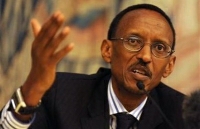
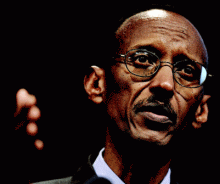
Paul Kagame: poster boy for the west's aid policies.Paul Kagame: poster boy for the west’s aid policies
Rwanda’s president Paul Kagame, long the darling of western donors, is widely expected to win August’s presidential polls, the second since the 1994 genocide. But is his success down to pure popularity, or because of an apparent crackdown on voices of dissent?
“On the surface, Kagame is a poster boy for the west’s aid policies, an African leader who stamps on corruption, who uses international help to educate children, treat the sick, repair roads and boost business.”
Mike Pflanz.
…
“‘It is strange. Why, if he has all this support, will he not allow opposition and then trounce them at the polls,’ asked a Kigali-based European diplomat. ‘Clearly all this other stuff is not the kind of press we were expecting out of Rwanda in the run-up to the elections.’”
…
“.‘The political environment ahead of the election has been riddled by a series of worrying actions taken by the Government of Rwanda, which appear to be attempts to restrict the freedom of expression’.”
Assistant Secretary of State Johnnie Carson.
Paul Kagame stands at a podium in an open-air stadium in Rwanda’s capital, Kigali, where terrified thousands sought refuge from the men with the machetes as the killing started exactly sixteen years earlier.
It is Genocide Memorial Day, April 7, 2010, and the president is talking about turning grief to strength and determination. So far he has spoken mostly in Kinyarwanda, his nation’s language, but without warning he switches to English.
What he says next is clearly directed at the suited dignitaries representing the world’s diplomatic missions, the donors who together pump roughly $700million into his country annually, or a little less than half its budget.
‘Political space, freedom of expression, press freedom, who are these giving anyone here lessons, honestly?‘ Kagame asks, softly, seemingly genuinely puzzled, as applause breaks out behind him. ‘These Rwandans…are as free, as happy, as proud of themselves like they have never been.‘
On the surface, Kagame is a poster boy for the west’s aid policies, an African leader who stamps on corruption, who uses international help to educate children, treat the sick, repair roads and boost business.
Former United States President Bill Clinton last year recognised his ‘public service’ with a Clinton Global Citizen Award. Former British Prime Minister Tony Blair is an unpaid and enthusiastic advisor to his government. Blair’s successor, David Cameron and senior members of the British Conservative party have for the last four years spent part of their summer recess building schools across Rwanda, and cosying up to its President.
So, why, at an event charged with the memories of sixteen years ago, is Kagame appearing to bite the hands that help feed his people? The reason is another date, August 9, when Rwandans vote in only their second democratic presidential election since the genocide.

UGLY EVENTS

In the lead-up to polling, a series of ugly events has focused the international spotlight on Kagame in a way that has never happened before. He suspended two popular independent newspapers, Umuseso and Umuvugizi, described by the New York-based Committee to Protect Journalists as ‘the only critical media voices left in the country’.
A week later, Victoire Ingabire, head of the opposition Unified Democratic Forces returned from exile in Holland, was promptly arrested and charged with denying the genocide, among other indictments. She has been bailed, but is under house arrest. Her American lawyer, Peter Erlinder, was arrested too, also accused of genocide denial, and only released on medical grounds after three weeks.
A second presidential hopeful, Bernard Ntaganda, is in prison awaiting trial on four charges, including terrorism. A Human Rights Watch researcher was expelled from the country over alleged visa irregularities.
Only three opposition parties have been allowed to nominate presidential candidates. They are accused of at best being strategically soft on Kagame’s ruling Rwandan Patriotic Front, at worst, being its proxies. ‘There is nothing we can do, we have supporters, we are ready to contest the election, but we cannot because we cannot register,’ said Frank Habineza, leader of the Democratic Green Party of Rwanda.
Most seriously, a reporter from one of the banned newspapers, Jean Leonard Rugambage, was shot dead outside his house on the evening of June 24.
Earlier in the day, a story he had written appeared online, alleging Rwandan security force involvement in the apparent assassination attempt of a disaffected army general – and former ally of Kagame’s – in South Africa. General Kayumba Nyamwasa, who reportedly fled Rwanda earlier this year afraid for his life, is expected to survive his injuries.
Two other army generals have been arrested in Rwanda, one for corruption, another for immoral conduct. Both were accused of links to a series of mysterious grenade attacks which killed one person and risk frightening-off tourists, who supply the largest share of the country’s foreign exchange earnings.
The vice-president of the opposition Democratic Green Party of Rwanda was found beheaded near his abandoned car on July 15, in what authorities said was a robbery. But his Green party colleagues immediately voiced suspicions that this too was a political killing. Kagame’s government has angrily denied any involvement in the deaths or shootings.

WESTERN WORRIES

‘It is strange. Why, if he has all this support, will he not allow opposition and then trounce them at the polls,‘ asked a Kigali-based European diplomat. ‘Clearly all this other stuff is not the kind of press we were expecting out of Rwanda in the run-up to the elections.’
Certainly not, agreed US President Barack Obama’s point-man for Africa, Assistant Secretary of State Johnnie Carson. In testimony to the US House Foreign Affairs subcommittee on Africa, he said: ‘The political environment ahead of the election has been riddled by a series of worrying actions taken by the Government of Rwanda, which appear to be attempts to restrict the freedom of expression.‘
Carson’s comments came as something of a pleasant surprise to those frustrated at a lack of international pressure on a leader who, they felt, was being allowed to run his nation like a dictatorship.
‘Carson’s statement was significant, and encouraging,’ said Carina Tertsakian, the Human Rights Watch staffer whose Rwanda visa was cancelled. ‘Sadly so far we have seen very little will on the part of western donors to deal with this issue, we’ve seen nothing like that coming out of the UK, for example, which is by far the biggest European donor and main supporter of the Rwandan government. We hope for more [international pressure], but we’re not seeing it yet.’
But this is exactly the kind of attention that irritates Kagame that prompted his puzzled statements on Genocide Memorial Day. Much of the concern, from human rights organisations and media freedom advocates, centres on the accusation that the government uses the charge of denying the genocide as a political tool to silence critics.
Britain’s new coalition government has said it is watching the run-up to Rwanda’s election closely. Speaking to The World Today during a visit to Nairobi, Andrew Mitchell, the International Development Secretary, said Britain was Rwanda’s ‘good, but candid, friend’ and that he had raised concerns publicly and privately with the government in Kigali.
‘There are real issues about ethnicity in a country which saw over eight hundred thousand people murdered principally by machete and single shot in ninety days,’ he said.
‘You have an incredible legacy to balance between the desire of the survivors for revenge and the rights of the Hutu people to live in peace. I think we in the west should be respectful of that very difficult situation in arriving at conclusions about how the Rwandans handle it.
‘I’m not saying that the restriction on political space should go unchallenged, far from it. But I think that they are entitled to be cut quite a lot of slack in addressing ethnic issues which have the power to be deeply destabilising in a country with Rwanda’s history.’
From holding an iron grip on a generally supportive military, the same army which he led from exile into Rwanda to stop the genocide sixteen years ago, Kagame is now facing dissent among some senior officers.
There are accusations that political patronage is spread too thin. Or that control of privatised state assets is being passed to too small an inner circle.
But critics claim, discuss this and the strong arm of the state will find you. Further, they question the long term sustainability of what is, in essence, the world’s first real experiment in post-genocide state reconstruction.
Kagame’s unspoken theory is that if people are richer, they are less likely to fight because they will have far more to lose.
But that is not proven, and what if another seven years of firmly keeping the lid on dissent means that, come the next election, the pot is boiling and ready to explode?
‘It shouldn’t be us raising these issues, but as a Rwandan, what can you do’, asks Tertsakian. ‘As soon as you say anything, you are arrested and accused of genocide ideology, or threatened with it, or forced into exile.’
That is to entirely miss the point, counter Kagame’s supporters. ‘For Rwandans, guarding against genocide ideology is a matter of core national security,’ said Andrew Wallis, an advisor to Kagame’s government and author of Silent Accomplice: The Untold Story of France’s Role in the Rwandan Genocide.
‘Kagame feels that if you have a western-type full freedom of expression, that will allow revisionism, genocide denial, and that can lead to genocide itself. It’s still too soon since 1994. The feeling is, give the guy a break.’

BEST FOR BUSINESS

And Kagame’s record – human rights concerns aside – is impressive. A country utterly on its knees sixteen years ago, where neighbours had turned on neighbours, teachers on pupils, churchmen on congregations, is now among Africa’smost successful.
Since Kagame was first democratically elected – privately saying his models for how to run his country were South Korea and Singapore -economic growth has averaged above eight percent, and this year the World Bank named it as the world’s best business reformer.
Kigali aims to become a regional hub for conferencing and the service industry. Broadband internet cables are snaking up and down the hills.
Primary schooling is now free, extra teachers are being hired, new universities planned. Subsistence farmers – still eighty percent of the eleven million population – are advised on modern techniques and organic fertilisers.
Rwanda became only the second non-Anglophone country – after Mozambique – to join the Commonwealth last year, and Kagame has come to something of a rapprochement with the French, whom he long accused of favouring the Hutu genocidaires before and during 1994’s horrors.
Both moves are aimed at broadening Rwanda’s business partnerships. Beijing is being courted, but is unlikely to be as big a player as elsewhere in Africa because Rwanda has few minerals.
So, it is clear that Kagame will win re-election this year. For many Rwanda-watchers, the more fascinating contest will be the next presidential polls, in 2017. The president is unlikely to stand again, but as yet there is no clue as to his successor.
‘The question is whether Rwanda is ready for a Western-style democracy, and the answer at this point probably is no,’ said Wallis. ‘He has been called many things, but one is for sure: Kagame is a man of immense vision, and that vision is being impressively implemented. Why must outsiders keep pushing their theories of how to run a country onto Rwanda?’
‘Give him another seven years to bequeath a country where everyone’s too busy making money to risk anything like 1994, and then, perhaps, that will be time for true multipartyism. It’s far from sure, though.’
Mike Pflanz, Correspondent, East, West and Central Africa, Daily Telergaph, in Nairobi.
Enhanced by Zemanta

Critics intensify campaign against Rwanda rigged elections

Paul Kagame.
paul-kagame-tough
Kigali – Hours after President Kagame firing at his fierce foreign critics telling them to “go hung” (see Defiant Kagame tells critics: You “can go hung”), they are countering with a drive to put Rwanda in the spotlight – less than seven days to the presidential poll on Monday next week.
In Washington, several campaign groups, individuals and American politicians have organised a conference on Tuesday to protest against the August 09 election they say is a foregone conclusion.
The American attorney Prof. Peter Erlinder jailed for three weeks here on charges of Genocide denial will be also be there at the Washington event. Erlinder said he would have never come to Rwanda if he had known what the political climate was like.
“I thought with the election coming up and with the many nice things that the United States government has said about the Rwandan government recently and the progress that it has made … Unfortunately what is happening now raises serious questions about whether that progress was real or whether we really do have a military dictatorship that is being supported by our government. It raises a lot of very difficult questions,” Erlinder said.
Fear, nervousness… no freedoms

Following the arrest of Erlinder, US Secretary of State Hillary Clinton said at the time she understood the anxiety of Rwanda’s leadership over what they view as genocide denial, but she urged Rwanda not to undermine its remarkable progress by beginning to move away from positive actions.
Analyst Steve McDonald, with the Washington-based Woodrow Wilson International Center for Scholars, recently returned from Rwanda and was also said disturbed by what he experienced.
“The fear is palpable, the nervousness, the feeling that there is no freedom of speech and association and gathering in the society and I think this could be disastrous,” he said.
He says he believes President Kagame is refusing post-genocide reconciliation as a means to exert his authority. But McDonald is not surprised he has received praise and many awards in the United States, including the Clinton Global Citizen Award last year, from former President Bill Clinton.
“Kagame is an extremely energetic, extremely intelligent man who has fully taken advantage of many of the hot buttons that he knows the West cares about, that is economic progress, that is environmental concern, that is furthering information technology,” McDonald said.
“He is taking the lead on the international stage that originally put him among these new African leaders during the Clinton administration, including Meles Zenawi in Ethiopia, and [Yoweri] Museveni in Uganda.”
“Just election hype”
McDonald says since then he believes these leaders have failed their countries in terms of democracy and human rights.
President Kagame himself has denied his government has been behind any of the killings, and has accused the western critics of making up a crisis in his country which does not exist.
“Why would government be that stupid? I never knew I would be in a government that would be seen as that stupid, that would kill journalists, opposition leaders, one after another, you kill and you kill, as if there is anything to gain from it,” Kagame said at a press conference July 20, just hours before he launched his campaign drive.
In a policy statement to a US Congress committee of lawmakers in May, top U.S. diplomat for Africa, Johnnie Carson, said the political environment in Rwanda was in his words “riddled by a series of worrying actions.”
In response, Foreign Affairs Minister Louise Mushikiwabo shot back in an email message to RNA saying that was “an out-of-Rwanda reading of the situation in Rwanda, with added election hype.”
Election will be “free and fair”
Africa advocacy groups holding a protest conference Tuesday in Washington say foreign election observers in Rwanda will be a waste of money.
The International Crisis Group (ICG) says in a new crisis assessment that Rwanda there is increasing “political violence and a shrinking of the democratic space” ahead of the polls.
“Although the government denies any involvement, this month’s events should be seen as part of an alarming trend towards repression and intimidation, which could have serious security implications come next month’s elections,” said ICG in the assessment released August 01.
The donor community meanwhile seems to have given a clean-bill to the elections, indicating that the polls will be “free and fair”.
The European Union said last week that the introduction of a revised electoral code should ensure a peaceful and technically sound ballot, following the European Union’s recommendations after the 2008 legislative elections where they found procedural irregularities in over half the polling stations.
Frans Makken, Dutch ambassador and co-chair of the EU fund for the NEC, said results will be published outside polling stations and ballot boxes numbered to aid transparency.
“The electoral law has been adjusted for the better, thousands of volunteers have received training, instructions have been adjusted in line with EU observations. We trust that the conduct of the elections will be free and fair,” Makken told Reuters Friday.
With additional reporting from VOA and agencies
Enhanced by Zemanta

Defiant Kagame tells critics: You “can go hung"

Kagame in campaign – Gicumbi – Aug 2010
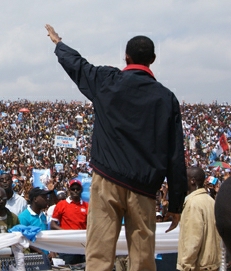
kame-in-campaign-gicumbi-smKigali – President Kagame stood Monday before tens of thousands in Gicumbi with just one simple message: that if his critics do not see the support he has, they can find another place to live.
“Give RPF another chance to develop the nation,” he said amidst wild cheering, on the latest leg of his campaign in Gicumbi, northern Rwanda.
“This is a struggle for democracy,” Kagame said, and put to question the authority of his fierce critics in the west who have recent raised concerns over Rwanda’s democratic credentials.
“Democracy is when people gathered in such a place to decide on their own what they want.
This is the time for Rwandans to make their choice and whoever is not interested may go and hang,” he fired as the crowd erupted in repeated chanting, dancing and drumming.
“When people choose what they want, that is democracy. When they reject negative forces and divisionism, that is democracy. When they choose the leadership they want that is democracy,” Kagame said. “Whoever does not like the Rwanda way of democracy should go and hang.”
President Kagame praised the attendance at today’s rally as a sign of support for the ruling Rwandan Patriotic Front’s policies.
“I am so happy you came in large numbers, which means you love your country and its prospects for democracy,” Kagame said. “Foreigners who write that there is no democracy in Rwanda should come and see.”
Enhanced by Zemanta

Rwandans will never tell you what is in their hearts because they are scared of Kagame

Matteo Fagotto
The Observer,
The campaign rallies of President Paul Kagame, such as this one in Nyaruguru district, have become increasingly triumphal. Photograph: Tadej Znidarcic for the Observer

kagameIt's a hot afternoon in the southern rural district of Nyaruguru. On a dusty clearing overlooked by a hill already swarming with people, tens of thousands of supporters have been gathering since early morning to get a glimpse of their hero. Among them are peasants, pregnant women and toddlers, all wearing the red-white-and-blue T-shirts of the ruling Rwandan Patriotic Front (RPF) and dancing to the rhythm of a famous local singer, Masamba Intore. Suddenly a convoy of black cars appears in the distance. The crowd explodes in cheers of joy when a tall, slender figure slowly makes his way to the podium. Ready for another mass celebration of his uncontested rule of this small African country, the president of Rwanda and former liberation fighter, Paul Kagame, finally appears, greeting his supporters.
Triumphal rallies like this one are becoming a daily routine in the presidential campaign of the Rwandan strongman. On 9 August the RPF leader will seek another seven-year mandate in an election widely seen as a formality. With a huge budget advantage over his three opponents, Kagame is expected to win as smoothly as in 2003, when he gained more than 95% of the votes. The only female among the contestants, Alvera Mukabaramba, has already accepted the inevitable defeat. "Beating Kagame is almost impossible," she acknowledges. "He has done so well for this country, rebuilding it from scratch after putting an end to the bloodiest page in our history."
Sixteen years after the genocide, the fates of Rwanda and the RPF are still deeply connected. The party is credited with having stopped the 1994 massacres in which 800,000 Tutsi were killed by the paramilitary Hutu militias and the former Rwandan army. It has ruled the country since then, constantly strengthening its grip on the society thanks to a policy based on development, order and transparency. But a series of recent disturbing events have highlighted what the RPF might not yet be ready to promote: democracy.
In recent weeks human rights organisations have repeatedly accused the government of dirty tactics and attempts to silence the media and prevent political opponents from competing in the elections. Victoire Ingabire, a politician who recently asked for an acknowledgment of the Hutu sufferings during the genocide, is now under house arrest, charged with denialism, genocide ideology and links with the FDLR, a rebel group based in nearby Congo and made up of former génocidaire troops.
Umuseso and Umuvugizi, two of the main Rwandan tabloids, have been banned for six months for "inciting public disorder" which will prevent them from covering the elections.
At the end of June Umuvugizi's editor, Jean-Leonard Rugambage, was killed in front of his home in Kigali, the capital, by two gunmen. Rwandan general Kayumba Nyamwasa, who had fled the country after an alleged falling out with Kagame, almost succumbed to the same fate when he was shot and seriously wounded in Johannesburg.
"At the beginning we were willing to start a political process. But it seems we are now simply negotiating to save our lives," said Frank Habineza, a former member of the RPF and now the leader of the Democratic Green party of Rwanda. One of the opposition parties that have mushroomed in the past year, the Greens cannot participate properly in the August elections because of police bans on its meetings. On 14 July, the party's deputy president, André Kagwa Rwisereka, was found dead on a river bank close to the border with Burundi, his head almost completely removed from his body. According to Habineza, the two men arrested in connection with the killing were released after a few days in custody. "Kagame is a soldier who never finished the war and never gave up military methods," he says. "He sees criticism as an open threat to his rule".
While Rwandan authorities have denied any role in the killings, RPF insiders concede that the recent bans are suspicious. They might betray the worries of a party afraid to lose control of a society still deemed politically immature after the traumas of genocide. The RPF policy of cancelling Hutu and Tutsi identities and embracing everyone as a Rwandan is widely thought to be working, but will take time. "If allowed to act without restraint, people would still vote along ethnic lines and Hutus would regain power, something we are not ready to accept now," admits a local RPF member who wished to remain anonymous. "Rwandans are voting for Kagame because they don't want problems, but the society remains tense."
Loyal to its president's credo that democracy is an empty box if people are not provided with food and basic services, and conscious that a former Tutsi rebel group cannot yet have a lasting base in a country where 85% of the people are Hutu, the RPF are betting on improving the living conditions of the people, hoping that this will do enough to silence opposition inside the country.
Rwanda is certainly developing fast. "Today everyone here can enjoy free primary education and health insurance," explains Jean Paul Uwizihiwe, a GP in Kigali. "The government even subsidises free anti-retroviral medication for HIV-positive patients. This means that people who would die in almost any other African country can live a normal life."
Rwanda's economy has boomed thanks to foreign investors. Roads and new infrastructure have boosted exports and tourism, while poor rural areas have benefited from loans given to co-operatives and aid programmes including "one cow per family" .
"Efficiency and delivery" are the motto of a political party born and bred according to the military discipline of its leader. Corruption is rare and poorly performing officials are quickly removed from their offices. As a result, Rwanda is one of the few countries where the public sector is more efficient than private industry.
"As in China, democracy will come naturally with the economic empowerment of the people," explains John Rwangombwa, the minister of finance and economic planning. "Our society is still fragile. We can't allow a total freedom of expression when some politicians and part of the society are ready to use the racial card to achieve power."
According to a prominent member of the opposition who asked to remain anonymous, the RPF reasoning has a point. When asked about choosing between Kagame and Ingabire for president, he replies without hesitation. "I would choose Kagame. Ingabire is clean, but she is still supported by scary people linked to the previous regime. They have a bad agenda. They still have the old Rwandan flag in their office. I'm proud to wear the new one."
The shortcomings of the opposition are undeniable, but RPF critics still argue that the party's attitude is making things worse, preventing people from speaking about problems that are bound to resurface. For all the economic development guaranteed by the RPF, the unresolved questions of this country's troubled past still cast a shadow over the future of Rwandans. Many acknowledge that relations between Hutus and Tutsis are slowly improving but remain difficult. They can go out to drink beers and speak about women, cars and football, but some subjects remain taboo, genocide among them.
"Rwandans never tell you what is in the heart," explains Sylvestre Mupenzi, an artist. "We always say that everything is OK, but in reality we are scared and wary. We can't trust each other."
While Tutsis remain understandably bitter towards the perpetrators of genocide, Hutus think it is time to address the killings carried out against them during the civil war that followed the ethnic cleansing.
As a consequence of this endless cycle of guilt, fear and resentment, there remain two paramount needs: peace and security, things that the Kagame administration has provided. But when asked if this country may then need an "enlightened dictator" to solve its problems and continue on the road to recovery, Habineza rejects the option. "It has worked in the first years after the genocide," he admits. "But in the long run, development is not sustainable without democracy.

Rwanda: Atteintes aux libertés d’expression, d’association et de réunion à l’approche de l’élection présidentielle

Human Rights Watch logoImage via Wikipedia
Janvier - juillet 2010
Ce document présente une chronologie de cas de violations du droit à la liberté d'expression, à la liberté d'association et à la liberté de réunion ainsi que d'événements connexes qui se sont produits au Rwanda à l'approche de l'élection présidentielle du 9 août 2010. Il devrait être lu conjointement avec les documents de Human Rights Watch énumérés en face, lesquels fournissent des informations complémentaires sur quelques-uns de ces cas.


La présente chronologie est principalement axée sur une sélection de cas affectant des membres des partis de l'opposition, ainsi que des journalistes et des organisations non gouvernementales. Elle ne prétend pas apporter une liste exhaustive de cas. Human Rights Watch a recueilli des informations sur d'autres incidents qui ne sont pas inclus dans la présente chronologie.
16 janvier Victoire Ingabire Umuhoza, présidente du parti d'opposition FDU-Inkingi, rentre au Rwanda après 16 années d'exil.
Janvier à avril Victoire Ingabire est convoquée à maintes reprises par la police et interrogée à propos d'une présumée collaboration avec des groupes armés, en particulier les Forces démocratiques pour la libération du Rwanda (FDLR). (Les FDLR sont un groupe armé actif en République démocratique du Congo, composé en partie d'individus ayant participé au génocide au Rwanda en 1994.) Elle est également interrogée à propos de ses déclarations publiques critiques à l'égard du gouvernement, donnant lieu à des accusations d'idéologie génocidaire et d'incitation aux divisions ethniques. Ces accusations sont en partie liées aux déclarations qu'elle a faites au mémorial du génocide à Kigali, au cours desquelles elle a appelé à ce que les massacres de Hutus soient reconnus, en plus du génocide, et à ce que justice soit rendue pour ces crimes.
Janvier à mai Les autorités locales refusent à diverses reprises au Parti démocrate vert (autre parti d'opposition) et aux FDU-Inkingi la permission de tenir leurs congrès, l'une des conditions pour qu'un parti politique soit enregistré. Les deux partis ne peuvent obtenir leur enregistrement.
3 février Un membre des FDU-Inkingi, Joseph Ntawangundi, est passé à tabac devant les bureaux des autorités locales de Kinyinya (Kigali). 
4 février Frank Habineza, président du Parti démocrate vert, est menacé par un inconnu dans un restaurant de Kigali.
6 février Ntawangundi est arrêté et accusé de participation au génocide.
21 février Une réunion du parti d'opposition PS-Imberakuri est violemment perturbée par des membres d'une faction dissidente.
22 février Dans une affaire qui avait débuté en 2009, un tribunal reconnaît trois journalistes du journal indépendant Umuseso (le rédacteur en chef Didas Gasana, l'ancien rédacteur en chef Charles Kabonero et le reporter Richard Kayigamba) coupables de diffamation en lien avec un article publié dans leur journal. Kabonero est condamné à un an d'emprisonnement, Gasana et Kayigamba à six mois chacun. Tous trois se voient infliger une amende d'un million de francs rwandais (environ 1 755 $US).
28 février L'ex-général rwandais Faustin Kayumba Nyamwasa part en exil en Afrique du Sud et commence à dénoncer le gouvernement et le Président Paul Kagame.
3 mars Déogratias Mushayidi, ancien journaliste et opposant en exil du gouvernement, est arrêté au Burundi. 
5 mars La police burundaise remet Mushayidi aux autorités rwandaises.
10 mars  Les agents de l'immigration annulent le visa de travail de la chercheuse principale de Human Rights Watch sur le Rwanda, Carina Tertsakian.
17-24 mars Le membre des FDU-Inkingi Joseph Ntawangundi comparaît devant une juridiction gacaca (tribunal communautaire mis sur pied pour statuer sur les affaires de génocide). Après avoir au départ plaidé non coupable, il change ensuite d'avis et avoue avoir participé au génocide. Il est condamné à 17 ans de prison.
17 mars Une faction dissidente du PS-Imberakuri nomme Christine Mukabunani nouvelle présidente du parti, dans le cadre d'une tentative d'éviction du fondateur et président Bernard Ntaganda.
19 mars Mushayidi comparaît devant un tribunal et est accusé, entre autres, d'atteinte à la sûreté de l'État, de collaboration avec des groupes terroristes, d'avoir minimisé le génocide, d'idéologie génocidaire et de divisionnisme.
23 mars Ingabire est bloquée par la police à l'aéroport de Kigali et se voit empêchée de se rendre à l'étranger.
5 avril Lors d'une audience devant le Sénat, des membres de la Commission politique du Sénat affirment que les accusations d'idéologie génocidaire portées à l'encontre de Bernard Ntaganda sont bien fondées. Le Sénat avait convoqué Ntaganda à deux reprises fin 2009 pour qu'il réponde d'accusations d'idéologie génocidaire, en lien avec ses déclarations publiques critiquant certaines politiques gouvernementales.
13 avril Le Haut conseil des médias suspend les deux journaux indépendants Umuseso et Umuvugizi pour une période de six mois.
21 avril Le rédacteur en chef d'Umuvugizi Jean-Bosco Gasasira fuit le Rwanda après avoir fait l'objet de menaces à plusieurs reprises.
21 avril Ingabire est arrêtée et accusée d'idéologie génocidaire, de divisionnisme et de collaboration avec des groupes terroristes, dont les FDLR.
22 avril Ingabire est libérée sous caution mais n'est pas autorisée à quitter Kigali.
23 avril Dans une affaire qui avait débuté en 2009, la cour d'appel reconnaît Gasasira coupable de diffamation en lien avec des articles publiés dans son journal. Il est condamné à verser une lourde amende ainsi que des dommages et intérêts.
23 avril La deuxième demande de visa de travail de Carina Tertsakian est rejetée, la veille de la date d'expiration de son séjour légal au Rwanda. Elle est obligée de quitter le pays le 24 avril.
24 mai Le rédacteur en chef d'Umuseso Didas Gasana fuit le Rwanda après avoir fait l'objet de menaces à plusieurs reprises.
28 mai Peter Erlinder, l'avocat américain de Victoire Ingabire, est arrêté et accusé d'avoir nié et minimisé le génocide, ainsi que d'avoir diffusé des rumeurs susceptibles de menacer la sécurité nationale.
7 juin Erlinder se voit refuser une mise en liberté sous caution.
17 juin Erlinder est libéré sous caution pour des raisons médicales.
19 juin Tentative de meurtre sur Faustin Kayumba Nyamwasa en Afrique du Sud.
24 juin Bernard Ntaganda est arrêté.
24 juin Plusieurs membres du PS-Imberakuri sont arrêtés devant l'ambassade des États-Unis et plusieurs membres des FDU-Inkingi sont arrêtés devant le Ministère de la Justice à Kigali.
24 juin Le journaliste d'Umuvugizi Jean-Léonard Rugambage est abattu devant sa maison à Kigali dans la soirée. Le matin, l'édition en ligne d'Umuvugizi avait publié un article, basé en partie sur des informations reçues par Rugambage selon lesquelles de hauts responsables rwandais auraient été impliqués dans la tentative de meurtre perpétrée en Afrique du Sud sur la personne de Kayumba Nyamwasa.
25 juin La police libère certains membres du PS-Imberakuri et des FDU-Inkingi, mais trois membres des FDU-Inkingi et six membres du PS-Imberakuri, dont Bernard Ntaganda, restent en détention. Plusieurs membres du PS-Imberakuri et des FDU-Inkingi signalent avoir été passés à tabac par la police.
27 juin Un autre membre du PS-Imberakuri est arrêté.
27 juin Didace Nduguyangu et Antoine Karemera sont arrêtés en lien avec le meurtre de Rugambage. Les autorités annoncent par la suite que les deux hommes ont avoué avoir projeté de tuer Rugambage pour se venger d'un meurtre que celui-ci aurait commis pendant le génocide.
2 juillet Date limite pour la remise des candidatures présidentielles à la Commission électorale nationale (NEC). Le PS-Imberakuri, le Parti démocrate vert et les FDU-Inkingi ne sont pas en mesure de présenter des candidats.
6 juillet Bernard Ntaganda comparaît devant un tribunal et est accusé de plusieurs délits, entre autres d'avoir organisé des manifestations sans autorisation officielle, d'avoir troublé la sécurité nationale et d'avoir incité aux divisions ethniques - les deux derniers délits étant liés à ses déclarations publiques critiquant les politiques gouvernementales.
8 juillet Arrestation d'Agnès Nkusi Uwimana, rédactrice en chef du journal Umurabyo, en lien avec des articles publiés dans son journal.
9-13 juillet Les membres restants des FDU-Inkingi et du PS-Imberakuri sont libérés, à l'exception de Ntaganda. 
10-12 juillet Arrestation de Saidati Mukakibibi et de Patrick Kambale, journalistes à Umurabyo. Kambale est libéré.  Mukakibibi reste en détention.
13 juillet André Kagwa Rwisereka, vice-président du Parti démocrate vert, est porté disparu. Sa voiture est retrouvée près de la ville de Butare, dans le sud.
14 juillet
Le corps mutilé de Rwisereka est retrouvé à la périphérie de Butare.
16 juillet La police arrête Thomas Ntivugurizwa, présumé être la dernière personne à avoir vu Rwisereka, sur présomption de meurtre.
20 juillet Lancement officiel des campagnes pour l'élection présidentielle. Les candidats sont le président en exercice Paul Kagame (Front Patriotique Rwandais),  Prosper Higiro (Parti Libéral), Jean-Damascène Ntawukuriryayo (Parti Social Démocrate) et Alivera Mukabaramba (Parti du Progrès et de la Concorde). 
21 juillet Thomas Ntivugurizwa est libéré.
21 juillet Cinq membres du PS-Imberakuri sont arrêtés dans les bureaux du parti.
24 juillet Deux membres des FDU-Inkingi sont arrêtés devant le domicile de Victoire Ingabire.
27 juillet Le procès de Mushayidi débute à Kigali. 
28 juillet Des exemplaires du premier numéro de The Newsline, un journal en langue anglaise produit par des journalistes d'Umuseso en exil, sont saisis à la frontière rwando-ougandaise. La police rwandaise arrête le chauffeur et le contrôleur du bus transportant les journaux. Le chauffeur est libéré quelques heures plus tard. Le contrôleur est maintenu en garde à vue pendant deux jours ; il est libéré le 30 juillet, mais d'après certaines informations, il aurait été ré-arrêté le lendemain.
29 juillet Trois membres du PS-Imberakuri sont libérés.
9 août Élection présidentielle.
Enhanced by Zemanta

Rwanda:Abuses of Human Rights in Rwanda – January to July 2010

by Human Rights Watch
Rwanda Green Party Leader Beheaded by the RPF Members
Monday, August 2nd, Human Rights Watch published a list of attacks on freedom of expression, freedom of association and freedom of assembly in the run-up to presidential elections in Rwanda. The list which is not exhaustive covers the period from January to July 2010.
The document presents a chronology of incidents of violations of the right to freedom of expression, freedom of association and freedom of assembly in Rwanda, and related events, in the period leading up to presidential elections on August 9, 2010. It should be read in conjunction with the Human Rights Watch documents listed at the end of the chronology, which provide additional information on some of these cases.
The chronology focuses primarily on selected incidents affecting members of opposition parties, journalists and non-governmental organizations. It is not intended as an exhaustive list of cases. Human Rights Watch has documented additional incidents which are not included in this chronology.
Chronology of main incidents and related events
January 16
Victoire Ingabire Umuhoza, president of the FDU-Inkingi opposition party, returns to Rwanda after 16 years in exile.
January to April
Victoire Ingabire is summoned by the police on numerous occasions and interrogated in relation to alleged collaboration with armed groups, in particular the Forces démocratiques pour la libération du Rwanda (FDLR). (The FDLR is an armed group active in the Democratic Republic of Congo, composed in part of individuals who carried out the genocide in Rwanda in 1994.) She is also questioned in relation to her public statements criticizing the government, leading to accusations of genocide ideology and incitement to ethnic divisions. These accusations relate, in part, to statements she made at the genocide memorial in Kigali, in which she called for massacres of Hutus to be acknowledged – in addition to the genocide – and for justice to be done for these crimes.
January to May
Local authorities repeatedly deny the Democratic Green Party (another opposition party) and the FDU-Inkingi permission to hold their congress meetings, one of the conditions for registering as a political party. Both parties are unable to register.
February 3
FDU-Inkingi member, Joseph Ntawangundi, is beaten outside the local government office in Kinyinya, Kigali.
February 4
Frank Habineza, president of the Democratic Green Party, is threatened by an unknown man at a Kigali restaurant.
February 6
Ntawangundi is arrested on accusation of participation in the genocide.
February 21
Meeting of the PS-Imberakuri opposition party is disrupted violently by members of a dissident faction.
February 22
Court finds three journalists of the independent newspaper Umuseso (Editor Didas Gasana, former editor Charles Kabonero and journalist Richard Kayigamba) guilty of defamation in relation to an article published in their newspaper, in a case which began in 2009. Kabonero is sentenced to one year’s imprisonment, Gasana and Kayigamba to six months each. All three are fined one million Rwandan francs (approximately US$ 1,755).
February 28
Former Rwandan general Faustin Kayumba Nyamwasa goes into exile in South Africa and begins speaking out against the government and President Paul Kagame.
March 3
Deogratias Mushayidi, former journalist and exiled opponent of the government, is arrested in Burundi.
March 5
Burundian police hand over Mushayidi to the Rwandan authorities.
March 10
Immigration authorities cancel the work visa of Human Rights Watch’s senior researcher on Rwanda, Carina Tertsakian.
March 17-24
FDU-Inkingi member Joseph Ntawangundi appears before a gacaca court (community-based court set up to try genocide cases). After initially pleading not guilty, he changes his plea and confesses to participating in the genocide. He is sentenced to 17 years’ imprisonment.
March 17
A dissident faction of the PS-Imberakuri names Christine Mukabunani as the new president of the party, in a bid to oust founder and president Bernard Ntaganda.
March 19
Mushayidi is brought before a court and accused, among other things, of endangering state security, collaboration with terrorist groups, minimizing the genocide, genocide ideology and divisionism.
March 23
Ingabire is stopped by the police at Kigali airport and prevented from travelling abroad.
April 5
In a Senate hearing, members of the Senate Political Commission claim that accusations of genocide ideology against Bernard Ntaganda are well-founded. The Senate had summoned Ntaganda on two occasions in late 2009 to answer accusations of genocide ideology, in relation to his public statements criticizing government policies.
April 13
The Media High Council suspends the two independent newspapers Umuseso and Umuvugizi for six months.
April 21
Umuvugizi editor Jean-Bosco Gasasira flees Rwanda after receiving repeated threats.
April 21
Ingabire is arrested on charges of genocide ideology, divisionism, and collaboration with terrorist groups, including the FDLR.
April 22
Ingabire is released on bail, but not allowed to leave Kigali.
April 23
Appeal court finds Gasasira guilty of defamation in relation to articles published in his newspaper, in a case which began in 2009. He is sentenced to a large fine and damages.
April 23
Carina Tertsakian’s second work visa application is rejected, the day before her legal stay in Rwanda is due to expire. She has to leave the country on April 24.
May 24
Umuseso editor Didas Gasana flees Rwanda after receiving repeated threats.
May 28
Peter Erlinder, Victoire Ingabire’s American defense lawyer, is arrested on charges of denying and minimizing the genocide, and malicious spread of rumors that could threaten national security.
June 7
Erlinder is denied bail.
June 17
Erlinder is released on bail on medical grounds.
June 19
Attempted murder of Faustin Kayumba Nyamwasa in South Africa.
June 24
Bernard Ntaganda is arrested.
June 24
Several PS-Imberakuri members are arrested outside the US embassy and several FDU-Inkingi members arrested outside the Ministry of Justice in Kigali.
June 24
Umuvugizi journalist Jean-Léonard Rugambage is shot dead outside his home in Kigali in the evening. That morning, the online edition of Umuvugizi had published an article, based in part on information received by Rugambage, alleging the involvement of senior Rwandan officials in the attempted murder of Kayumba Nyamwasa in South Africa.
June 25
Police release some PS-Imberakuri and FDU-Inkingi members, but three FDU-Inkingi members and six PS-Imberakuri members, including Ntaganda, remain in detention. Several PS-Imberakuri and FDU-Inkingi members report being beaten by the police.
June 27
An additional PS-Imberakuri member is arrested.
June 27
Didace Nduguyangu and Antoine Karemera are arrested in connection with the murder of Rugambage. The authorities later announce that the two men confessed to planning to kill Rugambage to avenge a murder which he allegedly committed during the genocide.
July 2
Deadline for submission of presidential candidacies to the National Electoral Commission (NEC). The PS-Imberakuri, Democratic Green Party and FDU-Inkingi are unable to submit candidates.
July 6
Bernard Ntaganda is brought before a court and accused of several offences, including organizing demonstrations without official permission, endangering national security and inciting ethnic divisions – the latter two in relation to his public statements criticizing government policies.
July 8
Arrest of Agnès Nkusi Uwimana, editor of the newspaper Umurabyo, in connection with articles published in her newspaper.
July 9-13
The remaining FDU-Inkingi and PS-Imberakuri members are released, with the exception of Ntaganda.
July 10-12
Saidati Mukakibibi and Patrick Kambale, journalists with Umurabyo, are arrested. Kambale is released. Mukakibibi remains in detention.
July 13
André Kagwa Rwisereka, vice-president of the Democratic Green Party, is reported missing. His car is found near the southern town of Butare.
July 14
Rwisereka’s mutilated body is found on the outskirts of Butare.
July 16
Police arrest Thomas Ntivugurizwa, allegedly the last person to see Rwisereka, on suspicion of his murder.
July 20
Official start of presidential election campaigns. The candidates are incumbent president Paul Kagame (Rwandan Patriotic Front), Prosper Higiro (Parti Libéral), Jean-Damascène Ntawukuriryayo (Parti Social Démocrate) and Alivera Mukabaramba (Parti du Progrès et de la Concorde).
July 21
Thomas Ntivugurizwa is released.
July 21
Five PS-Imberakuri members are arrested in the party’s offices.
July 24
Two FDU-Inkingi members are arrested outside Victoire Ingabire’s house.
July 27
Mushayidi’s trial begins in Kigali.
July 28
Copies of the first edition of The Newsline, an English-language newspaper produced by Umuseso journalists from exile, are seized at the Uganda-Rwanda border. Rwandan police arrest the driver and conductor of the bus transporting the newspapers. The driver is released a few hours later. The conductor is detained for two days; he is released on July 30, but reportedly re-arrested the following day.
July 29
Three PS-Imberakuri members are released.
August 9
Presidential elections.
For further information, please see the following Human Rights Watch documents, all available at www.hrw.org/africa/rwanda
“Rwanda: Allow Independent Autopsy of Opposition Politician” (July 21, 2010 news release), http://www.hrw.org/en/news/2010/07/20/rwanda-allow-independent-autopsy-opposition-politician
Human Rights Watch’s submission on Rwanda for the Universal Periodic Review (July 5, 2010), http://www.hrw.org/en/news/2010/07/05/universal-periodic-review-rwanda
“Rwanda: Stop Attacks on Journalists, Opponents” (June 26, 2010 news release), http://www.hrw.org/en/news/2010/06/26/rwanda-stop-attacks-journalists-opponents
“Rwanda: Allow Human Rights Watch to Work” (April 23, 2010 news release), http://www.hrw.org/en/news/2010/04/23/rwanda-allow-human-rights-watch-work
“Rwanda: End Attacks on Opposition Parties” (February 10, 2010 news release), http://www.hrw.org/en/news/2010/02/10/rwanda-end-attacks-opposition-parties

Rwanda Election Blues:Opposition Politicians and Journalists Persecuted in Run-Up to Election

By Horand Knaup
Shortly before elections in Rwanda, once a model country in Africa, the opposition is being harassed and regime critics are being arrested or killed. Despite his success in turning the country around, President Paul Kagame has never had high regard for freedom of expression and human rights.
The gesture was clear and the message unambiguous. Rwandan President Paul Kagame had hardly arrived in the Spanish capital Madrid when he realized that his host was unwilling to shake his hand. The recent United Nations conference that the president was supposed to chair together with Spanish Prime Minister José Luis Rodríguez Zapatero was hastily moved from a government building to a hotel. And then, at the meeting, UN Secretary General Ban Ki-Moon even demanded that Kagame investigate recent incidents in his native Rwanda.

Never before had Kagame, 52, been subjected to such a serious act of political humiliation. Being treated like political outlaws from Zimbabwe or Iran was something he had not yet experienced. For years, Kagame was seen as a model leader in Africa. He had successfully jump-started his country's economy, international donors were approving funds for Rwanda, and the United States had built one of its biggest embassies in Africa in the capital Kigali. Kagame was the man who had achieved the miracle of transforming poverty-stricken Rwanda into a model African country. He fought corruption, reduced defense spending and invested in education. In 2009, the World Bank named Rwanda the "world's top reformer."
Critics and Opponents Suppressed
But for the past few months, just in time for the presidential elections scheduled for Monday, the president has shown a completely different face -- a face more reminiscent of other African potentates, one that bans newspapers and has journalists arrested and opposition leaders swept out of the way.
In the third week in June, Léonard Rugambage, a journalist, was shot and killed in front of his house in Kigali. And, in mid-June, the deputy chairman of the country's Green Party, André Kagwa Rwisereka, was found dead in a swamp, his head almost completely severed from his body. The leader of the Socialist Party has been detained for weeks, while his secretary disappeared without a trace in mid-June. In July, Kagame had three journalists arrested on charges of insulting the president. His most promising opponent has been under house arrest for months.
The government has distanced itself from the murders, and yet none of the cases has been solved. This seems odd in a country where the police even hands out tickets for throwing away plastic bags.
The world has long regarded Rwanda with favor. A latent sense of guilt for having done nothing about the 1994 genocide prompted many governments, including Germany's, to generously support the Kagame administration. About 800,000 people, most of them members of the Tutsi ethnic group, were killed between April and July 1994. After 100 days, the massacres were finally brought to an end when Kagame's Rwandan Patriotic Front (RPF) marched in.
Unlike other African leaders, Kagame is not suspected of having lined his own pockets while in office. His motorcade is relatively modest, he doesn't drink alcohol and he values punctuality. Employees who have not arrived at the presidential palace by 7 a.m. are barred from the premises for the next two hours. These virtues have also contributed to his popularity in the United States and Europe.
Using the Genocide as Ammunition
The United States provides Rwanda with about $200 million (€154 million) in annual foreign aid. Former British Prime Minister Tony Blair is a personal advisor to the president. This spring, the Global Fund promised him $431 million for a program to fight AIDS and tuberculosis. Hardly any other African country receives this much attention and support.
All of this aid and investment has clearly paid off. The streets in Kigali are as good as they are in Europe, two five-star hotels are under construction and a new airport is planned. Some 92 percent of the population has health insurance, and Rwanda, once a starving nation, is even exporting food products today.
But as energetically as Kagame has pressed ahead with economic development, he still holds freedom of expression and democratic rights in low regard. He cites Rwanda's unique history as justification for his restrictive policies.
For years, the RPF has used the trauma of the genocide as ammunition in its political disputes with critics. The president and the RPF see themselves as the country's unassailable moral authority, arguing that they were the ones who put an end to one of the worst genocides since World War II. They point out that it was the RPF that lifted the country out of an African quagmire of corruption and mismanagement. This is why they treat members of the opposition as traitors, and not as people with diverging political convictions.

Frank Habineza, an opposition politician, felt the government's displeasure when he switched from the RPF to the Green Party. He was sitting in a restaurant when a stranger approached him and said: "We are watching you very carefully. Look out." After the death of Deputy Chairman Rwisereka, Habineza now fears for his own life. In his office on the outskirts of Kigali, he likes to show visitors photos taken at one of the first conventions of his party, which was founded only last August. At the meeting, provocateurs wearing suits suddenly jumped and started throwing chairs. When the police arrived, they disbanded the event, handcuffed the troublemakers and took them away. But according to Habineza, the men were promptly released after arriving at the police station.
Nowadays Habineza always locks himself into his office. Then he whispers: "You never know who will suddenly walk in."

Press Release
Ten years on global poverty reduction strategies failing poorest people – new report
                                                                                                                        4 August 2010
More than 10 years on, global poverty reduction strategies introduced by multilateral organisations including the World Bank and International Monetary Fund (IMF), have failed to remove many of the poorest communities, especially minority and indigenous communities, out of poverty, Minority Rights Group International says.
Poverty Reduction Strategy Papers (PRSPs) were initiated in 1999 by the IMF and World Bank to help low income and highly indebted countries to reduce their poverty levels. At the time, the move was widely supported by the UN and big donor countries. Currently, about 140 countries around the world are at some stage of a PRSP process, including implementing development projects based on the papers.
Now a new briefing by MRG, which looks at the progress of PRSPs in  countries across Africa, Asia and Latin America, says millions of dollars, directed via governments and civil society, have been spent on development programmes as part of the PRSPs that are having no real impact on the ground.
The briefing says states compiling the papers have failed to take account of the unique situation facing minorities, such as geographical remoteness, language barriers and lack of knowledge and  information about national government processes. The lack of resources has also hindered communities’ meaningful participation in the process.
“Processes such as these can only begin to have results for minority and indigenous communities if they take account of linguistic and cultural differences, gender inequalities and the impact of direct and indirect discrimination,” says Mark Lattimer, MRG’s Executive Director.
The report is based on global research as well as first hand consultations with communities and civil society actors in Kenya and Uganda, with a focus on pastoralist communities in the region. The case studies argue that PRSPs are failing to deliver on the basic promises made by governments and the international community to poor people.
For instance, the Karamoja region in north eastern Uganda, an area mainly populated by minority pastoralist groups, is comparatively lacking basic social services and has endured marginalisation from the political, social and economic mainstream of Uganda despite a long-standing poverty reduction plan in the country.
 Similarly in Kenya, pastoralist communities, including the Endorois, who have been removed from their ancestral lands by successive governments, remain impoverished, with elevated levels of illiteracy, high HIV prevalence, poor health, and high maternal and child mortality rates.
“The lack of a comprehensive analysis within PRSPs of the status of minority and indigenous women, who face multiple levels of discrimination and marginalisation, as well as the failure to disaggregate data on the basis of ethnicity and religion means that the real situation of these vulnerable groups is hidden within the overall poverty analysis of the majority population,” says Samia Khan, author of the briefing.
MRG through its research has recognised the need to improve national poverty consultation processes to include models that are rights-based, pro-poor and engage all marginalised groups in meaningful participation in decisions that affect them.
Notes to Editor –
-       ‘Poverty Reduction Strategy Papers: failing minorities and indigenous peoples’ will be launched on 4 August 2010. The briefing will be available on MRG’s website www.minorityrights.org
-        
-       Interviews can be arranged with the following:

o    Mark Lattimer, MRG’s Executive Director
T: +442074224200

o    Samia Khan, Author of the briefing.
M: +44(0)7956431276


-       Minority Rights Group International (MRG) is a non-governmental organisation working to secure the rights of ethnic, religious and linguistic minorities and indigenous peoples worldwide. Visit our website on:www.minorityrights.org
For further information or to arrange interview please contact MRG’s press office in London +442074224205 or +447870596863 or in Kampala on +256 312266832 (Office) +256 782748189 (Cell).
Mohamed Matovu
Africa Regional Information officer
Minority Rights Group International
+256 312266832 (Office)
+256 782748189 (Cell)