Africa Great Lakes Democracy Watch


Welcome to
Africa Great Lakes Democracy Watch Blog. Our objective is to promote the institutions of democracy,social justice,Human Rights,Peace, Freedom of Expression, and Respect to humanity in Rwanda,Uganda,DR Congo, Burundi,Sudan, Tanzania, Kenya,Ethiopia, and Somalia. We strongly believe that Africa will develop if only our presidents stop being rulers of men and become leaders of citizens. We support Breaking the Silence Campaign for DR Congo since we believe the democracy in Rwanda means peace in DRC. Follow this link to learn more about the origin of the war in both Rwanda and DR Congo:http://www.rwandadocumentsproject.net/gsdl/cgi-bin/library


Sunday, December 18, 2011

RWANDA:PROCLAMATION ESTABLISHING THE RWANDA NATIONAL CONGRESS

Posted: December 12, 2011 in Rwanda News
0

PROCLAMATION ESTABLISHING THE RWANDA NATIONAL CONGRESS
We, the Citizens of Rwanda who are signatories to this Proclamation, met in
Bethesda, Maryland, in the United States of America on 11 – 12 December
2010, to discuss strategies for resolving the explosive political impasse that
prevails in Rwanda and to envision a new nation embedded in human dignity,
mutual respect, freedom, liberty, justice, and democracy.
We firmly believe that all human beings have an inherent right to live in peace
and freedom and to the fair use of, and accessto, the resourceswith which their
nations are endowed for the promotion of the well-being of all citizens.. Every
person is entitled to the rights promulgated by the Universal Declaration of
Human Rights, the International Covenant on Civil and Political Rights, the
African Charter on Human and Peoples Rights, and other international
conventions and instruments that explicitly establish and protect the full range of
universal human rights. The principal rationale for the existence of government
is to facilitate the realization of these fundamental and inalienable rights for all
citizens.
Rwanda is an ancient nation. No doubt, every government that has exercised
control over the Rwandan state during the course of our country’s long history
can rightfully be credited for developments that have been of benefit to its
citizens. On balance, however, virtually every Rwandan government has
historically preyed on the citizenry and has suppressed the realization and
enjoyment of the inherent and universal rights of those whom it governed.
Autocratic government (in the form of a government controlled by an absolute
monarch or an all-powerful president) has generally been the norm during our
history. While Rwanda is a diverse society, the diversity of its national character
(based on class, ethnic identity, religion or region of origin) has often been
manipulated by elite political leaders to satisfy their selfish and egoistic interests
and to acquire or monopolize power and access to resources. Our people have
never had the opportunity to fully realize their aspirations for freedom, security
and prosperity.
During its long history, Rwanda have never been provided with a political
environment wherein all of its citizens, regardless of their beliefs or origins, were
able to exercise their inherent rights. Instead, every group that has assumed
power – though at first proclaiming universal and democratic ideals – has in time
succumbed to the lure of the monopoly of power.
Each ruling group eventually found justification to exclude the majority of
Rwandans from the enjoyment of fundamental human rights. The ruling class
often assumed absolute power and governed with impunity, outside the rule of
law and outside universally recognized democratic norms; it prepared to
eliminate both real and perceived political opponents and competitors for the
privileges that flow from control of political power.
For ordinary Rwandans, they were rarely, if ever, entitled to their inherent
human rights and the right of expression of beliefs and free association. In the
past, and sadly to this day, political leaders determined who should live or who
should die, outside the rule of law. The struggle in Rwanda of competition for
power and access to resources has often unleashed cataclysmic conflict, killings
and untold human suffering, particularly over the last five decades. Horrendous
violence, including crimes against humanity and genocide, has in the past been
unleashed against innocent men, women and children caught in the crossfire of
elites struggling for political supremacy.
Upon assuming power at the end of the genocide in 1994, the Rwandese
Patriotic Front (RPF), the party that governs Rwanda today, promised to reverse
the violent history of the past; it promised to overturn a political culture of
violence, unaccountable government, and exclusion and marginalization of the
majority of the population. Regrettably, Rwanda is now far less free than it was
prior to just before the genocide.
The RPF has established a political system that maintains a false appearance of
multi-party democracy but does not provide real opportunity for political dialogue
or competition. Rwanda’s laws make it impossible for individuals and
organizations other than the RPF to participate meaningfully in politics and to
build the nation on behalf of all Rwan-dans. Rwandans do not have opportunities
for meaningful political participation and cannot exercise their fundamental right
to choose and change government. Instead,’ while Rwanda holds regular
elections, their outcomes are pre-determined.
Rwanda’s political system does not provide opportunity for checks and balances.
The entire machinery of government is controlled by the Head of State. The
legislature, virtually all of whose members belong to the ruling party, is a rubber
stamp for the executive and complies with its every demand. Further, the
judiciary lacks independence. Economic, social and political power is
concentrated in the hands of a small group of officials answerable only to the
President, who control all institutions of the state from behind the scenes. In
sum, the Rwandan Government is not accountable to the people of Rwanda.
The RPF maintains its monopoly of political power by means of repressive laws,
unfair and illegal administrative practices, fear, intimidation and violence.
Administrative, law enforcement, judicial and security institutions are used to
suppress the exercise of fundamental human rights of citizens who are not
members of the RPF. Draconian restrictions limit the ability of civil society,
including the media, to hold government accountable. The government uses the
security services to persecute opponents and critics of the government. Elements
of the security services regularly resort to issuing false charges, illegal detentions,
politically-motivated prosecutions, imprisonment of opponents, enforced
disappearances, and extra-judicial killings and other forms of violence to
maintain the RPF’s monopoly of power.
Rwanda’s poor record of governance enhances social polarization, stemming
from cleavages driven by perception of marginalization and exclusion based on
class, ethnicity, region, language and origin. The government’s failures result in
widespread and increasing poverty, especially among the rural population, and
perpetual conflict. Rwanda also suffers an endemic problem of refugees. It has
grappled with armed insurgency by groups based in the Democratic Republic of
Congo that the government has not been able to defeat.
President Paul Kagame justifies these draconian restrictions on the exercise of
civil and political rights on the grounds that the restrictions are necessary to
prevent manipulation of ethnicity and recurrence of genocide. As a result of
these restrictions and violations of universal rights and liberties, Rwanda’s
government lacks popular legitimacy. This failure of legitimacy on the part of the
government presents grave implications for peace and stability.
In spite of the traumatic experiences that Rwandans have experienced and
continue to endure, they share common aspirations to live in peace, free from
fear of becoming victims of power struggles among competing elites. Rwandans
are eager to work to meet their own needs and to become self-sufficient. They
long to live in a nation whose growth is focused on ensuring that every individual,
family and community has equal access to the full range of human rights,
including access to health, education, work or land for farming. Our people
yearn to live in freedom, in a state that honors and respects their inherent rights
to human dignity, human rights and the right to determine their own future in
freedom and security.
Rwanda’s recovery from the ravages of war and genocide has been remarkable,
but is evidently not sustainable. Freedom, peace and economic and social
development are intimately linked. Freedom is the ultimate expression of human
dignity and equality. Freedom is essential for human happiness and well-being.
3
But until today, the absence of freedom is the most critical obstacle to the
achievement of our people’s dreams and aspirations.
As a direct result of the current government’s intransigent refusal to embrace
democracy and respect of our people’s fundamental and inalienable rights, the
threat of violent conflict and bloodshed again looms large over our motherland.
Rwanda needs profound political reform to avert the risk of violent conflict -
conflict that could be of the same or worse catastrophic proportions as the war
and genocide of the 1990s – and to ensure peace and sustainable development.
We are convinced that only profound change, rooted in popular aspiration for
freedom, peaceand mutual material well-being can avert the looming crisis.
We, the signatories of this Proclamation, share deeply-held convictions that the
policies of the current Rwandan government may, in the long- term, lead to
violent conflict and bloodshed. We are determined to work together with likeminded
Rwandansto avert this impending calamity and chart a new course that
will ensure sustainable peace for all our people. We believe that fundamental
political change is a pre-requisite for building and sustaining peace in Rwanda.
We are determined to work together and bring an end to dictatorship; we will
together usher in a new era of freedom, unity, democracy and the rule of law.
The present government, instead of working to address the issues that so
severely threaten the very survival of the nation, adamantly refuses to
acknowledge the need for political reform. We have, consequently, resolved to
establish, and hereby proclaim, the establishment of the Rwanda National
Congress to spearhead a national peaceful struggle to end the current
dictatorship, establish democracy and ensure sustainable peacefor all Rwandans.
We envision a new Rwanda infused with freedom, unity, peaceand prosperity for
all, without discrimination The Rwanda National Congress is not a political party.
It is an umbrella, broad-based orqanization for all Rwandans to exert pressure
and advocate for democratic change through peaceful means.
We envision a new Rwanda that will be a united, democratic, and prosperous
nation inhabited by free citizens with harmonious and safe communities who will
live together in peace, dignity and mutual respect, regardless of class, ethnicity,
language, region, origin or other differences, within a democracy governed
according to universal principles of human rights and the rule of law.
The political-and societal- transformation we seek to bring about in Rwanda can
only be achieved if it is rooted in values that are both relevant to our people’s
cultural heritage and reflect the aspirations of the majority of Rwandans at this
time in history. These values, which shall be the foundation of our nationrebuilding
process, include human dignity and respect for human rights, equality
and non-discrimination, mutual respect, democracy and the rule of law, integrity,
4
empathy, solidarity, patriotism, humility, forgiveness, the right and responsibility
of citizens to hold leaders accountable, accountable leadership, truth, justice,
fairness.
The objectives of our cause are to:
1. Stop and prevent violent conflict, including genocide and grave human
rights violations that Rwanda’s people have periodically suffered and
that have historically extended to citizens – men, women, and children
- of neighboring states;
2. Eradicate a culture of impunity for human rights violations;
3. Create a conducive and progressive environment for inclusive social
and economic development for all the people of Rwanda;
4. Establish, nurture and institutionalize democratic governance,
particularly the rule of law in all its aspects;
5. Establish independent, non-partisan, professional civil service and
security institutions;
6. Build a stable society that promotes and protects equality, embraces
and celebrates diversity, and fosters inclusion in all aspects of national
life;
7. Promote individual, community and national reconciliation and healing;
8. Promote harmonious relations, reconciliation and mutually- beneficial
collaboration with the peoples and governments of neighboring states;
9. Resolve the chronic problem of Rwandan refugees;
10. Nurture a culture of tolerance to diverse ideas, freedom of discussion,
and debate of critical issues.
We promulgate this Proclamation in the earnest hope that it will encourage all
Rwandans of good will to overcome fear and mistrust, and to dedicate
themselves to the pursuit of the ideals, values, principles and goals that this
Proclamation embodies. We view this Declaration as a living document that will
evolve over time. We believe this Proclamation must reflect the collective will of
all Rwandans who, like us, envision a peaceful, democratic, and free nation for
themselves and for posterity.
We, the founders of the Rwanda National Congress gathered at Bethesda,
Maryland, in the United States of America, representing a wide diversity of our
nation, do hereby adopt this Proclamation this lih day of December, 2010.
1.Jerome Nayigiziki
2.Gervais Condo
3.Lt. Gen. Kayumba :Nyamwasa
4.Dr.Gerald Gahima
5.Jonathan Musonera
6.Col.Patrick Karegeya
7.Dr.Theogene Rudasingwa
8.Joseph Ngarambe
9.Dr.Emmanuel Hakizimana
lO.Jean Paul Turayishimye

RWANDA:RNC: STRATEGIES FOR TRANSFORMING RWANDA

STRATEGY 10: Truth-Telling, Justice and Memory

Rwanda has experienced violence involving horrendous human rights abuses, including genocide, since 1959 and particularly, during the early 1990s. In response to this violence, the post-genocide Government of Rwanda undertook what is arguably the most ambitious attempt in human history to bring perpetrators of atrocity to justice. The Government opted to pursue a maximal approach to accountability that aimed to identify and hold accountable each and every person who participated in mass atrocity. Rwanda has used the formal judicial system, Gacaca and international justice to deal with the genocide. These processes of transitional justice should not be an end in themselves.

The success of transitional justice processes, in Rwanda as elsewhere, can only be measured in terms of their lasting impact on the society in which they have been adopted; on whether they have contributed to consolidating the rule of law; and whether they build social cohesion and enhance prospects for long-term peace and development.

The RNC supports truth, justice and memory processes that reflect the experiences of all our people without discrimination. The RNC shares some of the concerns of many Rwandans about the processes of accountability that Rwanda has undertaken. The judicial processes that the government of Rwanda has implemented have had very many shortcomings. The attempt to investigate and prosecute each and every suspected case of genocide, in a situation where the justice system was too weak to cope with the work load, led to violations of the rights of persons accused of genocide and to the denial of fair trial rights.

Rwandan society has yet to openly address the issue of violence that victims in the Hutu community experienced during the conflicts of the 1990s. The trials that both Rwanda and the ICTR have undertaken have not been even-handed; they have dealt exclusively with the genocide and have not addressed the grievances of Hutu victims of human rights violations. Far from expressing remorse and seeking the forgiveness of the victims, most of the perpetrators of the genocide remain in denial. Instead of bringing healing and reconciliation, Gacaca has led to confrontation among victims of the genocide and the rest of their communities. By bringing victims and the rest of their communities into confrontation, Gacaca has served to enhance divisions, rather than unite communities. Victims of the genocide resent the way in which the RPF has exploited the genocide to serve its political interests and goals. The Hutu community largely perceives the transitional justice processes that Rwanda has undertaken as “victors‟ justice.”

As a result of these and other shortcomings, the processes of justice that Rwanda has undertaken have failed to achieve some of their principal objectives: eradicating a culture of impunity for gross human rights abuses; enhancing respect for human rights; promoting the rule of law; facilitating reconciliation; enhancing social cohesion; preventing conflict; and ensuring sustainable peace. The hope that justice would promote reconciliation and bring closure and healing to the victims has not been realized. In fact, Rwandan society remains deeply divided along ethnic lines and, in many ways, is collectively traumatized.

The contributions of Rwanda‟s transitional justice processes to national reconciliation have been constrained by a lack of even-handedness in the administration of justice for prior atrocities and the absence of progress in democratization. Impunity for gross human rights violations is still deeply entrenched. Rwanda‟s transition to democracy and the rule of law has been unsuccessful. The major causes of Rwanda‟s conflict (namely lack of freedom, conflict over political representation and access to power and resources) remain unresolved. Prospects for violent conflict remain high.

The Rwanda National Congress supports accountability for all human rights violations, regardless of the identity of the victims or the identity of the perpetrators of the alleged crime. The RNC also recognizes that it is not possible to investigate and prosecute all crimes that take place in a situation of mass atrocity in which large numbers of ordinary people participate and comply with applicable human rights standards. The RNC seeks, without discrimination, to ensure truth, justice and memory for all victims of the human rights violations that have taken place since 1990.

To this end, the Rwanda National Congress supports:

- The creation of a Truth and Reconciliation Commission to establish a historical record of the Rwanda conflict that reflects the experiences of all communities of our nation
- Criminal prosecutions of persons who bear the greatest responsibility for the most serious human rights violations that have been committed during Rwanda‟s conflict since the 1990s
- Restorative justice processes for the remainder of persons who took part in committing human rights abuses during this period
- Review of cases of persons who have been tried, convicted and punished by Gacaca or national courts, where there is evidence that the accused have been victims of gross miscarriages of justice
-The provision of reparations for all victims of serious human rights violations that have been committed during Rwanda‟s conflict since 1990s
- The establishment of museums and monuments, days of remembrance and other ways and means to collectively remember, celebrate and honor all victims of all human rights abuses that have taken place in Rwanda
- The development of positive expressions of gratitude to past leaders who contributed to the social, economic and political development of a progressive, modern, and democratic Rwanda.

The RNC recommends that the government that will prepare the country for transition to democracy should organize a national dialogue on the aforementioned proposals as a matter of urgency. The RNC also recognizes that the transformation of war-torn, deeply-divided societies with histories of gross human rights abuses, into democratic, peaceful and stable states is a process fraught with difficult challenges. Accountability for past atrocities is a critical component of strategies to facilitate such transformation.

However, justice, whatever its form, must ensure the rule of law and be the insurer of peace and stability. Reform of political governance systems is ultimately more essential to the process of building more cohesive, peaceful and stable societies in the aftermath of mass atrocity. Transitional justice processes are unlikely to achieve their intended objectives if they are not part of a wider process that addresses the root causes of a country‟s conflict.

RWANDA:IBIBERA MU RWANDA BIMEZE NKA WA MUGANI W’UMWAMI W’ABIDISHYI

by Rwanda Rwiza on Sunday, 18 December 2011 at 18:38
 
Kagame ati: Uruhu rurankanyaga bidishyi abandi aho kumutabara bati yego mwidishyi
Ibihe bya politique turimo birakomeye kuko amahanga yafashaga Perezida Kagame akamushyira hejuru akirengagiza ibibi akora bakamurundaho ibifaranga bitabarika, ubu atangiye kumukuraho amaboko, ahubwo arimo kumushyiraho igitutu kuburyo budasanzwe.
Kagame amaze iminsi afite amaganya nk’aya Yeremiya wo muri Bibiliya. Yirirwa ateza ubwega ukuntu abanyamakuru bamwanga, ngo imiryango irengera ikiremwa muntu iramubonerana ikamubeshyera, naho ibihugu by’amahanga ngo byirirwa bimushyiraho igitutu byitwaje imfashanyo zabyo, n’uko abantu batumva ntacyo atavuze: yageze aho avuga ko bagiye kumurekura akikubita hasi akameneka, bamwe ngo batangiye no kumusaba kwegura ngo mandat ye itararangira  ariko abo aganyira aho kumufasha ngo bamugire inama ukuntu yasohoka mu rusobe rw’ibibazo arimo,  bakamusubiza bati ”Komereza aho Nyakubahwa nta wundi dushaka ahubwo uzongere wiyamamaze”.
Ibi bitwibutsa wa mugani w’umwami w’abidishyi aho yishe abasaza bose agasigarana n’abasore gusa, kuri Kagame nabigereranya n’uko burigihe yirukana abantu bashaka kumugira inama nzima ahubwo agafata ba NDIYO BWANA bamushuka ngo arimo gukora neza gusa.
Ubu bamwambitse uruhu rw’imparage ngo n’intwali niwe kamara nta wundi washobora gutegeka nkawe!  Ku buryo hari n’abavuga ngo n’Impano y’Imana. Uko bigaragara uruhu rw’imparage akazuba katangiye kurukubitaho rukamukanyaga nawe yataka aho kumukura muri rwa ruhu bati yego mwidishyi, nihatagira umuntu w’inararibonye utabara uruhu ruramukanyaga abure umwuka bimuviremo no kwitaba Rurema, muri ibyo byose ariko induru y’abidishyi ni yose bati yego mwidishyi ntibumva ingorane arimo.
Hari ibimenyetso byinshi byerekana ko Kagame atorohewe:
-Ibihugu by’ibihangange (UK, USA..) byafashije Kagame cyane bimuha Butamwa yiyonereraho na  Ngenda arica arakiza aridagadura agera no muri Congo sinakubwira, abantu arica ibihumbi n’ibihumbi araruha, abo bene madamu  rwose baricecekera ntihagira n’ukoma. None ba bantu bamuretse agakora ibyo byose ntibavuge,  harapfa umuntu umwe bose bakamuraza ku nkeke ngo nasobanure
-Kera ibitangazamakuru byose byo mu mahanga byamuvugaga nk’umuntu ngo w’intwali none ubu nawe arivugira ngo abanyamakuru baramwanga, ntibatinya kuvuga ko ari umunyagitugu (dictator)
-Urukiko mpuzamahanga rwatangiye kugira abantu abere abandi ndetse bagafungurwa, ubu batangiye kwibaza niba nta bantu bo muri RPF nabo bagomba gukurikiranwa. Bagosora basanze gutegura Génocide bitamuhama, ntibyabatangaza rero bene Madamu bayihamije mwene Rutagambwa izuba riva.
-Mapping Report bari barabitse mu kabati barayisohoye,
- iby’indege ya Habyalimana nabyo birasohoka vuba aha
-Callixte Mbarushina wa FDLR ngo nta bimenyetso
-Ubu abakuru b’ibihugu bikomeye baramusaba gushyikirana n’abatavugarumwe nawe, gufungura abanyapolitiki bafunze (Hari inkuru zivuga ko agiye kubafungura vuba aha, ariko arimo gushaka amayeri yo kubafungura adataye ibaba), kureka ibinyamakuru bigakora nta nkomyi, kureka amashyaka agakora, ndetse hari n’abagera aho bamusaba kwegura  mbere ya 2017 mandat ye itarangiye.
-Ubutavugarumwe nawe ntibamworoheye aho agiye hose yakirwa n’imyigaragambyo, nawe yagira ngo hari icyo akoze agatanga amafaranga atagira ingano mu bantu ba diaspora ngo n’intore bakirira bakidagadura bati YEGO MWIDISHYI
-N’izindi ngorane nyinshi ntiriwe mvuga
Abitwa ko bagira inama Kagame bose baricecekeye ahubwo bamubwira  ko ari igihangange,  ko ntacyo azaba ko ahubwo agomba gukomereza aho akanahindura itegeko nshinga akongera kwiyamamaza muri 2017. Urundi rugero n’igihe inama ya 9 y’umushyikirano isozwa yavuze ko nta bibazo bya bindi yita bibi byigeze bibazwa. Abaza Prime Minister niba atayunguruye ibibazo undi ati oya. (Njyewe ubwanjye nabajije ibibazo birenga icumi, nta kibazo nakimwe cyahise kandi byose byari byerekeye politique n’ubutabera, nanabajije niba iriya nama itakwiga ukuntu leta yashyikirana n’abayirwanya). Niba atari Kagame ubeshya ni Prime Minister ubeshya. Niba ari Prime Minister ubeshya ibyo akora ni nko kwanga gutabara umwami w’abidishyi uruhu rutangiye kumukanyaga.
Umwanzuro
Kagame rero niba yishakira ejo hazaza heza nashake abantu b’inyangamugayo kandi b’inararibonye bamubwiza ukuri, atari abandi bamugira ikigirwamana bakamushuka ko ashoboye byose nk’Imana. Maze nawe agerageze gufungura inzira ya politique akore amavugurura ya ngombwa yose ashoboka, abanyarwanda bose bicare hamwe bavuge ibibazo byabo ntawe utewe ubwoba, areke amashyaka akore, yicare aganire n’abatavuga rumwe nawe, impunzi zitahuke, abafunze bafungurwe n’ibindi... Ayo mavugurura yarangirana na Mandat ye akagenda ari intwali nk’umuntu wakoreye neza igihugu. Kandi ntawe uzamukurikirana, ingero zirahari kandi mu nshingano z’uwamusimbura hagomba kubamo kumurinda abanyamahanga. Naho rero niyishinga abidishyi uruhu ruzamwumiraho rumukanyage kugeza apfuye nabi.
Matabaro Mariko
Karongi

RWANDA:U Rwanda ntirwishimiye irekurwa rw’Umunyamabanga wa FDLR Mbarushimana

Callixte Mbarushimana, wari ufungiye i La Haye
U Rwanda rwakiriye nabi icyemezo cyafashwe n’Urukiko Mpuzamahanga Mpanabyaha (ICC) kuwa Gatanu ubwo rwahanaguragaho ibyaha biregwa Umunyamabanga Mukuru w’umutwe FDLR, Callixte Mbarushimana.

Uru rukiko ruri i Hague ruvuga ko rwamuhanaguyeho ibi byaha bitewe n’uko ngo nta bimenyetso bimushinja bihari.
 
Mbarushimana, w’imyaka 47, yatawe muri yombi mu mwaka w’ 2010, aho yaregwagwa ibyaha by’intambara bitandatu birimo itoteza, gufata ku ngufu, ibyaha byo gutoteza inyokomuntu ndetse no kwangiza imtungo y’abandi byakorewe muri Repubulika Iharanira Demokarasi ya Congo.
 
Ariko ngo Abashinjacyaha bashobora kuzajurira iki cyemezo, avuga kuri iki cyemezo Umushinjacyaha Mukuru w’u Rwanda, Martin Ngoga, aganira na The New Times yavuze ko byari kuba byiza iyo Urukiko rw’i Hague rusuzumana ubushishozi.
 
Yagize ati : “Byari kuba byiza iyo Urukiko runonosora neza uru rubanza, Mbarushimana akomeje kuregwa ibyaha yakoze umunsi umwe azaryozwa birimo uruhare muri Jenoside n’ibyo yakoreye mu mutwe wa FDLR.”
Nyuma y’itabwa muri yombi rye rye, Mbarushimana yaburanishijwe mu gihe gito n’inkiko zo mu Bufaransa biturutse ku kirego cyatanzwe n’Umuryango urengera abarokotse Jenoside (CPCR).
 
Aho yabajijwe ku byaha aregwa by’uruhare rwe bwite mu bwicanyi yakoreye kuri za bariyeri muri Kigali no mu bindi bice by’igihugu mu gihe habaga Jenoside yakorewe Abatutsi muri Mata 1994.
Ibuka ivuga ko Mbarushimana yagize uruhare muri Jenoside yakorewe Abatutsi.
 
Minisitiri w’Ubutabera akaba n’Intumwa Nkuru ya Leta, Karugarama Tharcisse aganira na Radio Rwanda yavuze ko u Rwanda rubabajwe n’irekurwa rya Mbarushimana yagize ati : “Iyo urubanza ruba rwabereye hano twaba twagombye guhita tujuririra uyu mwanzuro w’uru rubanza”

RWANDA:Perezida Kagame kwibaza impamvu Abanyarwanda babaye ibiragi ni ukwigiza nkana!

by Jb Gasasira on Saturday, 17 December 2011 at 19:10
Mu nama y’umushyikirano imaze iminsi ibera I Kigali, niho perezida Kagame yatunguriye Abanyarwanda kimwe n’abaterankunga bari bitabiriye iyo nama, ubwo yibazaga impamvu Abanyarwanda babaye ibiragi k’ uburyo banagera n’aho bananirwa kumubaza ibibazo bigaragara .

Uku kwibaza kwa perezida Kagame impamvu abitabiriye iyo nama yitwa iy’ umushyikirano bamusingizaga gusa, akabura n’umwe nibura watinyuka  kugira icyo amubaza ku marorerwa akomeje gukorwa na leta ye, byari ukwigiza nkana.  Nta wari  kubitinyuka kubera ko bazi neza ibyo perezida Kagame akorera abamunenga cyangwa abatinyuka kugira icyo bamubaza ku gitugu akomeje kuyoboresha abaturage.

Kugeza ubu, nta munyarwanda wari gutinyuka kubaza perezida Kagame imikorere ya leta ye, mu gihe n’umunyarwanda watinyutse kunenga ibitagenda  mbere y’umushyikirano w’ubushize, witwa Dr Specioza Uwiherekeje wari waturutse muri diaspora ya Zambiya, yatewe n’inzego z’umutekano za perezida Kagame, zimuhatira kuvuguruza  muri iyo nama y’umushyikirano ibyo yari yavugiye mu yindi nama azinenga .

Ikindi nta Munyarwanda  ushobora gutinyuka kuvugira mu Rwanda, mu gihe azi neza ko ari perezida Kagame ubwe wifungiye  ibinyamakuru byamunengaga, inzego z’umutekano ze zikica umunyamakuru Rugambage Jean Leonard , abandi banyamakuru basigaye zikabameneshereza mu mahanga . Mu gihe nanone abanyapolitiki nka Kagwa Andre Rwisere , Ntare Semadwiga Denis hamwe n’abandi  babacyegetse imitwe   kubera gutinyuka  kunenga leta ya Kagame .

Ikinamico rya perezida Kagame rirarenze doreko atinyuka  kuvuga ko abanyarwanda badacyeneye ubavugira kandi akongera kwivuguruza yibaza impamvu batavuga babaye ibiragi . Ibi nabyo bikaba ari ukubashinyagurira, binatangaje kubona  yibaza  aho abanyarwanda bazavugira  cyangwa uzabavugira, mu gihe  ibitangazamakuru byose byigenga abanyarwanda bavugiragamo  yabifunze, igitugu cye kikaba kimaze kurenga urugero  aho  n’abaterankunga batinyutse kuvugira abanyarwanda  abatukira ku karubanda. Izi mpamvu ubwazo zikaba zihagije, ko perezida Kagame yisubiza ko abanyarwanda bagizwe ibiragi kubera gutinya kwicwa cyangwa gushyirwa ku ngoyi.

Uburinganire :
Biratangaje kubona ko kugeza magingo aya, atarasobanukirwa ko yaba abanyarwanda cyangwa abaterankunga bamaze gusobanukirwa ya turufu ye akunze kuvuga yo gushyira abagore mu myanya myinshi y’ubuyobozi  ari ukubeshya. Ibi byisobanuye igihe yananirwaga kwihanganira abagore batarenze batatu batinyutse kunenga igitugu cye akabamarira muri gereza. Kugeza magingo aya, nta kuntu perezida Kagame yakwivuga ko yateje imbere abagore mu gihe abanyamakuru  nk’ Agnes Nkusi Uwimana na Saidati Mukakibibi bakatiwe igifungo kingana kuriya bazira gusa kunenga leta ye na Kagame ubwe . Biratangaje na none kubona Kagame wananiwe kwihanganira umunyapolitiki wenyine w’umugore utavuga rumwe na we Madame Ingabire Umuhoza Victoire akamufunga, yarangiza akajya kubeshya abanyarwanda ko yateje imbere uburenganzira bw’abagore.

Ubutabera :
Ni mu gihe ,perezida Kagame akwiriye kunenga urukiko rw’ Arusha, nk’uko yabikoreye mu mushyikirano, kubera ko  urwo rukiko rwananiwe kumucira urubanza we n’abambari be,  nyuma y’imbaga y’abantu bagiye bicwa ku mabwiriza ye yaba mu Rwanda cyangwa muri Kongo.

Abakurikiranira hafi ibya politiki y’u Rwanda, bemeza ko kuba kugeza ubu perezida Kagame atarafatwa kugirango ashyikirijwe inkiko mpuzamahanga kimwe nk’abandi bicanyi, nibyo bimutera guhora ashaka kwongera kumena amaraso no kutubahiriza uburenganzira bw’ikiremwamuntu, aho amaze  guhekura abaturage b’ibihugu byinshi  ariko akaba akidegembya.

Perezida Kagame na none yaboneyeho umwanya wo kwerurira abanyarwanda ku mugaragaro, ko agomba kuzavugurura itegekonshinga akiyongeza izindi manda, ari nayo mpamvu kugeza ubu yeruye kimwe nk’abandi banyagitugu akaba yaranyuzemo kwibasira imiryango iharanira uburengazira bw’ikiremwamuntu , itangazamakuru hamwe n’abaterankunga mu rwego rwo gutera ubwoba  buri muntu wese utinyutse kunenga igitugu akomeje kuyoboresha abanyarwanda ataretse  no kubica .
Kagabo , London
Perezida Kagame akomeje kuyoberesha Abanyarwanda Igitugu!

Friday, December 16, 2011

RWANDA:Rwanda: Current President Kagame confessed ordering predecessor’s plane shot down

Adapted from the Sanfrancisco Bay View

October 1, 2011
Powered by Translate

Kagame’s former ambassador to the U.S. makes startling announcement about event that triggered Rwandan Genocide

This interview of Theogene Rudasingwa by Minister of Information JR was broadcast Dec. 8 on KPFA’s Hard Knock Radio
by Theogene Rudasingwa

Now revealing in this article that Paul Kagame (above), who is credited with ending the Rwandan Genocide, confessed that he, in effect, started it is Dr. Theogene Rudasingwa, former secretary general of the Rwandan Patriotic Front (RPF), ambassador of Rwanda to the United States and chief of staff for President Kagame.

On Aug. 4, 1993, in Arusha, Tanzania, the government of Rwanda and the Rwandan Patriotic Front (RPF) signed the Arusha Peace Agreement. The provisions of the agreement included a commitment to principles of the rule of law, democracy, national unity, pluralism, the respect of fundamental freedoms and the rights of the individual. The agreement further had provisions on power-sharing, formation of a single National Army and a new National Gendarmerie from forces of the two warring parties and a definitive solution to the problem of Rwandan refugees.
On April 6, 1994, at 8:25 p.m., the Falcon 50 jet of the president of the Republic of Rwanda, registration number 9XR-NN, on its return from a summit meeting in Tanzania, as it was on approach from Dar-es-Salaam to Kanombe International Airport in Kigali, Rwanda, was shot down. All on board, including President Juvenal Habyarimana, President Cyprien Ntaryamira of Burundi, their entire entourage and flight crew, died.
The death of President Juvenal Habyarimana triggered the start of genocide that targeted Tutsi and Hutu moderates and the resumption of civil war between the RPF and the government of Rwanda. The RPF’s sad and false narrative from that time on has been that Hutu extremists within President Habyarimana’s camp shot down the plane to derail the implementation of the Arusha Peace Agreement and to find a pretext to start the genocide in which over 800,000 Rwandans died in just 100 days. This narrative has become a predominant one in some international circles, among scholars, and in some human rights organizations.
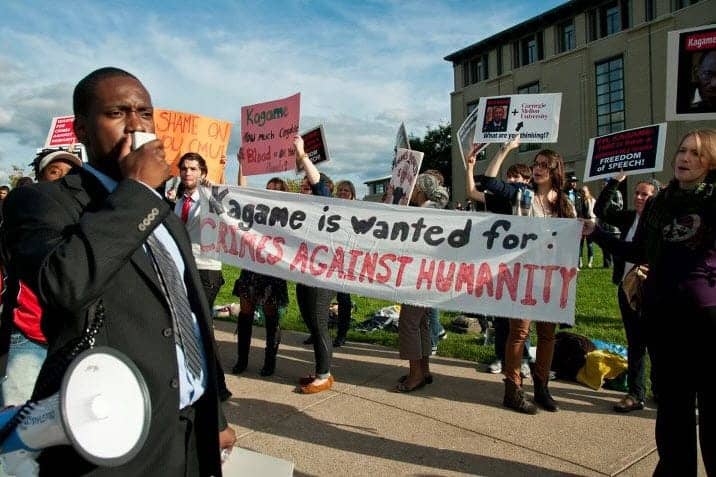
Outside Carnegie Mellon University while President Paul Kagame was speaking inside, Kambale Musavuli, student coordinator for Friends of the Congo, led a demonstration by Rwandan, Congolese and American students denouncing Kagame’s crimes against humanity. – Photo: Lindsay Dill
The truth must now be told. Paul Kagame, then overall commander of the Rwandan Patriotic Army (RPA), the armed wing of the Rwandan Patriotic Front, was personally responsible for the shooting down of the plane. In July 1994, Paul Kagame himself, with characteristic callousness and much glee, told me that he was responsible for shooting down the plane. Despite public denials, the fact of Kagame’s culpability in this crime is also a public “secret” within RPF and RDF (Rwandan Defense Force) circles. Like many others in the RPF leadership, I enthusiastically sold this deceptive story line, especially to foreigners who by and large came to believe it, even when I knew that Kagame was the culprit in this crime. The political and social atmosphere during the period from the signing of the Arusha Accords in August 1993 was highly explosive, and the nation was on edge. By killing President Habyarimana, Paul Kagame introduced a wild card in an already fragile ceasefire and dangerous situation. This created a powerful trigger, escalating to a tipping point resumption of the civil war, genocide and the region-wide destabilization that has devastated the Great Lakes region since then.

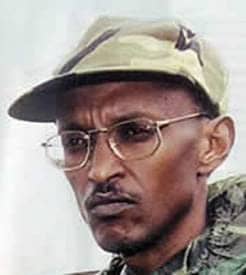
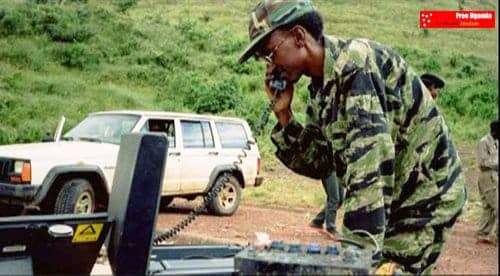
Gen. Kagame uses his satellite phone from the field. The Rwandan Civil War, culminating in the 1994 genocide, had been raging since Kagame’s Rwandan Patriotic Front invaded Rwanda from Uganda in 1990. By assassinating then Rwandan President Habyarimana, Kagame prevented the Arusha Peace Agreement the president had just signed from taking effect.
Paul Kagame has to be immediately brought to account for this crime and its consequences. First, there is absolutely nothing honorable or heroic in reaching an agreement for peace with a partner and then stabbing him in the back. Kagame and Habyarimana did not meet on the battlefield on April 6, 1994. If they had, and one of them or both had died, it would have been tragic, but understandable, as a product of the logic of war.

By killing President Habyarimana, Paul Kagame … created a powerful trigger, escalating to a tipping point resumption of the civil war, genocide and the region-wide destabilization that has devastated the Great Lakes region since then.

President Habyarimana was returning from a peace summit and, by killing him, Kagame demonstrated the highest form of treachery. Second, Kagame, a Tutsi himself, callously gambled away the lives of innocent Tutsi and moderate Hutu who perished in the genocide. While the killing of President Habyarimana, a Hutu, was not a direct cause of the genocide, it provided a powerful motivation and trigger to those who organized, mobilized and executed the genocide against Tutsi and Hutu moderates.

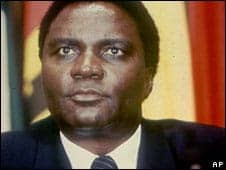
Rwandan President Juvenal Habyarimana, assassinated by Gen. Paul Kagame – Photo: AP
Third, by killing President Habyarimana, Kagame permanently derailed the already fragile Arusha peace process in a dangerous pursuit of absolute power in Rwanda. Kagame feared the letter and spirit of the Arusha Peace Agreement. As the subsequent turn of events has now shown, Kagame does not believe in the unity of Rwandans, democracy, respect of human rights and other fundamental freedoms, the rule of law, power sharing, integrated and accountable security institutions with a national character, and resolving the problem of refugees once and for all. This is what the Arusha Peace Agreement was all about. That is what is lacking in Rwanda today.
Last, but not least, Kagame’s and RPF’s false narrative, denials and deceptions have led to partial justice in Rwanda and at the International Criminal Tribunal for Rwanda, thereby undermining prospects for justice for all Rwandan people, reconciliation and healing. The international community has, knowingly or unknowingly, become an accomplice in Kagame’s systematic and shameful game of deception.

By killing President Habyarimana, Kagame permanently derailed the already fragile Arusha peace process in a dangerous pursuit of absolute power in Rwanda, to which the international community has become an accomplice.

I was never party to the conspiracy to commit this heinous crime. In fact, I first heard about it on BBC around 1:00 a.m. on April 7, 1994, while I was in Kampala, where I had been attending the Pan African Movement conference.
I believe the majority of members of RPF and RPA civilians and combatants, like me, were not party to this murderous conspiracy that was hatched and organized by Paul Kagame and executed on his orders. Nevertheless, I was a secretary general of the RPF, and a major in the rebel army, RPA.
It is in this regard, within the context of collective responsibility and a spirit of truth-telling in search of forgiveness and healing, that I would like to say I am deeply sorry about this loss of life and to ask for forgiveness from the families of Juvenal Habyarimana, Cyprien Ntaryamira, Deogratias Nsabimana, Elie Sagatwa, Thaddee Bagaragaza, Emmanuel Akingeneye, Bernard Ciza, Cyriaque Simbizi, Jacky Heraud, Jean-Pierre Minaberry and Jean-Michel Perrine.
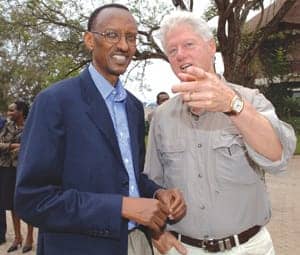
Rwandan President Paul Kagame and former U.S. President Bill Clinton tour Clinton Foundation projects in Rwanda. The two have become close friends, as have the governments of Rwanda and the U.S.

I also ask for forgiveness from all Rwandan people, in the hope that we must unanimously and categorically reject murder, treachery, lies and conspiracy as political weapons, eradicate impunity once and for all, and work together to build a culture of truth-telling, forgiveness, healing and the rule of law. I ask for forgiveness from the people of Burundi and France, whose leaders and citizens were killed in this crime. Above all, I ask for forgiveness from God for having lied and concealed evil for too long.
In freely telling the truth before God and the Rwandan people, I fully understand the risk I have undertaken, given Paul Kagame’s legendary vindictiveness and unquenchable thirst for spilling the blood of Rwandans. It is a shared risk that Rwandans bear daily in their quest for freedom and justice for all. Neither power and fame, nor gold and silver, are the motivation for me in these matters of death that have defined our nation for too long.

In freely telling the truth before God and the Rwandan people, I fully understand the risk I have undertaken, given Paul Kagame’s legendary vindictiveness and unquenchable thirst for spilling the blood of Rwandans. But Rwanda cannot rebuild and heal on lies.

Truth cannot wait for tomorrow, because the Rwandan nation is very sick and divided and cannot rebuild and heal on lies. All Rwandans urgently need truth today. Our individual and collective search for truth will set us free. When we are free, we can freely forgive each other and begin to live fully and heal at last.
Dr. Theogene Rudasingwa is a former secretary general of the Rwandan Patriotic Front (RPF), ambassador of Rwanda to the United States and chief of staff for President Paul Kagame.

RWANDA:Colonel BEMS Théoneste Bagosora yakatiwe imyaka 35, naho Lt Colonel BEMS Anatole Nsengiyumva akatirwa imyaka 15

Colonel BEMS Théoneste Bagosora yakatiwe imyaka 35, naho Lt Colonel BEMS Anatole Nsengiyumva akatirwa imyaka 15

by Rwanda Rwiza on Wednesday, December 14, 2011 at 7:13pm
Urugereko rw'ubujurire rw'urukiko mpuzamahanga rwashyiriweho u Rwanda, rwahanaguye igihano cyo gufungwa burundu kuri Colonel BEMS Theoneste Bagosora wari umukuru w'ibiro bya minisitiri w'ingabo muri 94.
Urwo rukiko rwategetse ko Colonel BEMS Bagosora afungwa imyaka 35.
Umuvugizi w’urukiko, Laurent Amoussouga, yabwiye BBC ko urwo rukiko rw'ubujurire rwamuhanaguyeho bimwe mu byaha yari yahamijwe n'urukiko rw'ibanze mu mwaka wa 2008.
Urwo rukiko kandi rwahanaguye icyaha cyo gufungwa burundu kuri Lt Colonel BEMS Anatole Nsengiyumva,rwategetse ko Nsengiyumva afungwa imyaka 15.
Laurent Amoussouga yavuze ko Nsengiyumva ahita arekurwa kubera imyaka yari amaze muri gereza.

Colonel BEMS Théoneste Bagosora ni muntu ki?
 Colonel BEMS Bagosora Théoneste 
Théoneste Bagosora yavukiye mu cyahoze ari Komini Giciye muri Perefegitura ya Gisenyi mu 1941. Nyuma yo kurangiza amashuri yisumbuye muri Seminari Ntoya ya Nyundo, yinjiye mu ishuri ry’abasirikare b’abofisiye ry’i Kigali muri Promotion ya 3 mu 1962. Yasohotse muri iryo shuri ari Sous-Lieutenant mu 1964. Yakoze akazi mu mitwe myinshi y’ingabo z’u Rwanda zikitwa Garde Nationale, na nyuma zimaze kwitwa Armée Rwandaise. Twavuga nka: Ikigo cya gisirikare cya Gako mu Bugesera, Compagnie Kigali, Compagnie Police Militaire, n’ikigo cya Muhima yategekaga mu 1973. Amaze kurangiza amasomo ye mu Ishuri ryigisha iby’intambara ry’ i Paris mu Bufaransa (Ecole de Guerre) aho yakuye Brevet d’Etudes Militaires Supérieures (BEMS) mu 1984, yoherejwe gukora muri Ministre y’ingabo. Mu 1988 yabaye umukuru w’ikigo cya gisirikare cya Kanombe ndetse na Bataillon LAA (yari ishinzwe ibyo guhanura indege) nyuma y’iyicwa rya Nyakwigendera Colonel Stanislas Mayuya. Ni kuri uwo mwanya yagiriyeho imyaka yo gusezererwa mu ngabo ava mu ngabo mu 1992.
Mu masezerano hagati y’amashyaka kugira ngo hageho Leta y’inzibacyuho mu 1992 yagizwe Directeur de Cabinet muri Minisiteri y’ingabo, iyo Minisiteri ikaba yari yahawe ishyaka rya MRNDD, n’ukuvuga ko mu 1994 yari umusivire. Yafatiwe mu gihugu cya Cameroun mu 1996 yoherezwa Arusha mu 1997. Yahakanye ibyaha byose aregwa. Umushimjacyaha avuga ko ariwe wari ukuriye umugambi wa Génocide. Muri 2008 yari yakatiwe burundu ariko ubu hari ibyaha urukiko rwamuhanaguyeho: nko gutegura Génocide, urupfu rw’abasirikare 10 b’ababirigi, urupfu rwa Madame Agathe Uwiringiyimana wari Ministre w’Intebe, Ubwicanyi nk’icyaha kibasiye inyokomuntu, Ubwicanyi ku Nyundo n’i Mudende, ndetse n’icyaha cyo gutanga amategeko yo kwica abantu ku ma bariyeri mu mujyi wa Kigali, ariko urukiko rwasanze agomba guhanwa nk’umuntu wari umuyobozi muri icyo gihe. Yakatiwe imyaka 35 Ukuyemo igihe amaze muri Gereza azafungwa indi myaka 19.
Mu minsi ishize nagerageje gushaka amakuru kuri Colonel BEMS Bagosora, mbaza abantu bahoze mu gisirikari cya kera Les Forces Armées Rwandaises (FAR) ndetse nkora ubushakashatsi mu nyandiko zitandukanye.
Colonel BEMS Bagosora ntabwo navuga ko ari umwere 100% ariko iyo ukoze iperereza neza ridafite aho ribogamiye usanga hari impamvu nyinshi zituma havugwa ko ariwe wari ukuriye umugambi wa Génocide.
Natanga impamvu nyinshi zatumye bifatwa gutyo:
-Impamvu ya mbere ni propagande ya FPR  bitewe n’uburyo yari yaragiranye ibibazo n’abari bahagarariye FPR mu mishyikirano ya ARUSHA yanga kwemera ibintu byose FPR yashakaga ndetse hakazamo iteranamagambo aho Colonel BEMS Bagosora yavuze ko ibintu FPR irimo kwaka byose nibihabwa hazaba imperuka (Apocalypse) ariko imvugo ye yarahinduwe bavuga ko yavuze ko agiye i Kigali gutegura imperuka (ibi hari abantu benshi babihagazeho ndetse bari no muri FPR bakwemeza ko imvugo ye yahinduwe mu rwego rwa Propagande cyane cyane ko no mu rukiko yabitsindiye.)
-Kuba hari hakenewe umuntu ugomba gushyirwaho icyo cyaha (bouc émissaire) kugira ngo amahanga yikure mu kimwaro cy’uko amahanga atatabaye abanyarwanda, ukongeraho ko hari hakenewe umuntu wo guhanwa by’intangarugero ngo abantu barebereho.
- Kuba Bagosora ariwe wari usigaye mu basirikare bakuru b’abashiru byatumye abashakaga kwihorera ku bashiru ibyaha byose babyegeka kuri Bagosora cyane cyane abasirikare b’aba FAR bari baragiranye ibibazo na Leta ya Habyalimana.
-Kuba ari mubaburijemo umugambi wa Général Gatsinzi na Général Roméo Dallaire wari ugamije guha umujyi wa Kigali FPR nta mirwano ibaye. Ndabibutsa ko Général Gatsinzi ariwe wategekaga Ingabo za kera (FAR) hagati ya 08.04.1994 na 17.04.1994, mu byo yashates gukora byari ugusaba ingabo za FAR kuva mu mujyi wa Kigali intambara igitangira muri Kigali. Kuba Gatsinzi ntacyo yigeze abazwa nk’umuntu wari ukuriye ingabo icyo gihe n’igitangaza gikomenye gituma umuntu yibaza byinshi.
- Kuba Bagosora  kandi yari umuntu urakazwa n’ubusa kandi akagira kwihangana guke , byatumye agirana ibibazo cyane n’abantu benshi bakoranye nawe mu gisirikare nka ba Colonel Rusatira, Géréral Gatsinzi n’ahandi. Bituma agira abanzi benshi, barimo n’abanyamakuru kubera kubasubizanya uburakari bwinshi.
Umwanzuro natanga kuri Bagosora n’uko ibyabaye mu Rwanda byagizwemo uruhare n’abantu benshi byaba kubera ubushake, byaba kubera kurebera ntihagire igikorwa, ari ugushaka guhindura ibintu batitaye ku ngaruka n’ibindi. Mbona ari amahanga, ari Leta y’u Rwanda n’igisiriare by’icyo gihe,ari na FPR  abo bose bashatse kwirengagiza uruhare rwabo muri icyo kibazo bashaka kwikoreza umutwaro w’ibyabaye byose umuntu umwe n’ubwo nawe atari shyashya. Twizere ko uretse ibyavugiwe mu manza za ARUSHA hari igihe kizagera abanyarwanda tukamenya ukuri kose.

 LT Colonel BEMS Anatole Nsengiyumva ni muntu ki?
 Lt Colonel BEMS Nsengiyumva Anatole 
Yavukiye mu cyahoze ari komini Satinskyi, Perefegitura ya Gisenyi mu 1950, yinjiye mu Ishuri ry’abofisiye ry’i Kigali mu 1969, arisohokamo mu 1971 ari Sous-Lieutenant. Yakoze cyane mu nzego z’umutekano n’iperereza. Yabaye Officier d’ordonnance wa Nyakwigendera Perezida Juvénal Habyalimana nyuma ya Coup d’Etat yo mu 1973, nawe yize mu ishuri ry’ibijyanye n’intambara (Ecole de Guerre) aho yakuye Brevet d’Etudes Militaires Supérieures (BEMS) nyuma yaje kuba ushinzwe iperereza muri Etat-Major y’ingabo (G2) kugeza muri 1992. Muri Mata 1994 yari umuyobozi w’ingabo mu karere ka Gisenyi. Abasirikare bagenzi be bari baramuhimbye izina rya KIRENGE.
Yafatiwe muri Cameroun mu 1996 ajyanwa Arusha mu 1997. Yahakanye ibyaha byose aregwa. Yari yakatiwe burundu mu 2008, ariko ubu urukiko rwamuhanaguye ibyaha bimwe birimo, gucura umugambi wo gukora Génocide, ubwicanyi nk’icyaha kibasiye inyokomuntu, Ubwicanyi ku Nyundo n’i Mudende, gutangiza ubwicanyi mujyi wa Gisenyi, Ubwicanyi mu Bisesero, ariko urukiko rwasanze agomba guhanwa kuko yari umuyobozi. Yakatiwe imyaka 15 yari amaze muri Gereza, n’ukuvuga ko azahita arekurwa.
Umwe mubahoze muri les FAR
Liège, Belgique

Wednesday, December 14, 2011

RWANDA:PRESIDENT KAGAME WILL CHANGE CONSTITUTION IN 2007 TO RULE AGAIN

From the INDEPENDENT
Rwandans campaigning for democracy in their country yesterday said that they were "chilled to the bone" by a signal sent by the strong-arm President Paul Kagame that he intends to extend his term in power.
An independent analyst went further, saying that comments made by Mr Kagame yesterday during a visit to neighbouring Uganda could destabilise the Great Lakes region by leaving no option open to the Rwandan opposition other than to take up arms.
Mr Kagame has been in power since the end of the Rwandan genocide in 1994. For a long time he enjoyed wide international support as a result of Western guilt over its failure to prevent the killing of hundreds of thousands of Tutsis. In a legacy of Tony Blair's era, Britain remains one of the leading advocates of Mr Kagame's regime. But amid growing claims – strenuously denied – that Mr Kagame's supporters are ordering political assassinations, human-rights activists increasingly denounce his regime.
Speaking at a press conference in the Ugandan capital, Kampala, he contradicted previous categorical assurances that he would step down at the end of his constitutional two terms in office. His comments came after Rwanda's Internal Security Minister Sheikh Fazil Musa Harerimana was quoted calling for the constitution to be changed so that the President could run again.
Mr Kagame claimed anyone asking for him to run again was exercising their freedom of expression. Reuters reported that he said: "I will not be uncomfortable at all with people saying this or the other. There's contradiction, on one hand you say people should have freedom to express themselves. On the other hand, you start questioning somebody expressing himself."
Mr Kagame, who led the Rwandan Patriotic Front (RPF) to victory in the rebel war linked to the genocide, was re-elected last year. His main opponent, Victoire Ingabire, remains in jail after she was prevented from running in the election.
The next elections are not due until 2017. Analyst Paul-Simon Handy said Mr Kagame's early move to reveal his intentions suggests deep internal divisions in the ruling RPF.
Mr Handy, a Cameroonian who is head of research at the Institute for Security Studies in Pretoria, South Africa, said: "The fact that Kagame is openly floating the idea of changing the constitution is extremely dangerous. It marks a radical switch in his tactics. He has always previously said that Rwanda is a constitutional country and that he will abide by the constitution. Given the level of repression in Rwanda, the opposition will consider taking up arms to be their only option."
Joseph Matata, a human-rights activist, said from Brussels, he was "chilled to the bone" by the prospect of Mr Kagame remaining in power and the potential bloodshed that could result from such a move. "Kagame faces being arrested for war crimes carried out in Eastern Congo (where Rwanda supports rebel groups guarding mineral deposits) and he knows that international judges will not touch him as long as he is President," Mr Matata, who leads the Centre Opposed to Impunity and Injustice in Rwanda, said.
The opposition Parti Social Imberakuri's co-ordinator in Brussels, Jean-Baptisre Ryumugabe, said: "We are not surprised that the call for a third term has come through the Internal Security Minister. Kagame always floats his ideas through his close collaborators."
Mr Ryumugabe denied the opposition would take up arms. "As democrats we believe in peaceful means," he said.
Human-rights activists have in recent months denounced an apparent rise in the number of attempts on the lives of Mr Kagame's critics. The most recent was the journalist Charles Ingabire, who was shot dead on 1 December at a bar in Kampala.
Mr Kagame said that Mr Ingabire was a thief who was killed because he stole from an association of genocide survivors

Thursday, December 8, 2011

RWANDA: NGIYO KIGALI TWUBYIRWA TUKANAYITURAMO


 Abakobwa b’abatutsi kazi
Kera nkiri muto nigeze kumva ibigabo by’Ibihutu biganira bivuga ngo « Abatutsikazi ni beza, naho Ibihutukazi ni bibi, ngo ndetse nta n’ubwo bizi gufata abagabo neza ». Imyumvire nk’iyi yatumye benshi bagwa mu mitego ikomeye cyane. Muribuka ukuntu abasirikari benshi mu bari bakomeye mu ngabo za Habyarimana bagiye bamena amabanga akomeye kubera abo Batutsikazi. Si ibyo gusa, na n’ubu mu Rwanda rushya turacyafite bya Bihutu bitibuka bikirirwa bihunahuna mu ngutiya z’Abatutsikazi. Erega si uko baba babakunze, haba hari icyo babakurikiyeho. Amateka se ntacyo ababwiye ? Hari n’Umututsi mwene wacu wigeze kumbwira ati «  Ntureba biriya Bihutu ? Byirirwa byirukanka kuri bashiki bacu, ariko twe ntidushobora kwirukanka ku Bihutukazi ».


2 . Ubuhake
Iyo witegereje amateka y’igihugu cyacu, ugirango ubuhake bwaracitse. Reka da. Ubu iyo ugeze mu Rwanda ukitegereza uko ibintu byifashe, usanga ahubwo hari ubuhake n’uburetwa biruta ibya kera. Ni bande birirwa bahagatwa bikoreye imifuka y’ibirayi n’indi myaka ? Abandi bigaramiye bikabasanga mu ngo zabo. Ni bande birirwa barwana n’imishike ? Ni ba Bahutu bari muri TIG. Imyanya ikomeye yose irimo Abatutsi. Abahutu ni abo guhabwa amabwiriza no guhakirizwa kugirango bakunde barebe ko bwacya.


3. Igisirikare
Nuramuka witegereje igisoda cy’u Rwanda rw’ubu uzasanga ari icy’Abatutsi. Nawe mbwira niba mu bayobozi bakomeye b’igisirikare cyacu wabonamo Umuhutu. Ashwi da ! Yego birumvikana ko Abatutsi aribo barwanye ndetse bakanabohoza u Rwanda, ariko se guhera mu w’i 1994 jenoside irangiye ko tuzi Abahutu bihandagaje bakajya mu gisoda, ubu ntimujya mubabona n’uko bafashwe. ? Muzumva ryari ? Abandi birirwa bazamurwa mu ntera ariko bya Bihutu byo bakabishyira ku marondo gusa kugira ngo imbeho ibimene inda. Ibindi babigize bya « lidofonsi=Local defence » maze bikirirwa byikoreye za rubaho no kunywa amayoga gusa. Icyo ni cyo bazakukana.


4. Abahutu bakaniwe urubakwiye
Dore uko amateka atajya yigisha Abahutu ngo bahumuke. Reba nawe umugabo nka Kanyarengwe witandukanyije na ba Habyarimana ngo asanze Inkotanyi. Ntimuzi se uko ibye byarangiye ? Undebere umugabo Pasteur Bizimungu. Ibye ni birebire, ariko Abahutu bagombye kubikuramo amasomo menshi. Hari n’abandi benshi ntiriwe mvuga bihaye gusanga Inkotanyi ndetse n’uyu munsi ariko ntibazi ko iyo zibareba ziba zibiseka.


5. Amasambu, ubuhinzi na Nyakatsi
Iyo witegereje ibisigaye bibera mu rwatubyaye, hari igihe wumva birenze kandi ukabona ko Abahutu batsikamiwe birengeje. None se nawe, reba nta muntu ugishobora guhinga ngo yeze kubera byabindi byo gutegeka guhinga amaboberi aho bene ngofero bihingiraga ingano n’ibirayi cyangwa ibijumba. Reka kuvuga ibyo kwibumbira udutafari mu kwawe. Yewe biratangaje pee ! None ubu ikigezweho ni uguca nyakatsi. Erega ntawanga amajyambere, ariko nibinyure mu buryo bwiza. Ese ko bamwe bubakiwe abandi bazaba abande ?


6 .Urubuga mpuzamahanga
Ni ukuri biratangaje iyo wumvise ku rubuga mpuzamahanga ukuntu isura y’Abahutu yahindanyijwe n’Abatutsi. Abahutu ngo ni abicanyi. Nyamara Abatutsi bapfuye muri jenoside ntibageze no kuli miliyoni. Ariko mbwira Abahutu bapfuye kuva mu w’1990 kugeza ubu, maze wongereho abaguye muli Congo kandi byose bitewe n’Inkotanyi. Abahutu bageze kuri miliyoni 3 zose bamaze gutikizwa n’Inkotanyi. Ariko igitangaje ni uko ku rubuga mpuzamahanga ubona ntawe ushaka kuvuga ko Abahutu bishwe baruta kure Abatutsi bapfuye.

7. Gereza zuzuye Abahutu
Iyo urebye gereza z’u Rwanda, usanga harimo ibibazo bikomeye cyane. Na n’ubu hari Abahutu benshi bamaze imyaka myinshi muri gereza bataraciriwe n’imanza. Ese nkubwo igihe nikigera bagasanga ari abere bizagenda bite ? Ejobundi ntimwiboneye ibyabaye kuri Dogiteri Kazimiri Bizimungu na Jérôme Bicamumpaka se ? Ubundi twari tuzi ko hakurikizwa iri hame : “Igihe cyose ubucamanza butarahamya umuntu icyaha ngo bumugenere igihano, uwo umuntu aba ari umwere. Mu Rwanda ho si ko bimeze, ahubwo « buri muntu ni umunyacyaha kugeza igihe bizagaragarira ko ari umwere » ! (Before the court everyone is held innocent until proven guilty, but now in Rwanda, everyone is held guilty until proven innocent) Murumve rero. Mubanze mwitegereze ibiri kubera kuri uriya mutegarugori Ingabire Victoire.


8. Kiliziya
Biratangaje koko kuba na Kiliziya y’u Rwanda yaramunzwe. Banza witegereze Abihayimana basinye muri FPR kandi bakanirirwa babigaragaza. None se iyo ubona mu miryango imwe n’imwe y’Abihayimana nta Muhutu cyangwa Umuhutukazi ushobora kurangirizamo biba bishatse kuvuga iki ?


9. FARGE
Ni byiza gufasha imfubyi cyangwa abapfakazi ndetse ni n’igikorwa cy’indashyikirwa. Ariko se imfubyi z’Abahutu zizi neza ko ababyeyi babo bahitanywe naba Ibingira zo zizaba zite? Murumve rero. Abana b’Abatutsi birirwa bahahamuka kuko bafite uwo baririra n’ikibahoza. Ariko se imfubyi z’Abahutu zizaririra nde ? Zizahozwa na nde? Iyaba mwari muzi ukuntu umubyeyi wanjye Inkotanyi zamugaraguje agati maze zikamwica urubozo muri 1997. Ariko simfite uwo ndirira keretse Rurema gusa we wumva akaga k’abarengana.


10. Guhendeshwa imyanya
Kuba Minisitiri w’intebe w’Umuhutu nka ba Damiyani ntacyo bihindura rwose kuko nta n’icyemezo yafata gikomeye kuko uriya ni agakingirizo nk’abandi Bahutu bose babaye mu buyobozi bw’Inkotanyi. Murumve rero. Ese na n’ubu ntimuremera ko ubuyobozi bw’u Rwanda bugengwa n’abasoda ?.


Umwanzuro
Nta wundi mwanzuro natanga uretse kongera kuvuga nti “Mu Rwanda hari akarengane gakabije”. Simbivugiye kugirango amoko yongere ashyamirane kuko hari n’Abatutsi barengana. Mbivugiye kugirango icyo kibazo gishakirwe umuti mumaguru mashya.

RWANDA-UGANDA:Dread, whispers shroud Rwandan scribe’s funeral

Mourners at the requiem of Ingabire. Most of them spent the 20 minutes it took to end the funeral hiding their faces.
Mourners at the requiem of Ingabire. Most of them spent the 20 minutes it took to end the funeral hiding their faces. PHOTO BY ISAAC KASAMANI 

Dreadful grief was an understatement at the funeral service of the Rwandan journalist Charles Ingabire yesterday afternoon. It was more like the shroud on his death had descended on family members, friends and well-wishers bidding him final respects.
One by one, the mourners walked into Evangelical Restoration Church in Bakuli, many avoiding eye contacts with strangers and only speaking in hushed tones.
The funeral service that started about 2:30pm lasted for only about 20 minutes and had only two speakers.
First to speak was Pastor Shedrack Mporana, also a Rwandan, who described the day the editor of Rwanda’s Inyenyeri online news web site was shot as a sad one but urged mourners not to give into fear.
A second speaker, who only wanted to be identified as Pastor Yeremiya, also Rwandan, said many mourners wanted to pay their last respects to the deceased but they could not do so for security reasons.
“If you shoot someone dead, you are only killing the flesh not the spirit. We should not fear those who kill the flesh,” Pastor Yeremiya said.
No photos of identities
Several mourners we spoke to alleged being persecuted by government back home but none wanted their photographs taken or identities revealed.

Pastor Yeremiya, who had earlier moved around reminding the mourners to be weary of spies among them “intending to take information to their masters,” eventually let the cat out of the bag when he announced at the podium, “There is someone who has sent
spies to spy on us.”
Among the mourners were men in civilian clothes, most of whom had security gadgets. The men could be seen communicating on walkie-talkies as the service went on.
Ingabire, 32, was shot twice in the lower abdomen late in the night of November 30, by unknown people in Makies II Bar at Bukesa-Kikoni near Makerere, a Kampala suburb.
Police found five cartridges of spent bullets, which they suspected to have been discharged by a Sub Machine Gun that was used to shoot Ingabire, at the scene of crime.
Police also said they have arrested two suspects now in their custody to help with investigations.
Ingabire had earlier fled Rwanda for Uganda for fear that his life was in danger for being critical of Rwanda president Paul Kagame and his government.
He was buried yesterday in a government cemetery at Lusaze in Rubaga Division, Kampala. He is survived with a wife and a five-month old baby.
No Rwandan government official attended the funeral or burial.
abagala@ug.nationmedia.com