Africa Great Lakes Democracy Watch


Welcome to
Africa Great Lakes Democracy Watch Blog. Our objective is to promote the institutions of democracy,social justice,Human Rights,Peace, Freedom of Expression, and Respect to humanity in Rwanda,Uganda,DR Congo, Burundi,Sudan, Tanzania, Kenya,Ethiopia, and Somalia. We strongly believe that Africa will develop if only our presidents stop being rulers of men and become leaders of citizens. We support Breaking the Silence Campaign for DR Congo since we believe the democracy in Rwanda means peace in DRC. Follow this link to learn more about the origin of the war in both Rwanda and DR Congo:http://www.rwandadocumentsproject.net/gsdl/cgi-bin/library


Monday, August 2, 2010

Colonialism and the 'scramble for Africa'

By Catriona Davies, for CNN
STORY HIGHLIGHTS
  • Africa was carved up among several European countries at the Berlin Conference in 1884-5
  • It emerged then that Africa had mineral and agricultural wealth available for exploitation
  • Historian Gareth Austin said colonies were cheap for British and French taxpayers
Editor's note: This year 17 African nations mark 50 years of independence from their former colonial rulers. Eight of those countries celebrate their anniversary in August, they include Benin, Ivory Coast and Gabon. CNN.com is marking this major milestone with special coverage in August looking at the continent's past, present and future.
(CNN) -- The wave of Independence across Africa in the 1950s and 1960s brought to the end around 75 years of colonial rule by Britain, France, Belgium, Spain, Portugal and -- until World War I -- Germany.
Before 1880, Europeans had only made small incursions into Africa, with forts and trading posts mainly around the coast, according to Richard Dowden, director of the Royal African Society in Britain.
The interior until then remained largely inaccessible to Europeans because of disease and difficulty of travel.
"Then the new unified Germany began to flex its muscles. It saw Britain and France ruling the world and wanted to compete for its 'place in the sun'. Its explorers were beginning to penetrate the continent," Dowden told CNN.
When the explorer Henry Morton Stanley -- who had already rescued David Livingstone -- set out on another rescue mission, King Leopold of Belgium asked him to claim land along the Congo River for Belgium.
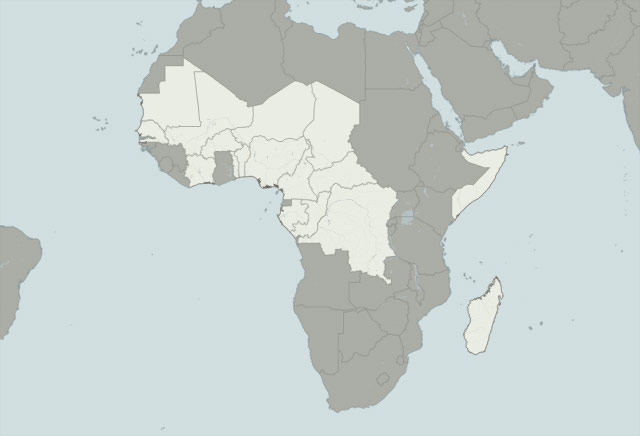
 
Nations marking 50 years of independence
"This was a vast grab from little old Belgium, which upset Britain and France," said Dowden. "Britain already had India and didn't really want Africa too, but felt they should have it if everyone else was."
In 1884-5, the Berlin Conference was called to carve up Africa between Britain, France, Belgium, Spain, Portugal and Germany.
"They didn't want to be seen to be fighting amongst themselves, because then Africans would realize that white men could be killed," said Dowden. "Instead they drew lines on a map of places they had never been to, with no regards for existing kingdoms, geography or the people that lived there.
"They believed they were bringing civilization to 'savage people'. They introduced Christianity, trade, education, justice and a good deal of looting and forced labor."
It was beginning to emerge that Africa had mineral and agricultural wealth, which the Europeans were keen to exploit.
Because India had fought for its independence, Africa wanted to fight too.
--Richard Dowden, Royal African Society director

RELATED TOPICS
  • Africa
  • World War I
  • Sudan
Another justification among the European powers was to 'liberate' Africans from Arab slave traders, who had continued to operate after slavery was abolished in Europe.
The Europeans met little resistance from Africans once their vast military might -- including newly-developed machine guns - became clear.
Dowden said that in a single day's battle for Sudan, 10,800 Sudanese were killed, compared with 48 British soldiers.
Over the decades that followed, each colonial power ruled in its own style.
Dr. Gareth Austin, a historian at the London School of Economics, pointed out that colonies were intended to be cheap for British and French taxpayers and in many cases collected more in taxes from the colonies than they spent.
"The British doctrine was that each colony should be fiscally self-supporting. Thus, any growth in government expenditure was supposed to be financed from higher revenues," he wrote in his article African Economic Development and Colonial Legacies, in the journal Revue Internationale de Politique de Développement.
He added that surpluses made by West African farmers were held in forced savings in British government bonds, helping the British economy to recover from its post-war shortages.
Dowden said France believed in the "Frenchification" of Africa and invested in instilling its language and culture into the people.
African leaders were able to become government ministers representing their colonies in France.
"This would have been unthinkable in Britain, who did not want to mix with Africans," said Dowden. "Britain used indirect rule to control people through their own tribal leaders. They were amazingly brutal in putting down any rebellion."
Dr. Austin said that, despite these differences, there were more similarities than differences in styles of colonial rule.
After WWI, Germany's colonies were divided between Britain and France to administer on behalf of the League of Nations.
The end of colonialism came about after India's independence from Britain.
"Because India had fought for its independence, Africa wanted to fight too," said Dowden. "Britain was completely broke after World War II and couldn't invest in its colonies. It found it easier to walk away than to start wars all over Africa to hold on to them," he added.
"In contrast with the start of colonization, independence was mostly non-violent, with some exceptions," Dowden continued. "France also gave independence to its colonies but only on its own terms, with French troops and administrators remaining in place for many years.
"Portugal resisted independence and kept its colonies until much later."
By David McKenzie, CNN
Click to play
Kenya's crucial vote
STORY HIGHLIGHTS
  • Kenyans vote Wednesday on new constitution that would change government dramatically
  • Constitution would weaken president's power, create two-chamber parliament
  • Supporters say changes are a vital step in reforming archaic political system
  • Opponents, including church, say new constitution has many flaws
Nairobi, Kenya (CNN) -- Kenyans go to the polls Wednesday in a referendum that could that could make major political and social changes to East Africa's largest economy. CNN's David McKenzie answers some fundamental questions about the referendum and why it is worth following closely.
Q: Why is Kenya having a referendum?
A: Kenya is voting in a crucial referendum this week on a proposed new constitution. The last time Kenya conducted a national vote, the country was thrown into chaos. A disputed presidential election in December 2007 led to over 1000 deaths and hundreds of thousands pushed off their land.
Since the signing of a national peace accord that created a power-sharing arrangement, Kenya has been relatively stable. But the accord set up a temporary structure that called for many reforms -- including a new constitution.
Q: What are the key issues in the proposed constitution?
A: If implemented, the new constitution would make radical changes to the structure of Kenya's government. It would transfer some power from the presidency; it would create a two-tier parliamentary structure, in some ways similar to the U.S. system of a Congress and Senate; and it would call for major changes in the judiciary. Put more simply, it would remove power from a powerful presidency and create a more decentralized political system. The constitution also brings in a Bill of Rights, allows dual citizenship for Kenyans -- sure to be popular with Kenya's large and loyal diaspora community -- and allows for land reform.
Q: Why should people in other countries pay attention to this vote?
A: Kenya is East Africa's largest economy and a crucial trade route into the rest of Africa. It provides an important buffer of stability against the volatile North (Somalia) and the politically tense West (Sudan). Many analysts say Kenya hasn't reached its potential as a country and that with wise reforms, it could emerge as a true giant of the continent.
While the government has beefed up security for this vote by deploying thousands of extra security forces to potential hot spots, the international community is watching closely and hoping the country does not see a repeat of the violence that followed the last major election in Kenya.
Q: What is the "Yes" camp saying?
A: The "Yes" camp, which includes most of Kenya's political leadership, says that the constitution is a vital step in reforming Kenya's archaic political system and will help end corruption and redress inequalities. "The vote itself is aimed at transforming the Kenyan society," Prime Minister Raila Odinga told CNN. "We are reconstructing the architecture of our country that will come up with new structures of governance. We are creating a second republic with this referendum."
The "Yes" team has made a lot of promises about the fundamental changes that the constitution could mean for Kenyans. But most analysts believe that a new constitution will only be as good as the leaders who will be chosen to implement it, and that real change will only happen after Kenya's next election, in 2012. "It is important for Kenyans to think beyond the constitution and choose leaders that will enable this constitution to realize its aspirations," said political scientist Duncan Okello.
Q: What is the "No" camp saying?
A: The "No" camp mostly agrees that it wants a new constitution -- just not this one. The "No" campaigners are led by disgruntled politicians, who say that their constituents are not being heard with the proposed constitution.
A major force calling for rejection is the church. Kenya is a largely Christian country with a strong multidenominational following. Church leaders have taken offense at two main parts of the constitution. They say that the constitution creates loopholes that will allow women to have abortion "on demand," though the constitution does state that life begins at conception. Religious leaders have also taken issue with the constitution explicitly codifying Islamic courts for Kenya's significant Muslim population.
"There are so many faults in the constitution that the more you read it, the more faults you find," said Bishop Mark Kariuki. "We don't think it's right to pass a constitution that is so faulty that it will bring problems in the nation after it is passed."
Q: How is the international community viewing this vote?
A: Analysts believe that most Western diplomats are quietly hoping for a yes vote. And some contend that they haven't been quiet at all. U.S. Ambassador Michael Ranneberger has been roundly criticized by "No" politicians and church leaders for attending "Yes" rallies and seemingly supporting the "Yes" vote.
The Obama administration has made no secret of its support for reform in Kenya, but officials maintain that they aren't supporting a specific vote. "The U.S. supports the process, not the outcome. We have been very careful not to express our views as to which way the people of Kenya should vote," said Johnnie Carson, the assistant secretary of state for African affairs.
Q: Which side will win?
A: Most polls suggest that the constitution will pass. But political analysts believe that either outcome is possible. Many of those supporting a "Yes" vote are looking not just for a win, but a win by a large margin, so they can have a strong mandate to move forward with reforms. A win by just a small margin could provide the "No" camp with a moral victory, allowing it to stall implementation of the constitution

Sunday, August 1, 2010

No rights; to a place of abode in own country-Mrs Ingabire
From Ghana News
Mrs Victoire Ingabire Umuhoza, leader of the United Democratic Forces (UDF) Inkingi, an opposition political party in Rwanda, early this year, return to her home country after a 16 years' exile in Europe.

Since, her return in January this year, she has not enjoyed the basic human rights such as; seeing her children, husband and a right to have a place of abode in her own native country. She alleges to be in constant fears at all times as death threats continue to ensue. Her concerns are real, in the space of 2 months several officials who differ from President Kagame's views; have fled the country, assassinated, survived assassination attempt or relinquishing in Rwandan jails indefinitely.

In June, a former Rwandan ambassador to India, and army Chief of Staff, Lt. Gen. Faustin Kayumba Nyamwasa survived death, after an attempt assassination in Johannesburg South Africa.

Mid-July, Vice President of Democratic Green Party of Rwanda, Andre Kagwa Rwisereka was assassinated. Also Jean-Leonard Rugambage a watchdog Reporter without Borders was assassinated after alleging reports of the involvement of President Kagame in the failed assassination attempt of Lt. Gen Nyamwasa.

Such psychological torture, previous detention and being homeless in her own country remain hallmarks of her-lifestyle.

According to Mrs Ingabire, the only 'luxury' known to her, the recent experience when she earned a treat to persecution leading to getting filthy free prison meals.

Her dream appears to be diminishing to challenge the Rwanda's incumbent Paul Kagame in the next month's general election, because with only a couple of week left, she hasn't been given space.

In her own native country, Mrs Ingabire is a victim of African dictatorship and has no right for a place of abode, landlords willing to accommodate her, are given 'deaths' threats by Rwanda secret police.

A landlord to her current dwelling place turned up two days after possession and prompted an immediate lease withdrawal process. Several Kigali hotels have previously aborted at the last minute after threats from the country's secret police. She alleges that police brutality, beatings, torture and deaths threats, disproportionate force and the use of extreme dislike langue, curse and insulting pronouncements by state agents are on the increase against the opposition.

Norman S. Miwambo, spoke to Mrs Victoire Ingabire, below is an exclusive of her excerpter.

You recently wrote that 'CALL FOR RESISTANCE', what did you mean?

Our understanding is that if we, as an opposition party, have no say in our country, it's our right to say NO. Dictators use fear to maintain people under their influence. Our guiding principle is peace and non-violence. The first steps of our resistance against state oppression by non-violent means will be for example to mobilize the population to slowly stay away from anything related to the regime, its administration, its arms and its instruments. Whenever the regime's representatives show up, people just walk away peacefully. We want to clearly mark the widening rift between the government and the population. Our supporters need some kind of training in this respect in order to progressively understand this concept, accept the subsequent sacrifices until a quality meaningful dialogue is established between the opposition and the regime.

How do you consider yourself given the current political situation in the country?

I am a victim of a dictatorship. I have no rights in my country. I have no chance to see my children and my husband still in exile in Europe. I am under house arrest and the regime's judiciary has refused to take me to court alleging that the prosecution is still gathering the evidence. I receive almost every day death threats. The state police makes sure I remain in almost a total quarantine. They have now started a campaign of pressure on estates' owners in order to make sure I have no home to rent. For example my previous landlord cancelled our tenancy agreement because of serious death threats from security services. On 17th July 2010, I moved to another house, and two days later the owner explained that his safety is more important. Recently we invited journalists for a press conference, and all the hotels cancelled our bookings at the last minute. The question now is how long is the life expectancy of an opposition leader in Kigali?

There are just a couple of weeks to the general elections, what do you make of this?

The government has refused to register our political party FDU INKINGI and three members of our Executive committee are either under house arrest, either on bail. Personally, I am under extended house arrest. The whole world is peacefully witnessing the deepening crisis. All the opposition parties are muzzled. Leaders jailed and others assassinated. Newspapers closed, dissent journalists murdered or in detention. This is a terror state, and we are left on our own. I don't believe the population will continue to watch and let the oligarchy crush people. There is a mounting pressure inside the volcano. It will erupt. When? Nobody knows. The crisis has reached the military as well. The country is on the brink of chaos. Who will survive? Nobody knows. The only thing we can still do is to alert the international community and to prepare for a humanitarian problem, and a possible unrest in the region.

Do you know the fate of your party? If so, can you give us a hint? What your next step to see that you campaign freely in a bid to contest for the country's high post?

It's a shame that partners of Rwanda will continue to support a regime that is ignoring the basic rights of its citizens. The international community has failed Rwandans during the 1994 genocide. Will they turn again a blind eye as the crisis deepens and unravel? We expect that the pressure will force General Paul Kagame to open the political space, allow the registration of our political party. Our struggle will continue until the FDU INKINGI is registered. Should the election masquerade go on? We are ready to challenge its legitimacy until a fair and transparent process is arranged. Yes, we expect to campaign in this country, not in a couple of weeks, but soon any way. If the incumbent does not postpone the poll, the deepening crisis will force him to do so in a few months. The wind of change is here.

What are you intending to do in the next couple of weeks, if things have not worked on your programme?

We have already started to prepare our supporters for a non-violent resistance. We avert violence and this is the motto of our action. We know that after rigged elections and massive fraud this country will never be like before. The incumbent and his supporters believe that they will use force to keep power; they forget that even bigger empires have collapsed. They have got no lessons from the history of apartheid, fascism and many other dictatorships. My intention is to stay alive, and I'm ready for a peaceful resistance until the final victory.
Enhanced by Zemanta

CONGO:Security Worsens in Volatile Eastern Border Region

In Eastern Democratic Republic of Congo (DRC), border villages have once again been caught in the crossfire between foreign rebel groups and government forces. 90,000 Congolese citizens have been forced to flee their
 homes in the fighting between the national army and the Allied Democratic Forces-National Army for the Liberation of Uganda (ADF-NALU) in North Kivu province, according to AllAfrica.com. Meanwhile, MSNBC reports that a new U.S. law will require certification of products, verifying they do not contain "conflict minerals", minerals sourced from Eastern Congo and which advocacy groups blame for fueling the violence.

Security has been dicey in the region despite the end of the previous Congolese conflicts, due to Ugandan and Rwanda rebel groups frequently operating across the porous border region. The head of UNHCR, the United Nations refugee agency Antonio Gueterres was quoted on MSNBC as describing the situation in Eastern Congo as "a dramatic humanitarian situation."

Congolese troops are consist of former rebels, government troops, and militia that have been widely accused of atrocities, as have competing rebel groups. Militia in the region, as described on an ENOUGH Project Youtube video posted here, vie for control over Eastern Congolese ore mines containing gold, tin, tungsten, and tantalum.

Another ENOUGH Project Youtube video, seen here, has had over half a million viewings and describes the conflict in terms of the famous Mac vs. PC ads. But as MSNBC reports, academics and activists are deeply divided over the degree to which the new U.S. law or any law regulating the sourcing of conflict. Academics argue that the minerals aren't a large enough portion of the global market to be significant, and that attempts to stop illegal mineral ore trafficking and taxation by the militias will quash purchases from legitimate, non-militia mines, putting thousands out of jobs.

Tyranny, Genocide and Civil War

Kabila's rule of the country wasn't much better than Mobutu. He had no plans on how to reconcile the country. In 2001 Kabila was assassinated rumored to be by one of his body guards. After his death his soon took over

office and eager to find a way to end the four year civil war that killed over two million people.
In 2003 Congo's power-sharing government finally came into office. Unfortunately, for the people of the Congo it did not stop the violence. Over four million people died as a result of the war either from starvation, violence or disease. In 2005 it was stated by the Crisis Group that 1,000 people died a day as a direct result of war. Even though the Congo has the largest UN Peace keeping mission it is still not enough to help the citizens.

Pearson Education, Inc "Congo, Democratic Republic of the"
URL (http://www.infoplease.com/ipa/A0198161.html)
BBC News, "Country profile: Democratic Republic of Congo"
URL (http://news.bbc.co.uk/1/hi/world/africa/country_profiles/1076399.stm)

Enhanced by Zemanta

Congo-Kinshasa: New Evidence Shows U.S. Role in Congo's Decision to Send Patrice Lumumba to His Death

Stephen R. Weissman
Fifty years ago, the former Belgian Congo received its independence under the democratically elected government of former prime minister Patrice Lumumba. Less than seven months later, Lumumba and two colleagues were, in the contemporary idiom, "rendered" to their Belgian-backed secessionist enemies, who tortured them before putting them before a firing squad. The Congo would not hold another democratic election for 46 years. In 2002, following an extensive parliamentary inquiry, the Belgian government assumed a portion of responsibility for Lumumba's murder.

But controversy has continued to swirl over allegations of U.S. government responsibility, as the reception for Raoul Peck's acclaimed film, "Lumumba," demonstrated. After all, the U.S. had at least as much, if not more, influence in the Congolese capital as Belgium. It was the major financier and political supporter of the U.N. peacekeeping force that controlled most of the country. According to still classified documents that I first revealed eight years ago, members of the Central Intelligence Agency's (CIA) "Project Wizard" covert action program dominated the post-Lumumba Congolese regime. However, a 1975 U.S. Senate investigation of alleged CIA assassinations concluded that while the CIA had earlier plotted to murder Lumumba, he was eventually killed  "by Congolese rivals. It does not appear from the evidence that the United States was in any way involved in the killing."

It is now clear that conclusion was wrong. A new analysis of the declassified files of the Senate "Church" Committee (chaired by Democratic Senator Frank Church), CIA and State Department, along with memoirs and interviews of U.S. and Belgian covert operators, establishes that CIA Station Chief Larry Devlin was consulted by his Congolese government "cooperators" about the transfer of Lumumba to sworn enemies, had no objection to it and withheld knowledge from Washington of the impending move, forestalling the strong possibility that the State Department would have intervened to try to save Lumumba. I detail this evidence in a new article in the academic journal, Intelligence and National Security, vol. 25, no. 2 (The full article is available from the publisher.)
Here, briefly, are the most important new findings:
- Former U.S. officials who knew Lumumba now acknowledge that the administration of former president Dwight D. Eisenhower mistakenly cast him as a dangerous vehicle of Soviet influence.
- Covert CIA actions against the Lumumba government, often dovetailing with Belgian ones, culminated in Colonel Joseph Mobutu's military coup, which was "arranged and supported and indeed managed" by the CIA alone, according to Devlin's private interview with the Church Committee staff.
- The CIA station and U.S. embassy provided their inexperienced and politically weak Congolese protégés with a steady stream of political and military recommendations. The advice arrived both before Congolese government decisions and shortly afterwards when foreign advisers were invited in to offer feedback. Devlin's counsel was largely heeded on critical matters, especially when it came to Lumumba. Thus Mobutu and former president Joseph Kasavubu were persuaded to resist political pressures to reconcile with Lumumba, and Mobutu reluctantly acceded to Devlin's request to arrest him. After both Devlin and the American ambassador intervened, the government dropped its plan to attack U.N. troops guarding Lumumba. And after Lumumba was publicly brutalized by Mobutu's troops, the U.S. embassy – under pressure from the State Department, which was concerned about African governments' threats to pull out of the U.N. force – pushed Kasavubu into promising Lumumba "humane treatment" and a "fair trial."
- In this context of U.S. adviser-Congolese leader interactions, Devlin's decision not to intervene after he was informed by a "government leader" of a plan to send Lumumba to his "sworn enemy" signaled that he had no objection to the government's course. It was also seen that way by Devlin's Belgian counterpart, Colonel Louis Marliere, who later wrote, "There was a 'consensus' and …no adviser, whether he be Belgian or American, thought to dissuade them." Considering Congolese leaders' previous responsiveness to CIA and U.S. embassy views, Devlin's permissive attitude was undoubtedly a major factor in the government final action. (Its last-minute switch of sending Lumumba to murderous secessionists in Katanga instead of murderous secessionists in South Kasai does not change the crucial fact that Devlin gave a green light to delivering Lumumba to men who had publicly vowed to kill him.)
- Furthermore, shortly before the transfer, Mobutu indicated to Devlin that Lumumba "might be executed," according to a Church Committee interview. Devlin did not suggest that he offered any objection or caution.
- Cables show that Devlin did not report to Washington the impending rendition for three days (i.e. until it was already underway), forestalling the strong possibility that the State Department would have intervened to try and protect Lumumba as it had done several weeks earlier. When news came that Lumumba had been flown to Belgian-supported Katanga (but before it became known that he was already dead), a top State Department official called in the Belgian ambassador to complain about Belgian advisers' possible contribution to the Congolese government's "gaffe" and to insist upon the need for "humane treatment."
- The Church Committee failed to uncover the full truth about the U.S. role because of its inattention to the covert relationship between the CIA and Congolese decision makers, CIA delays in providing key cables, and political pressure to water down its original draft conclusions.
Devlin died in 2008 after consistently denying any knowledge of his Congolese associates' "true plans" for Lumumba, and maintaining that he had "stalled" the earlier CIA assassination plot. Yet declassified CIA cables disprove his claims.
One horrible crime cannot, by itself, change history. But the murder of Patrice Lumumba, the most dynamic political leader the Congo has ever produced, was a critical step in the consolidation of an oppressive regime. At the same time, it crystallized an eventual 35-year U.S. commitment to the perpetuation of that regime, not just against Lumumba's followers but against all comers. In the end, Mobutu's kleptocracy would tear civil society apart, destroy the state and help pave the way for a regional war that would kill millions of people.

There can no longer be any doubt that the U.S., Belgian and Congolese governments shared major responsibility for the assassination of Lumumba in Katanga. The young prime minister was an imperfect leader during an unprecedented and overwhelming international crisis. But he continues to be honored around the world because he incarnated – if only for a moment – the nationalist and democratic struggle of the entire African continent against a recalcitrant West.
If the U.S. government at last publicly acknowledged – and apologized for – its role in this momentous assassination, it would also be communicating its support for the universal principles Lumumba embodied. What better person to take this step than the American president, himself a son of Africa?
Stephen R. Weissman is author of "An Extraordinary Rendition," in Intelligence and National Security, v.25, no.2 (April 2010) and American Foreign Policy in the Congo 1960-1964. He is a former Staff Director of the U.S. House of Representatives' Subcommittee on Africa.
Enhanced by Zemanta

More resistance to the U.S. militarization of Africa, from the indigenous Acholi of Northern Uganda

By Ann Garrison
I'm posting these notes in hopes of hearing, perhaps from some of those of you tagged, about how the LRA Disarmament Act is being implemented. After Al-Shabbab claimed credit for bombing Kampala's World Cup audience, and Museveni followed suit by promising to escalate his proxy war in Somalia, in defense of Somalia's U.S.-backed regime, I'm finding it hard to be hopeful.

The Acholi region of
Northern Uganda.
The real message of the Acholi statement, boldfaced below, seems to be the call on Obama to halt the further militarization of Africa. In "How Invisible Children Falsely Marketed The LRA Disarmament and Northern Uganda Recovery Act," in the Black Star News, http://goo.gl/LNWv, Michael Kirkpatrick wrote:

"The bill opens the door for the American military to legally militarize Uganda in the name of humanitarian efforts.

It legitimizes the mission of AFRICOM on the continent and gives military forces a home base in Africa to continue the 'global battle on terrorism,' combat the growing presence of China, and defend American interests regarding natural resources."


ACHOLI RELIGIOUS LEADERS PEACE INITIATIVE
Kitgum Office Pader Office Gulu Office
Plot 121 Uhuru Drive 1st Street Plot 16 Olya Road
P.O. Box 185 P.O. Box 50 P.O. Box 104,
Kitgum, Uganda Pader, Uganda Gulu, Uganda
Tel: 256-471-432484
Email: arlpi.interfaith@gmail.com
Website: www.arlpi.org

Acholi infants killed by both LRA , UPDF and concentration IDP Camps.
President Barak Obama
The White House
1600 Pennsylvania Avenue NW
Washington, DC 20500
May XX, 2010

RE: Open Letter to President Obama Regarding the “Lord's Resistance Army Disarmament and Northern Uganda Recovery Act of 2009 (S.1067/HR 2478)”

Dear President Obama,

For over two decades, the people of Northern Uganda have endured horrific violence as a result of a war between the Lord’s Resistance Army (LRA) and the Government of Uganda (GoU). Despite numerous attempts to bring an end to the conflict, all efforts have failed and to this day the civilian population in Sudan, the Democratic Republic of Congo (DRC), and Central African Republic (CAR) continues to suffer from the effects of LRA violence.

Mr. President, we are thankful for your desire for peace and justice in the world. More specifically, we are grateful to you for not ignoring the plight of the people by signing the “Lord's Resistance Army Disarmament and Northern Uganda Recovery Act of 2009 (S.1067/HR 2478)” into law. The potential of this historic legislation to support efforts to achieve sustainable peace, reconciliation, and meeting humanitarian needs in LRA affected regions cannot be understated and communicates that we are not forgotten.

As you and your administration begin the enormous task to develop a plan to implement the legislation, we strongly urge you to enter into consultations with regional CSO’s, NGO’s as well as grassroots leaders and their communities about the best way forward to bring an end to one of the world’s longest running conflicts.

While many have lost hope in any peaceful resolution to the conflict, the reality is that the peace process which started in 2006 is responsible for the relative calm being experienced in northern Uganda.

Sadly after achieving such a significant outcome and ignoring the complexity of the LRA concerns and issues, the government of Uganda lost patience in the process. In a final attempt to end the LRA once and for all, a regional military offensive dubbed “Operation Lightning Thunder” was launched in 2008 with U.S. support.

Like the numerous past military offensives launched against the LRA, this one also failed to meet its objective.

Military action has time and time again not only failed to end the conflict but caused it to spread into regions once immune to LRA violence resulting in further suffering of civilians. We therefore strongly implore you to prioritize and creatively explore non-violent actions to resolving the conflict. We believe this is the only way to bring a lasting solution that will foster healing and reconciliation in a region of the world that longs for and deserves peace.


Mr. President, we look forward to continued dialogue with you and your administration. May God guide and grant you and your administration wisdom as you discern how to effectively achieve the mandate of the “Lord's Resistance Army Disarmament and Northern Uganda Recovery Act of 2009 (S.1067/HR 2478)”.

Signed,
Acholi Religious Leaders Peace Initiative (ARLPI)-Gulu, Uganda

(Thanks to Maurice Carney, of Friends of the Congo, for sending me a PDF of this letter. "Operation Lightning Thunder," which the Acholi religious leaders, above, said "not only failed to end the conflict but caused it to spread" left many more war dead in northeastern Congo, after which U.S. military advisors said, essentially, "Oops.")
Enhanced by Zemanta

ICTR Defense Lawyers Condemn Murder of ICTR Lawyer Mwaikusa: Continuing Threats from Rwandan Government

Virginia - Arlington National Cemetery: Robert...Image by wallyg via Flickr
By Ann Garrison
NEWS ADVISORY:
Jwani Mwaikusa, law professor at the University of Dar es Salaam and defense lawyer at the International Criminal Tribunal on Rwanda, was gunned down outside his home in Dar es Salaam, Tanzania on July 13.

Contact: ICTR-ADAD Bureau, Arusha, TZ
Pres: Prof. Peter Erlinder (peter.erlinder@wmitchell.
edu) E
Beth Lyons (bethlyons@aol.com ) Fr/E
John Philpot (jphilpot@videotron.ca) Fr/E

ICTR Defense Lawyers Condemn Murder of ICTR Lawyer Mwaikusa:
Continuing Threats from Rwandan Government

July 16 --ARUSHA, TZ --The Bureau of the ICTR Association des Avocats de la Defense (ADAD), notes with sadness and alarm the murder of our ICTR colleague University of Dar es Salaam Law Professor Jwani Mwaikusa, who was shot to death at his home on July 14. Professor Mwaikusa had recently prevented the transfer of ICTR defendants to Rwanda on “lack of fair” trial grounds, and recently annnounced the appeal of his client’s July 3 conviction.

Our colleague’s murder is not an isolated incident. Within the past month, a prominent Rwandan opposition journalist was also shot to death in front of his home; a former Rwandan general survived an apparent assassination attempt in South Africa, where he is seeking asylum; the de-capitated body of the Rwandan Green Party Vice-president was found near his car two days ago, and, the Green Party’s President has been publicly threatened with assassination.

Hundreds of potential opposition candidates and supporters have been arrested or disappeared. Presidential candidate Victoire Ingabire was arrested on “genocide denial” charges for suggesting that both Tutsi and Hutu were victims during the 1990-94 civil war and genocide, as were her Dutch, U.S. and Rwandan lawyers.

The murder Dr. Mwaikusa also follows the illegal arrest of other lawyers representing alleged opponents of the Rwandan government. U.S. Law Professor Peter Erlinder on “genocide-denial” criminal charges, arising from his work in the ICTR Military 1 Trial, which acquitted four senior military officers on “genocide conspiracy” charges in February 2009, and his representation of Madame Ingabire. After Erlinder’s arrest, ICTR defense lawyers refusing to participate in proceedings and he was released in June after an international campaign.

But, the Rwandan government continues to refuse to recognize UN-granted immunity for Erlinder or other ICTR defense counsel. ICTR defense lawyer Peter Robinson (a former Assistant U.S. Attorney) has notified the court that meaningful defense of ICTR clients is not possible and he has asked to withdraw. Other ICTR defense attorneys are considering similar measures.

Rwandan government threats to ICTR defense counsel are also not isolated incidents. In 2006 ICTR defense lawyer Me. Gakwaya was arrested on a Rwandan “genocide” warrant when he arrived at the ICTR and he was forced to end his ICTR work. Many other defense team members have also been forced to give up the ICTR work, because of threats or arrest by the Rwanda government. The charges against Erlinder, the Mwaikusa murder and continuing threats against ICTR defense teams make in clear that ICTR defense team members cannot take their safety for granted anywhere in Africa.

In addition, during the past-2 months credible media reports have documented the systematic withholding of evidence helpful to the defense by the ICTR Prosecutor, which further deepens our concern because only the losing side in the Rwanda civil war has been prosecuted at the ICTR. The ADAD Bureau is deeply concerned that the impossibility of meaningful defense at the ICTR has now made the legitimacy of the ICTR, itself, an open question.

The ADAD Bureau calls on the UN Security Council to ensure the safety of ICTR defense teams, to undertake an independent of the Mwaikuza murder, and to re-establish the integrity of the Tribunal by fully disclosing evidence of crimes committed in Rwanda in 1994 by both the former and the current government of Rwanda. .
Enhanced by Zemanta

Saturday, July 31, 2010

TWAGIRAMUNGU FAUSTIN NGO IBITAMBO TWATANZE SI IBYO KUDUHEZA ISHYANGA !

Map of RwandaImage via Wikipedia
Mu minsi ishize natanze amatangazo anyuranye mu cyongereza, igifaransa, n’ikinyarwanda.
Muri ayo matangazo icyo nsaba Abanyarwanda bemerewe gutora, nkabimenyesha abanyamakuru n’amahanga, ni uko batakwitabira ariya matora ya Perezida wa Republika ateganijwe ku itariki ya 9 Kanama 2010. Iki cyifuzo ni ingezi kandi ntabwo ari icyanjye gusa. Kiramutse gishyizwe mu bikorwa cyagira akamaro kanini mu rwego rwo kurwanya politike “mpotozi” ya Perezida Kagame, tukamwereka ko tutamukeneye kugira ngo ayobore Urwanda. Kutajya gutora, nibwo buryo bwonyine bwakwerekana imbaraga z’Abenegihugu mu kurwanya uyu mukakandida wa FPR.
 Muri iki gihe ubu buryo bwo kutajya gutora nibwo bwonyine bwakoreshwa tukereka amahanga ko dushoboye kurwanya ingoma y’igitugu itwima ijambo n’ubwisanzure mu gihugu cyacu, dukoresheje inzira y’ubwitonzi buzira urugomo, umuvundo, gusenya no kwica. Bityo tukerekana ko dushaka gukomeza inzira ya demokarasi, ko tudashaka gutotezwa, gucundwa ayikoba, gufungirwa ubusa, kwicwa urubozo no guhotorewa ku marembo dutashye mu ngo zacu.
Ikindi gikomeye cyane twakagombye kwerekana, ni uko tudashaka kuyoborwa n’Umuperezida ufite ibisare n’ibimenyetso simusiga ko ari umwicanyi kabuhariwe, kandi akarenga akiyamamaza, kugira ngo atorwe ku ngufu, maze namara gutorwa akomeze umugambi wo guheeza abatavuga rumwe nawe, ndetse no kubica, mbese nk’uko abikora muri iki gihe. Ibi ntabwo ari ugusebanya, na Perezida Pawulo Kagame ubwe arabizi, uretse ko abyirengagiza: azi neza ko afite imiziro myinshi imubuza guhagarara imbere y’Abanyarwanda ngo arambure ibiganza, agira ati: “Dore ibiganza byera, bitari ibya rukarabankaba”. Arabizi ko atatinyuka kubikora, kandi impamvu arayizi kuturusha:
  1. Ni umwicanyi: yishe aba Perezida babiri, Perezida w’u Rwanda Yuvenali Habyarimana, uw’u Burundi Sipiriyano Ntarayamira, kandi yarabyiyemereye mu kiganiro cyitwa HARD TALK yagiranye n’umunyamakuru wa BBC, Stephen Sackur, taliki ya 7 Ukuboza 2006, avuga ati: “Askyi, naramaze niba naramwishe, twari mu ntambara, nawe iyo antanga yari kunyica”.
  2. Ni umwicanyi, kandi atajijishije nawe arabizi, ko ariwe wicishije abanyapolitke b’Abanyarwanda bari abagabo twari dutezeho byinshi mu buyobozi bw’igihugu cyacu: Felesiyani Gatabazi, Emmanweli Gapyisi, Sethi Sendashonga. Aba bagabo b’abanyabwenge yabakurikije, mu rupfu, abandi bagabo bari mu butegetsi bwa FPR ari bo: Colonel Agustini Cyiza, Dr. Leonard Hitimana, na Assieli Kabera. Abanyarwanda bandi yicishije, nawe azi neza ko ari we wabikoze, sinabarondora bose, dore ko harimo n’abasirikare ba FPR batagira umubare.
  3. Ni umwicanyi, ntabihakana kuko adahwema kwivuga imyato, mbese nk’igihe yari mu Nteko ishinga amategeko akagira ati: “Icyo mvuze iteka ngishyira mu bikorwa. Navuze ko nzacyura impunzi zari muri Congo . Narabikoze ndazicyura, ababyanze: NARABARASHE NDABICA”. Perezida Kagame, uwo twakwita Rwivugabigwi, yarongeye mu Nteko ishinga amategeko ati: “Nibiba ngombwa, isazi nzayicisha inyundo”! Ntitwibagirwe kandi ko ari muri meeting i Bwisige muri Werurwe 2003, yavuze ati: “Nzabaskya, nk’uskya ibigori”. Birumvikana ko iyo avuga ko “azaskya”, aba ashaka kuvuga kwica.
  4. Kugira ngo Perezida Paul Kagame yerekane ko ashobora guskya abantu, nibwo yishe Colonel Cyiza na Depute Dr. Leonard Hitimana twavuze harauguru. Na none kugira ngo yerekane ko ashobora kwica isazi ziduhira, Perezida Kagame yatumye “escadron” ye y’abicanyi muri Afrika y’Epfo kujya kwica General Faustin Kayumba Nyamwasa: baramurashe, Uwiteka akinga akaboko, ntiyapfa. Ariko hari abandi batagize bene aya mahirwe, nk’umunyamakuru, Yohani Leonard Rugambage, na Visi Perezida w’ishyaka “Democratic Green party”, Andreya Kagwa Rwesereka: “inyundo” yaza “death squads”yarabahitanye. Kubera ko “Inshuti za Kagame” zamaganye cyane ukwicwa kw’ aba Banyarwanda uko ari batatu, barimo General Kayumba Nyamwasa warusimbutse, byateye Perezida Kagame isoni, we na Ministri we w’Ububanyi n’amahanga, Luwiza Mushikiwabo, bigira nyoninyinshi ari nako bagerageza no gutera imbabazi bavuga ko iby’ubwo bwicanyi batabizi. Nyamara ni aya ubusa, icyaha kirabahama.
Turetse kandi iby’ubwicanyi bwa Perezida Kagame, ubu ushakishwa n’Ubushinjacyaha mpuzamahanga, agakizwa ni uko afite ubudahangarwa nka Perezida w’u Rwanda, hari izindi mpamvu zatuma tutamutora: ntidushobora kwirengagiza ko yateje umwiryane mu b’Abanyamulenge, akanabateranya n’abandi Banyekongo, akanateza intambara mu gihugu cyabo cya Congo, akica yo abantu benshi, akavana yo iminyago ifite agaciro kanini cyane, ubu yagize umutungo we bwite.
Ntabwo twamutora kw’itariki ya 9 Kanama 2010, kubera ko:
a)      Nta mahoro atanga ku giti cy’umuntu. Ubutegetsi bwe bw’igitugu ntibuduha umutatekano ku mutima no mu mutwe, duhora duhangayitse, tutabona neza ejo hazaza.
b)      Ntiyashoboye gukemura burundu ikibazo cyo guhunga igihugu cyatubyaye, ubu impunzi z’Abanyarwanda zikaba zandagaye ku isi hose, akirengagiza nkana ko iki kibazo cyo kuba impunzi aricyo cyabaye nyirabayazana y’intambara yo mu Ukwakira 1990, na jenoside yo kuva muri Mata 1994 kugeza muri Nyakanga 1994. Ahubwo aho kudukiza ubuhunzi arabwongera. None se twamutora tumuca iki?
c)      Ntashobora kurangiza ikibazo cy’inkomoko y’ubushyamirane hagati y’Abana b’u Rwanda, ahubwo akomeje kugikaza agiha indi ntera, yitwaje ko yahagaritse wenyine “jenoside y’Abatutsi” asigaye yaragize intwaro ye ya kirimbuzi.
Amajyambere Perezida Kagame yitwaza ntacyo yatumarira igihe cyose tutishyira ngo twizane m’Urwatubyaye. Amajyambere yazana, ayo ariyo yose, ntacyo yatumarira igihe tuzaba tukiri kungoyi ya politiki mbi y’ubutegetsi bw’igitugu. Amajyambere y’umwicanyi arutwa n’amahoro twagira turi abakene ariko turi mu gihugu cyacu. Amajyambere atatugeza kuri “liberte”, (“freedom”), “demokarasi”, no kubaho mu mutuzo, tugenda twemye iwacu i Rwanda, iherezo ry’ayo majyambere ni ugusenyuka, uko byagenda kose.
Twese Abanyarwanda, ibitambo twatanze ku buryo bunyuranye, no kuri za “alitari” zinyuranye (izo mu gihugu, no mu mashyamba ya Congo), ntabwo twabivunja mo amashanyarazi, za mudasobwa, na gaz methane, n’amazu muri Kigali. Ibitambo twatanze nta kiguzi twabibonera, ariko kandi ntabwo byaba byaratanzwe kugira ngo duhere hanze, tuvanwe mu gihugu cyacu na politike mbi; ntabwo byaba byaratanzwe ngo tubure ubumwe, no kwishyira tukizana mu gihugu cyacu. Ibitambo ntitwabitanze kugira ngo Kagame ashyireho ubutegetsi bw’igitugu, bufite ubukana n’ubugome kurusha ubwo twarwanyaga. Turashaka ubutegetsi bubereye ibihe tugezemo, byo kumvikana no kwishyira tukizana iwacu i Rwanda.
Ntagutinya umwicanyi, umwicanyi aramaganwa, tugashyira hamwe tukamurwanya tutamutora.
Bikorewe i Bruxelles, tariki ya 30 Nyakanga 2010
Faustin Twagiramungu
Uwahoze ari Ministri w’Intebe mu Rwanda
Umukandida Perezida muri 2003
Tel: 0032 473 210 512 begin_of_the_skype_highlighting              0032 473 210 512      end_of_the_skype_highlighting begin_of_the_skype_highlighting              0032 473 210 512    
Enhanced by Zemanta

Friday, July 30, 2010

Agricultural Society of Kenya from Eastern organizes a beauty contest to woe the youths into farming

Agricultural Society of Kenya from Eastern organizes a beauty contest to woe the youths into farming
By David Kiarie
Kenya
As a way wooing youths into farming, the Agricultural Society of Kenya show Eastern branch is using beauty contest to attract the youngsters.
Last weekend, the ASK show organized a beauty pageant at Izaak Walton Inn in Embu town where a total of 33 contestants mainly from tertiary institutions took part.
The branch ASK show chairman James Kibathi said the event was a curtain raiser to this year's show which will be held from June 17 to 19 at Njukiri.
"Farming in Kenya has been left to the old and we want the youths who are more educated, innovative and energetic to venture into the sector, which is the backbone of the country's economy," Kibathi told journalists.
The ASK committee is now appealing to the youth from the region to attend the three-day exhibition in order to see the different farming methods, both crops and animals, hoping this will change the attitude by many youth that farming is for the old people and inspire them to undertake agriculture.
Maureen Wambui, a 3rd year journalism and mass communication student at Mt. Kenya University beat all the 33 contestants to emerge the Miss ASK Eastern.
Wambui who is the current Miss Mt. Kenya University took home sh. 15,000.
Phoebe Wanjiku, an actress and an official of Dean, a local community based organization, took the second position while Doreen Obanda, a 2nd year teaching student at Kigari teachers' college managed number three.
The second contestant pocketed sh. 10,000 while number three won herself sh. 7,000. Numbers four, five and six were given sh. 3,000, sh. 2,000 and sh. 1,000 respectively.
Those who took part included Christine Charles, the reigning Miss Dean from Glamourland executive salon and hairdressing college who managed to take position four and Lillian Emojong, who is the Miss Kenya medical training college, Embu 2010. Emojong took number eight during the contest, which attracted hundreds of funs

Rwanda: Uganda Deports Rwandan Refugees

Rwanda: Uganda Deports Rwandan Refugees

On July 14 and 15, Ugandan police rounded up 1,700 Rwandan refugees and deported them back to Rwanda.
The police reportedly tricked the refugees, telling them they would distribute food and give them notice about their asylum appeals. Instead, they held them at gunpoint and forced them into trucks. Twenty-five people were injured from gunshots, and two people died after jumping off the trucks. In addition, some children were separated from their parents.

These outrageous acts are in violation of a number of accords and laws. The government is in violation of its own Citizenship and Immigration Act, which "outlines the due processes by which failed asylum seekers who have exhausted their right of appeal should be deported." By separating children from their families, the government is also in violation of the Children's Statute and the Convention on the Rights of the Child.

Many Rwandans fled to neighboring Uganda during the 1994 genocide, while others have fled in the last couple of years due to persecution. While some Rwandans have legal refugee status, the Ugandan government has rejected about 98 percent of asylum applications this year. Still, an estimated 15,000 Rwandans reside in Uganda. 

The United Nations High Commissioner for Refugees (UNHCR) reports both that the Ugandan and Rwandan governments coordinated the mass deportations. Human Rights Watch claims that this is not the first time that the Rwandan government has pressured another country to deport refugees. Besides Uganda, the Tanzanian and Burundian governments have also deported refugees
Enhanced by Zemanta