Africa Great Lakes Democracy Watch


Welcome to
Africa Great Lakes Democracy Watch Blog. Our objective is to promote the institutions of democracy,social justice,Human Rights,Peace, Freedom of Expression, and Respect to humanity in Rwanda,Uganda,DR Congo, Burundi,Sudan, Tanzania, Kenya,Ethiopia, and Somalia. We strongly believe that Africa will develop if only our presidents stop being rulers of men and become leaders of citizens. We support Breaking the Silence Campaign for DR Congo since we believe the democracy in Rwanda means peace in DRC. Follow this link to learn more about the origin of the war in both Rwanda and DR Congo:http://www.rwandadocumentsproject.net/gsdl/cgi-bin/library


Showing posts with label AFRICAN UNION. Show all posts

Monday, July 11, 2011

RWANDA: Unsafe to speak out


Rwandan president Paul Kagame holds a press conference in Kigali, Rwanda, Monday, Aug. 9 2010. © AP Photo / Margaret Cappa
Rwandan president Paul Kagame holds a press conference in Kigali, Rwanda, Monday, Aug. 9 2010. © AP Photo / Margaret CappaBy Amnesty International’s Central and East Africa Campaigner.
Freedom of expression in Rwanda has been unduly restricted for many years. The killings of a political opponent and a journalist in 2010 indicate how people who criticize the authorities are often at risk.
We believe the Rwandan government should re-open the investigation into the killings of Jean-Leonard Rugambage and André Kagwa Rwisereka by establishing two separate independent commissions of enquiry.
One year ago, Rwandan journalist and deputy editor of the Kinyarwanda newspaper Umuvugizi, Jean-Leonard Rugambage, was shot dead outside his home in Kigali on 24 June 2010. There is no evidence that Rwandan police have explored those leads into the killing of Jean-Leonard Rugambage that pointed towards it being politically motivated.
20 days later, on 14 July 2010, André Kagwa Rwisereka, vice president of the opposition Democratic Green Party, was found dead in Butare, southern Rwanda. He had been beheaded. No-one has been brought to justice for André Kagwa Rwisereka’s murder. The police opened investigations, but the prosecution claim to have insufficient evidence to press charges.
The months leading up to the August 2010 presidential elections, which President Kagame won with 93 per cent of the vote, were marked by a clampdown on freedom of expression and association.  Help us speak up for freedom of expression and mark these key dates.
Take action by…
Joining our call to allow criticism to be voiced in #Rwanda. Copy and paste the messages below & send them to @PaulKagame on 2 key dates:
24 June
@PaulKagame: I’m calling on the Rwandan authorities to re-open the investigation into
#Rugambage’s murder 1 year ago
With a follow-up tweet linking to the page with instructions for others who want to take the action:
Join me & message the Rwandan authorities to re-open the investigation into #Rugambage’s killing @PaulKagame. http://bit.ly/kagameAI
14 July
@PaulKagame: I’m calling on the Rwandan authorities to re-open the investigation into
#Rwisereka’s murder 1 year ago
With a follow-up tweet linking to the page with instructions for others who want to take the action:
Join me & message the Rwandan authorities to re-open the investigation into #Rwisereka’s
killing @PaulKagame. http://bit.ly/kagameAI
Disclaimer – Amnesty International has specified the example tweets and is not responsible for alternative messages sent by users.
If President Kagame responds to individuals, users are recommended to send him a link to the campaign: http://www.amnesty.org/en/library/asset/AFR47/002/2011/en/ef7cd1a3-d1db-46da-b569-818b7555b83b/afr470022011en.pdf

Friday, July 8, 2011

RWANDA:Rethinking Rwanda, 1994

Professor of Peace Studies, Political Science, and Sociology
Kroc Institute for International Peace Studies Click Here for the video

Click here to view the video of this lecture. 

10davenport.jpg

Christian Davenport

Sixteen years ago, the world watched as Rwanda descended into large-scale violence that left up to a million people dead. This was followed by massive out-migration (nearly half the country), untold amounts of internal displacement, and a deluge of articles, TV news features, movies, and commentary from human rights activists, political leaders, and ordinary people from around the world. 
Exactly what happened during Rwanda’s hundred days of horror?  Christian Davenport has spent more than a decade researching this question. His answer takes all the elements of what has become the conventional story — civil war, genocide, ethnic conflict, refugees, French UN missions, Tutsi rebels, the Hutu army — and combines them in unexpected ways.  His research turns on its head the way we understand Rwanda, political violence, intervention, and the study of conflict itself.
Christian Davenport is a scholar of political conflict, from genocide to domestic spying. He directs two research and action projects: the Radical Information Project and Stop Our States. He is the author or editor of four books: State Repression and the Domestic Democratic Peace, Media Bias, Perspective and State Repression, Repression and Mobilization, and Paths to State Repression.
Free and open to the public.
A light lunch will be available before the lecture.

Friday, June 24, 2011

Rwanda: Police dismantled a "terror network" from DRC (Read in French below)

Le général Faustin Kayumba Nyamwasa, le 4 janvier 2001 à Kigali. Rwandan police announced the arrest of six men from the Democratic Republic of Congo (DRC) to commit "acts of terror." The network infrastructure was designed and leaders.

According to an official of the Rwandan authorities, six men from the DRC and owned by a "network of terror" were arrested Wednesday, June 22 "Criminals are arrested under Colonel Norbert Ndererimana," it said. The same source, the latter was also arrested and is known to be at the head of "an armed group based in Binza, Rutchuru in the Virunga National Park, North Kivu."

An action-driven and Kayumba Habyaramina?

Investigators say they have established "a strong link between this group and the activities of terror [General Faustin] Kayumba (Nyamwasa]", former Chief of Staff of the Army currently exiled in South Africa. They point out that during their arrest, members of the squad have also "reported receiving their orders from Emmanuel Habyaramina." the latter, in exile in Europe, is the former defense minister of the government of Rwandan President Paul Kagame.

The six men "focused heavily populated areas, stocks of fuel, vehicles carrying fuel, national leaders and diplomats," added the police. (With AFP)

Read the article on Jeuneafrique.com: Rwanda: Police dismantle "terror network" from DRC | Jeuneafrique.com - the first site of information and news on Africa
 
Le général Faustin Kayumba Nyamwasa, le 4 janvier 2001 à Kigali. © AFP
 
La police rwandaise a annoncé l’arrestation de six hommes venus de la République démocratique du Congo (RDC) pour commettre des "actes de terreurs". Le réseau visait des infrastructures et des dirigeants du pays.
Selon un communiqué officiel des autorités rwandaises, six hommes en provenance de la RDC et appartenant à un « réseau de la terreur » ont été arrêtés le mercredi 22 juin. « Les criminels arrêtés sont dirigés par le colonel Norbert Ndererimana », poursuit le texte. Selon la même source, ce dernier a été également interpellé et est connu pour être à la tête d’« un groupe armé basé à Binza, Rutchuru, dans le Parc national des Virunga, Nord-Kivu ».
Une action pilotée par Kayumba et Habyaramina ?

Les enquêteurs affirment avoir établi « un lien fort entre ce groupe et les activités de terreur du [général Faustin] Kayumba (Nyamwasa] », ancien chef d’état-major de l’armée actuellement exilé en Afrique du Sud. Ils précisent qu’au cours de leur arrestation, les membres du commando ont aussi « déclaré avoir reçu leurs ordres d’Emmanuel Habyaramina ». Ce dernier, exilé en Europe, est l’ancien ministre de la Défense du gouvernement du président rwandais Paul Kagamé.
Les six hommes « visaient des endroits fortement peuplés, des stocks de carburant, des véhicules transportant du carburant, des dirigeants nationaux et des diplomates », ajoute la police . (Avec AFP)

Lire l'article sur Jeuneafrique.com : Rwanda : la police démantèle un "réseau de la terreur" venant de RDC | Jeuneafrique.com - le premier site d'information et d'actualité sur l'Afrique

Monday, January 24, 2011

United States of Africa: a reality which is gradually taking shape

From Saturday January 15th to Monday 17th, 2011, Tripoli, the Libyan capital hosted a historic conference which brought together representatives of African migrants from around the world. Delegates from Africa, Europe, North America, Caribbean Islands, Australia, New Zealand, and Asia included personalities from African migrant background and the majority of them specialists in their fields of knowledge. The theme of the conference was, ‘a decent life in Europe or a welcome return to Africa.’ The objectives of the event were to discuss and find solutions to the issues faced by migrants in their countries of residence and how they could effectively contribute to the development of their continent of origin – Africa. At the background of the conference was the project of making a reality the idea of the United States of Africa.
The Chairperson of the African Union Commission, Mr. Jean Ping addressed participants at the beginning of the conference in a speech which emphasized the importance and role of African migrants in developing Africa. Among the many building blocs of the United States of Africa, the Tripoli conference saw the creation of an International Association of African Migrants whose work and headquarters will be located in Libya. The association’s branches will be established all over the world as needed.
Participants were explained the evolution of the creation of the United States of Africa since the transformation of the old Organisation of African Unity into African Union on 9/09/99. Speeding up the process of establishing AU institutions, and particularly putting in place a central, focused and broad structure of leadership for the continent was found critical. Explaining the AU project to masses in different African countries was also found crucial for making it the pillar of African development and the continent’s respect and image in the world.
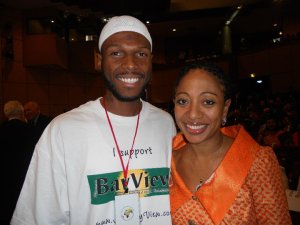
The conference was marked by the spirit of the continent’s forefathers who fought for its independence around the 60s. Among the participants who reminded the audience of that critical period of African history were the son of Patrice Lumumba, the daughter of Nkwame Nkrumah, the son of Abdel Gamal Nasser, and the grandson of Malcom X. Traditional kings and queens of different parts of the continent were also represented. While talking to delegates to the conference, one could also understand directly what it means brain drains when it comes to Africa. Out of the 600 participants, almost every one had a post-graduate qualification and tens hold doctorates. And this was only the tip of the iceberg.
What does it take to build the United States of Africa? That’s the question. We Africans need total belief in its feasibility and realisation. Taking action at our own level by contributing with whatever involvement this could be. Since the 60s there have been wars around the world and most of them were fought on African soil. For decades the West has been testing its weaponry on the continent. On American or European soils there has never been any significant war since World War II. The only hiccup sort of war was Kosovo which were a consequence of the destruction of communism in the Balkans. As we know, the latter conflict was the ultimate phase of ousting communism from European soil. Unless we Africans come together and ban any supporters of wars in our midst, it will be difficult to progress.
By applying the same approach of unifying the African continent that Europe and U.S. used to strengthen their positions in the world, Africa could end its continuous wars. We know these wars are initiated by forces and powers outside the continent. Part of the tools which have been enslaving African leaders and making them to become tools in the hands of the neo-colonialists is aid. It has proven to be effective in keeping African countries in bondage. In recent years it has emerged that remittances from Africa migrants were much higher than aid and far more effective as they tackle directly without other intermediaries the needs of their recipients on the continent. Since no developed country has reached its current level of development through aid, stopping aid should be perceived as a significant way forward to development.
At the time the West is crippled with debts worth trillions of euros or dollars, it is at the same time when it is aggressively pursuing strategies to maintain its supremacy on all areas of world affairs, hammering among them the importance of its aid package. Ministerial delegations are regularly criss-crossing the African continent applying the same strategies of the past which succeeded to delay its development. The counter-plan has to be the enhancement of the Africa Union which was established and is being strengthened gradually. Its role and importance will improve standards and well being of African people.
Since 9.09.99, Kaddafi, the Libyan president, has become the ardent crusader of the Unites States of Africa. He needs us all Africans, wherever we are. All Africans and their leaders particularly need to support the train carrying the United States of Africa structure to make it a reality. A common market, a common currency, continental institutions (parliament, bank, capital, AU government, etc), continental policies on taxation, communication, security, natural resources, etc are very urgently needed. Let’s all play our part. I dream of a day soon to come when African people will be able to travel from Dakar to Nairobi, or Cairo to Cape Town, without a visa, and or live in any part of the continent as they like.
Enhanced by Zemanta